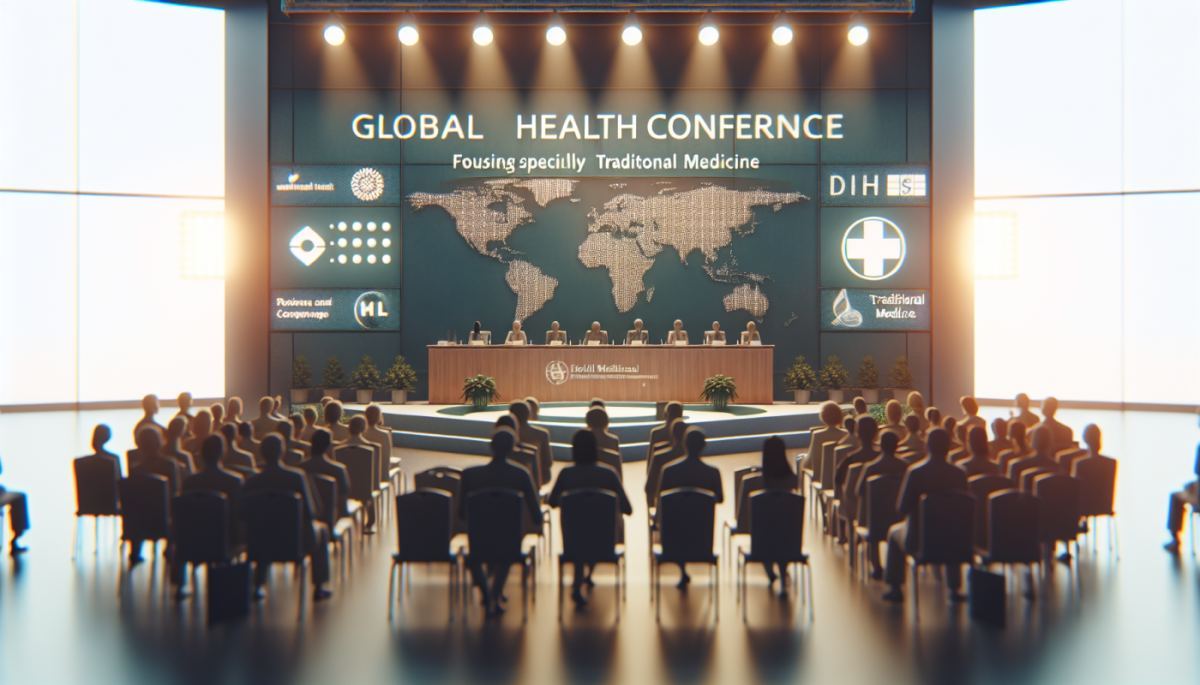
New Delhi became the unlikely epicenter of a quiet revolution in global health policy last week, as the second WHO Global Summit on Traditional Medicine wrapped up with numbers that are hard to ignore. More than 16,000 online registrations, 800 in-person delegates from over 100 countries, ministers representing more than 20 nations, and 160 speakers gathered under one roof to do something that would have seemed fringe just a generation ago: take traditional medicine seriously as a pillar of modern healthcare systems.
The summit, co-organized by the World Health Organization and the Government of India, was not a celebration of folk remedies or a retreat from evidence-based medicine. It was something more consequential and more complicated than that. It was a formal acknowledgment, at the highest levels of international health governance, that systems of healing developed over centuries across Asia, Africa, and Latin America deserve rigorous study, integration, and policy support. The question now is whether the momentum generated in New Delhi can survive contact with the institutional inertia that has historically kept traditional medicine at the margins of global health funding and research.
The timing of this summit matters. The COVID-19 pandemic exposed deep fractures in global health infrastructure, particularly in low and middle-income countries where access to conventional pharmaceutical care remains inconsistent and expensive. In that vacuum, millions of people turned to traditional remedies, not out of ignorance, but out of necessity. The WHO's engagement with traditional medicine is partly a recognition that ignoring what a significant portion of the world's population already relies on is not a neutral position. It is a policy failure.
India's role as co-host is also worth examining carefully. The country has long championed its AYUSH systems, an acronym covering Ayurveda, Yoga, Naturopathy, Unani, Siddha, and Homeopathy, through a dedicated ministry and substantial domestic investment. Hosting the summit in New Delhi is both a diplomatic achievement and a strategic one, positioning India as a global leader in an emerging health governance conversation. The WHO's Traditional Medicine Centre, established in Gujarat, further cements that relationship. Critics have raised legitimate concerns about whether this proximity risks blurring the line between evidence-based integration and politically motivated promotion, a tension the summit will need to navigate carefully in the years ahead.
The most underappreciated consequence of this summit may not be clinical at all. It is economic. Traditional medicine represents a massive, largely informal global market estimated by some analyses to be worth hundreds of billions of dollars annually. As WHO lends institutional legitimacy to these practices, the pressure to standardize, regulate, and potentially patent traditional knowledge will intensify. That creates a feedback loop with serious equity implications: the communities that developed and preserved this knowledge over generations could find themselves on the outside of a commercialization process that extracts value from their heritage without returning it.
This is not a hypothetical concern. The history of bioprospecting, where pharmaceutical companies have derived profitable compounds from traditional plant knowledge without compensating source communities, is well documented. The Convention on Biological Diversity and its Nagoya Protocol were designed to address exactly this dynamic, but enforcement remains patchy. If the WHO summit accelerates global interest in traditional medicine without simultaneously strengthening benefit-sharing frameworks, it could inadvertently accelerate the same extractive patterns it might hope to transcend.
There is also a second-order effect on health workforce dynamics. Integrating traditional medicine into national health systems, which several participating countries signaled interest in doing, requires training, credentialing, and quality control infrastructure that most health ministries are not currently equipped to provide. Done well, this could expand the effective healthcare workforce in underserved regions. Done poorly, it could create a two-tier system where wealthy patients access evidence-backed integrative care while poorer patients receive whatever is locally available under a newly legitimized but poorly regulated label.
The summit's final declarations and working commitments will take months to fully analyze. But the trajectory is clear. Traditional medicine is moving from the periphery of global health discourse toward something closer to its center. Whether that shift produces better health outcomes or simply better optics will depend on whether the institutions now championing it are willing to fund the hard, slow work of rigorous evidence generation, equitable regulation, and genuine community partnership. Summits are easy. Systems change is not.
References
- World Health Organization (2023) — WHO Traditional Medicine Strategy 2019–2025
- World Health Organization (2024) — Second WHO Global Summit on Traditional Medicine
- Secretariat of the Convention on Biological Diversity (2011) — Nagoya Protocol on Access and Benefit-Sharing
- Ministry of AYUSH, Government of India (2024) — Annual Report 2023–24

Discussion (0)
Be the first to comment.
Leave a comment