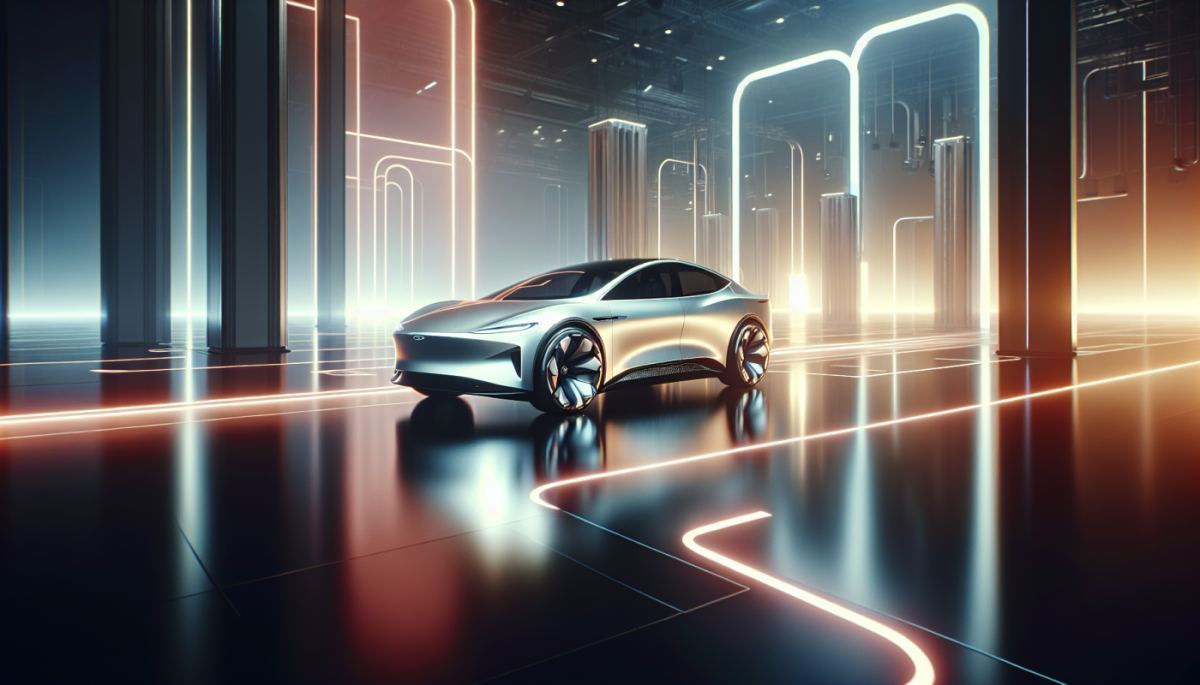
Lucid Motors has never lacked ambition. The company that built the Air, a sedan widely praised for its engineering but slow to find buyers, is now staking its survival on something different: a midsize SUV called the Cosmos, designed to go head-to-head with Tesla's Model Y in one of the most competitive segments in the automotive market. For a company that has burned through capital at a remarkable rate while selling vehicles in the low thousands annually, the Cosmos is not just a new product. It is a referendum on whether Lucid can survive long enough to matter.
What makes the Cosmos technically interesting is not just the hardware, though the hardware is genuinely impressive. Lucid has packed the vehicle with a next-generation motor and built it on a new electrical architecture designed from the ground up with autonomous driving capability in mind. That last detail is worth pausing on. Most legacy automakers and several EV startups have retrofitted autonomy onto platforms that were never meant to carry it, creating layers of engineering compromise that show up as latency, sensor placement problems, and software debt. Lucid is claiming it avoided that trap by designing the Cosmos with autonomy as a structural assumption rather than an afterthought. Whether that claim holds up in production is a different question, but the intent signals something about where the company believes the market is heading.
The Model Y comparison is inevitable and, to some degree, unfair. Tesla has had years to refine its manufacturing, build out its Supercharger network, and embed itself in the cultural imagination of the EV buyer. Lucid is entering this segment without any of those advantages. But the comparison also reveals something important about the strategic logic behind the Cosmos. The midsize SUV is the best-selling vehicle segment in the United States. If Lucid wants volume, and it desperately needs volume to achieve the economies of scale that make EV manufacturing financially viable, it has to compete where the buyers actually are.
Lucid's financial situation adds urgency to everything. The company is backed heavily by Saudi Arabia's Public Investment Fund, which has kept it alive through rounds of funding that most startups could only dream of. But sovereign wealth fund patience is not infinite, and Lucid has been explicit about needing to grow revenue substantially to reduce its dependence on external capital injections. The Cosmos, priced to reach a broader audience than the Air, is the vehicle that is supposed to change that equation.
This is where systems thinking becomes essential to understanding the story. Lucid is not just launching a car. It is attempting to trigger a feedback loop that the EV industry knows well but that very few companies outside Tesla have successfully activated. The loop works like this: higher volume reduces per-unit manufacturing costs, lower costs enable more competitive pricing, more competitive pricing drives higher volume. Breaking into that loop requires a product compelling enough to generate demand before the cost advantages exist. That is an extraordinarily difficult position to be in, and it explains why so many well-engineered EV startups have failed despite building genuinely good vehicles.
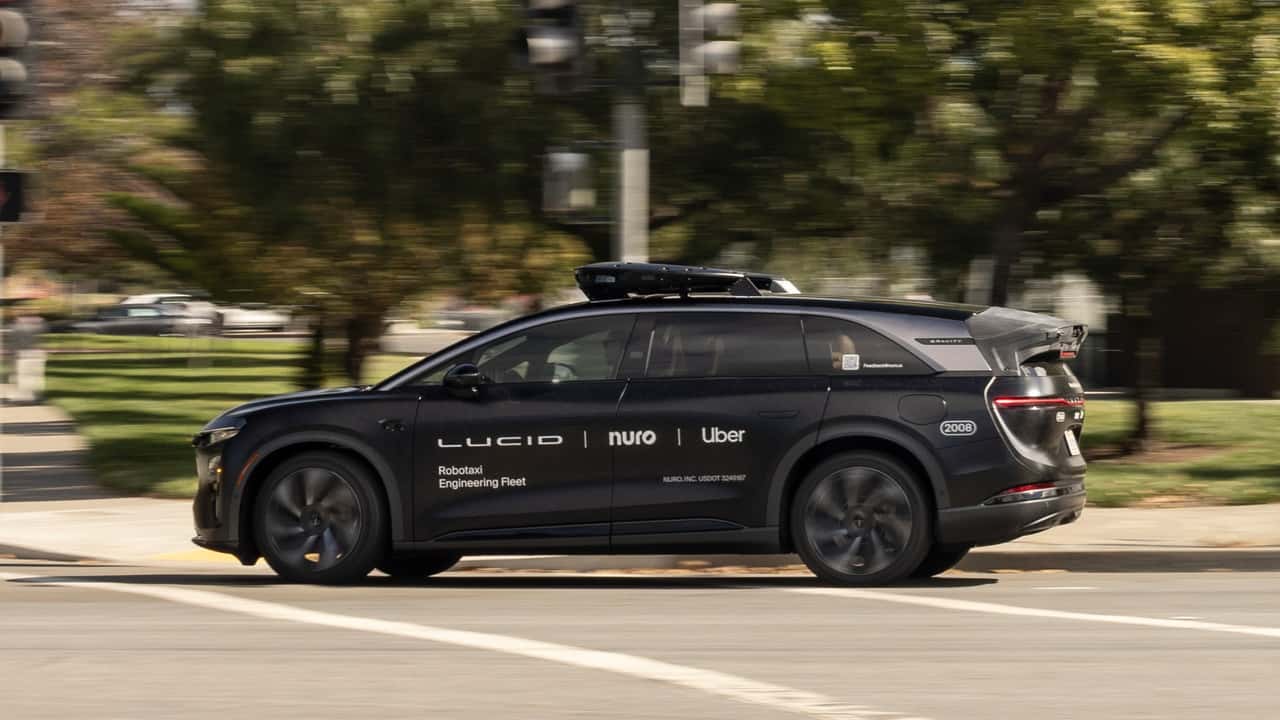
The autonomy-ready architecture adds another layer to this dynamic. If Lucid can establish the Cosmos as a platform that improves meaningfully over time through software, it changes the value proposition in a way that pure hardware specs cannot. Buyers who might otherwise default to Tesla partly because of its over-the-air update culture could find a similar promise in the Cosmos. But delivering on that promise requires not just the architecture but the software team, the data pipeline, and the regulatory relationships to make autonomy features real rather than theoretical.
There is a broader industry story embedded in Lucid's situation. The first wave of EV enthusiasm, which carried valuations to extraordinary heights and convinced investors that any company with a battery and a vision could become the next Tesla, has largely receded. What remains is a harder, more industrial competition where manufacturing efficiency, supply chain control, and software capability matter as much as range numbers and design language. Lucid has always been stronger on the engineering side than the operational side, and the Cosmos will test whether that balance has shifted.
The second-order consequence worth watching is what happens to the premium EV segment if Lucid stumbles. A Cosmos that underdelivers or arrives too late to capture momentum would not just hurt Lucid. It would reinforce a narrative that only Tesla and the major legacy automakers can survive at scale in this market, potentially chilling investment in the next generation of EV challengers before they get a serious chance. The Cosmos, in that sense, carries weight well beyond one company's balance sheet.
If Lucid gets this right, it will not just have built a good SUV. It will have demonstrated that a focused, engineering-driven EV company can find its footing in a market that has become brutally selective about who gets to stay.
Discussion (0)
Be the first to comment.
Leave a comment