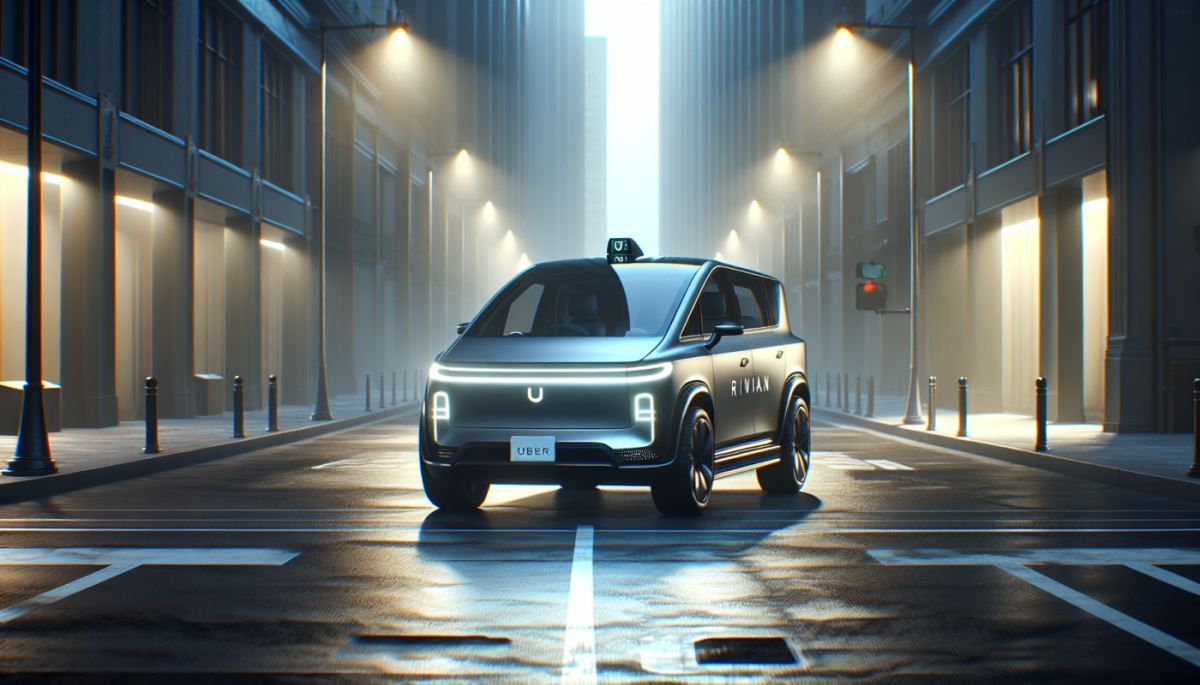
Rivian has spent the better part of three years fighting for its financial life, burning through cash reserves while trying to prove that an electric truck startup could survive the brutal economics of auto manufacturing. The announcement that Uber will invest up to $1.25 billion in the company over five years, with an initial order of 10,000 R2 vehicles destined for the Uber app, is more than a capital injection. It is a structural realignment of how two struggling business models might rescue each other.
The deal centers on Rivian's upcoming R2, a smaller and more affordable electric vehicle than the company's existing R1T truck and R1S SUV. Up to 50,000 R2s could eventually be deployed as robotaxis on Uber's platform, though the initial commitment of 10,000 units is where the rubber meets the road. For Rivian, the arrangement solves a problem that has haunted EV startups since Tesla first proved the model was possible but not easily replicable: how do you guarantee demand at scale before you've built the factory capacity to justify it? A committed fleet buyer like Uber answers that question before the assembly line even runs at full speed.
For Uber, the logic runs in a different direction. The company has long positioned itself as a platform rather than a vehicle owner, famously shedding its own autonomous vehicle division when the costs became untenable. But that arms-length posture has left Uber dependent on independent drivers who are increasingly expensive to attract and retain. Fleet-based robotaxi deployments, where vehicles are owned and operated through structured partnerships rather than gig arrangements, represent a path toward margins that the current driver model simply cannot deliver.
The R2 matters here not just as a product but as a strategic object. Rivian has been deliberately positioning it as a mass-market vehicle, targeting a price point significantly below the R1 lineup, which starts above $70,000. A lower-cost platform makes the unit economics of fleet deployment far more attractive. When you're calculating cost-per-mile across tens of thousands of vehicles, the purchase price is one of the largest variables in the equation. Rivian's vertical integration approach, where it controls more of its own software and hardware stack than traditional automakers, also means the company can theoretically optimize the R2 for commercial fleet use in ways that a conventional manufacturer retrofitting a consumer vehicle cannot.
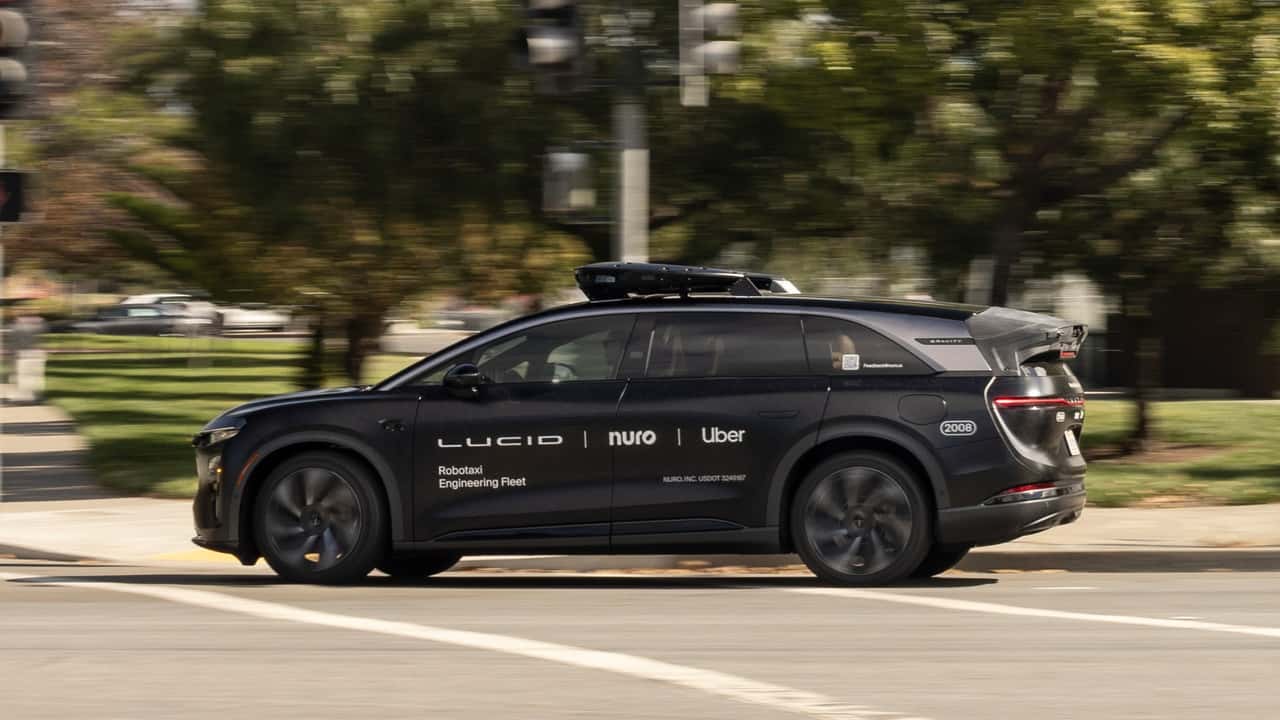
The robotaxi framing is worth examining carefully, though. The term implies full autonomy, but the current regulatory and technological landscape makes widespread driverless deployment a medium-term ambition rather than an immediate reality. Waymo has made genuine progress in specific geofenced markets, and Tesla continues to promise full self-driving capability on a timeline that keeps shifting. What Uber and Rivian are more likely building toward is a hybrid model: initially driver-operated R2s that are purpose-built for commercial use, with the architecture in place to layer in autonomous capability as regulations and technology mature. The investment is as much a bet on that future state as it is on present-day ride-hailing.
The deeper consequence of this deal may not be felt inside Uber or Rivian at all. It will be felt by the roughly 1.5 million Americans who currently drive for Uber and similar platforms. Fleet-based models, whether autonomous or not, structurally reduce the platform's dependence on independent contractors. Every R2 deployed through a managed fleet arrangement is a vehicle that doesn't require a gig worker to operate it on Uber's terms. The short-term effect is negligible, but the directional signal is clear: the ride-hailing industry is slowly building the infrastructure to operate without its current workforce model.
There is also a feedback loop worth watching between this deal and the broader EV market. Rivian securing a large, committed fleet buyer reduces its financial risk profile, which could improve its access to capital markets and lower its borrowing costs. That in turn funds the manufacturing scale needed to bring R2 unit costs down further, which makes the fleet economics even more attractive, which draws in more fleet buyers. It is the kind of virtuous cycle that Tesla rode in its early years with fleet and commercial commitments providing the demand certainty that justified factory investment.
Whether Rivian can execute on that cycle is the open question. Manufacturing at scale has humbled far better-capitalized companies. But the Uber deal at least means Rivian is no longer trying to answer the demand question and the supply question simultaneously, alone. That is not a small thing.
If the R2 robotaxi program reaches anything close to 50,000 units, the more interesting story won't be what it does for Uber's margins. It will be what it does to the political conversation around gig work, labor classification, and who bears the cost when automation arrives not with a bang but with a quiet fleet order.
Discussion (0)
Be the first to comment.
Leave a comment