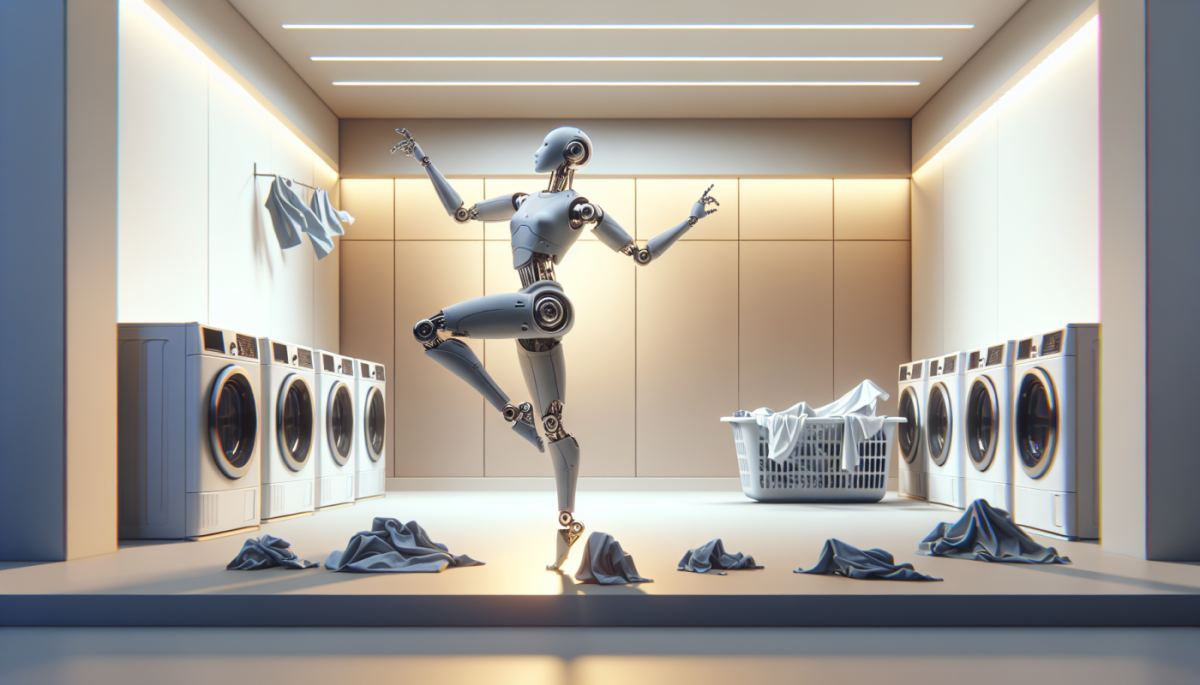
There is something almost philosophical about the gap between what humanoid robots can do and what they cannot. A modern robot can perform backflips, navigate rubble, and carry heavy loads across uneven terrain. Yet ask that same machine to pick up a grape without crushing it, button a shirt, or sort a pile of mismatched socks, and it will fail with a kind of spectacular, almost poignant incompetence. The last decade of robotics has produced machines that look increasingly human. The underlying intelligence, however, remains stubbornly unfinished.
The core problem is not processing power or mechanical engineering. It is something more fundamental: the ability to perceive, reason about, and physically interact with small, irregular, deformable, or unpredictable objects. Researchers call this the manipulation problem, and it sits at the intersection of computer vision, tactile sensing, motor control, and real-time decision-making. Each of those fields has made genuine progress in isolation. Integrating them into a single coherent system that works reliably in an unstructured environment, like a kitchen counter or a hospital supply room, remains one of the hardest open problems in all of engineering.
Human hands are extraordinary instruments that took millions of years of evolution to refine. They contain roughly 17,000 mechanoreceptors that feed continuous tactile data to the brain, allowing us to adjust grip pressure in milliseconds without conscious thought. We do not think about how hard to squeeze a paper cup. We just know. Replicating that feedback loop in a robotic system requires sensors sensitive enough to detect subtle deformation, processors fast enough to act on that data in real time, and actuators precise enough to respond with the right amount of force. Current robotic hands can approximate some of this, but the integration remains fragile and context-dependent.
Beyond the physical constraints, there is a data problem that rarely gets discussed in the breathless coverage of robot demos. Large language models and vision systems have been trained on billions of images and text samples scraped from the internet. But the internet contains almost no useful data about how objects feel when you touch them, how a wet cloth behaves differently from a dry one, or how much force is needed to separate two pieces of Velcro. This is sometimes called the "embodied data gap," and it means that even the most sophisticated AI systems arrive at the physical world essentially naive.
Some labs are trying to close this gap through simulation, generating synthetic training environments where robots can practice manipulation tasks millions of times before touching a real object. Others are building large datasets of robotic demonstrations, having humans teleoperate robot arms through thousands of household tasks to create the kind of ground-truth behavioral data that text-based AI has enjoyed for years. Both approaches have shown promise, but simulation still struggles to capture the full messiness of physical reality, and teleoperation datasets are expensive and slow to build.
The commercial pressure here is real and intensifying. Companies like Figure, Agility Robotics, and Tesla's Optimus program are racing to deploy humanoid robots in warehouse and manufacturing settings, where the manipulation demands are somewhat more constrained than in a home environment. Amazon has been testing humanoid robots in its fulfillment centers. The logic is straightforward: if you can solve manipulation for a defined set of objects in a controlled space, you have a viable product even before you solve the general case. But this strategy also risks locking in a generation of robots that are useful only in narrow, highly engineered contexts, which could slow the broader push toward general-purpose machines.
If manipulation remains the bottleneck, the economic geography of automation will look very different from what most forecasts assume. The jobs most vulnerable to near-term displacement are not the dexterous, tactile ones, but the ones involving mobility and gross motor tasks: moving pallets, patrolling facilities, performing inspections. The fine-motor jobs, including surgical assistance, elder care, food preparation, and garment manufacturing, may remain human-dependent far longer than expected. That is not necessarily reassuring, because those are also some of the most physically demanding and least well-compensated jobs in the economy.
The deeper irony is that the robots most likely to reach your home first will probably be the ones that avoid your hands entirely: systems that manage your calendar, answer your calls, and control your smart devices. The physical world, with all its softness and irregularity, may be the last frontier that humanoid machines genuinely conquer. And the researchers working on that frontier are increasingly convinced that the path forward runs not through faster processors or bigger models, but through a much older question: what does it actually mean to touch something and understand it.
References
- Billard, A. & Kragic, D. (2019) — Trends and challenges in robot manipulation
- Levine, S. et al. (2016) — End-to-End Training of Deep Visuomotor Policies
- Dexterous Manipulation Research at OpenAI (2019) — Learning Dexterous In-Hand Manipulation
- Johansson, R.S. & Flanagan, J.R. (2009) — Coding and use of tactile signals from the fingertips in object manipulation tasks


Discussion (0)
Be the first to comment.
Leave a comment