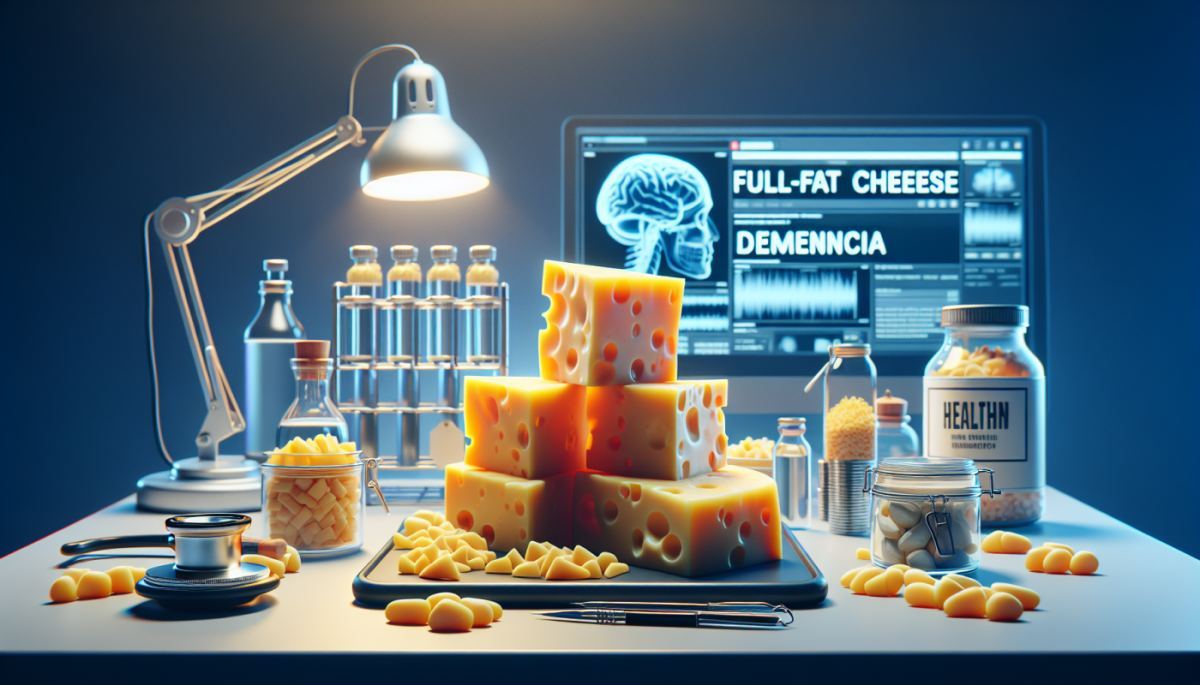
For decades, the nutritional establishment told us to put down the brie and reach for the skim milk. Fat was the enemy, saturated fat was the villain, and dairy in its richest forms was something to be rationed rather than enjoyed. A sweeping new study out of Sweden is now complicating that story in ways that researchers and public health officials will be untangling for years.
The study tracked nearly 28,000 people over 25 years, making it one of the longest and largest observational investigations into dairy consumption and cognitive decline ever conducted. Its headline finding is striking: among adults who did not carry a known genetic risk factor for Alzheimer's disease, eating more full-fat cheese was associated with a meaningfully lower risk of developing the condition. Separately, higher intake of cream was linked to reduced dementia risk across the broader study population. These are not small or easily dismissed correlations given the scale and duration of the research.
What makes this finding genuinely surprising is not just what it found, but what it contradicts. The low-fat dietary guidelines that dominated Western nutritional policy from roughly the 1970s onward were built on the premise that saturated fats drove cardiovascular disease and, by extension, threatened brain health through reduced blood flow and increased inflammation. The logic seemed sound. The evidence, it turns out, was always more contested than the confident public messaging suggested.
The rehabilitation of dietary fat has been underway quietly in the scientific literature for well over a decade. A landmark 2010 meta-analysis published in the American Journal of Clinical Nutrition found no significant association between saturated fat intake and cardiovascular disease risk, rattling the foundations of the low-fat consensus. Since then, researchers have increasingly pointed to refined carbohydrates and ultra-processed foods as more reliable culprits in metabolic and cognitive decline. Full-fat dairy, in this revised framework, looks considerably less threatening.
The Swedish findings fit within a growing body of evidence suggesting that the fat matrix in dairy products, particularly cheese, behaves differently in the body than isolated saturated fats. Cheese is a fermented food, and fermentation produces bioactive compounds including vitamin K2, short-chain fatty acids, and specific peptides that may have neuroprotective properties. The calcium, phosphorus, and protein content of cheese also interact in ways that simple fat-content labeling cannot capture. In other words, cheese is not just a delivery vehicle for saturated fat. It is a complex food system, and reductive nutritional thinking may have caused us to misread it for a generation.
The caveat embedded in the Swedish study matters enormously, though. The protective association with full-fat cheese appeared specifically among people without the APOE e4 gene variant, the most significant known genetic risk factor for Alzheimer's. For those who carry that variant, the picture was different. This is not a minor footnote. Roughly 25 percent of the population carries at least one copy of APOE e4, meaning the finding does not apply uniformly. Personalized nutrition, long a promise of precision medicine, may be more relevant here than any single dietary recommendation.
The second-order consequences of research like this ripple outward in ways that are easy to underestimate. Dietary guidelines in the United States and Europe are not just academic documents. They shape school lunch programs, hospital meal planning, food labeling regulations, and the product development strategies of major food manufacturers. If full-fat dairy begins accumulating enough favorable evidence, the pressure on regulatory bodies to revisit decades-old guidance will intensify. That process is slow, politically fraught, and often lagging a decade or more behind the science.
There is also a meaningful risk of overcorrection. Studies like this one tend to travel through social media stripped of their caveats, arriving in public consciousness as permission slips rather than data points. The nuance that the protective effect was limited to people without a specific genetic variant, and that the study is observational rather than a randomized controlled trial, gets lost in translation. People who carry APOE e4 and read only the headline may make dietary choices that do not serve their particular biology.
What the Swedish study ultimately points toward is not a vindication of any single food but a deeper argument for complexity. The brain is not protected or damaged by one nutrient in isolation. It is shaped by the entire dietary pattern, the genetic context, the metabolic environment, and the decades of cumulative choices that precede any diagnosis. The more interesting question the study raises is not whether cheese is good for you, but whether the reductive nutritional frameworks we have relied on for fifty years are capable of answering that question at all.
As researchers begin to layer genetic screening into dietary research more systematically, the era of one-size-fits-all nutritional advice may be approaching its natural end, and the guidelines that replaced butter with margarine may themselves become a cautionary tale.
References
- Siri-Tarino et al. (2010) — Meta-analysis of prospective cohort studies evaluating the association of saturated fat with cardiovascular disease
- Alzheimer's Association (2023) — APOE and Alzheimer's Disease Risk
- Astrup et al. (2019) — Re-evaluation of the traditional diet-heart hypothesis: analysis of recovered data from Minnesota Coronary Experiment
- Mozaffarian et al. (2013) — Changes in Diet and Lifestyle and Long-Term Weight Gain in Women and Men



Discussion (0)
Be the first to comment.
Leave a comment