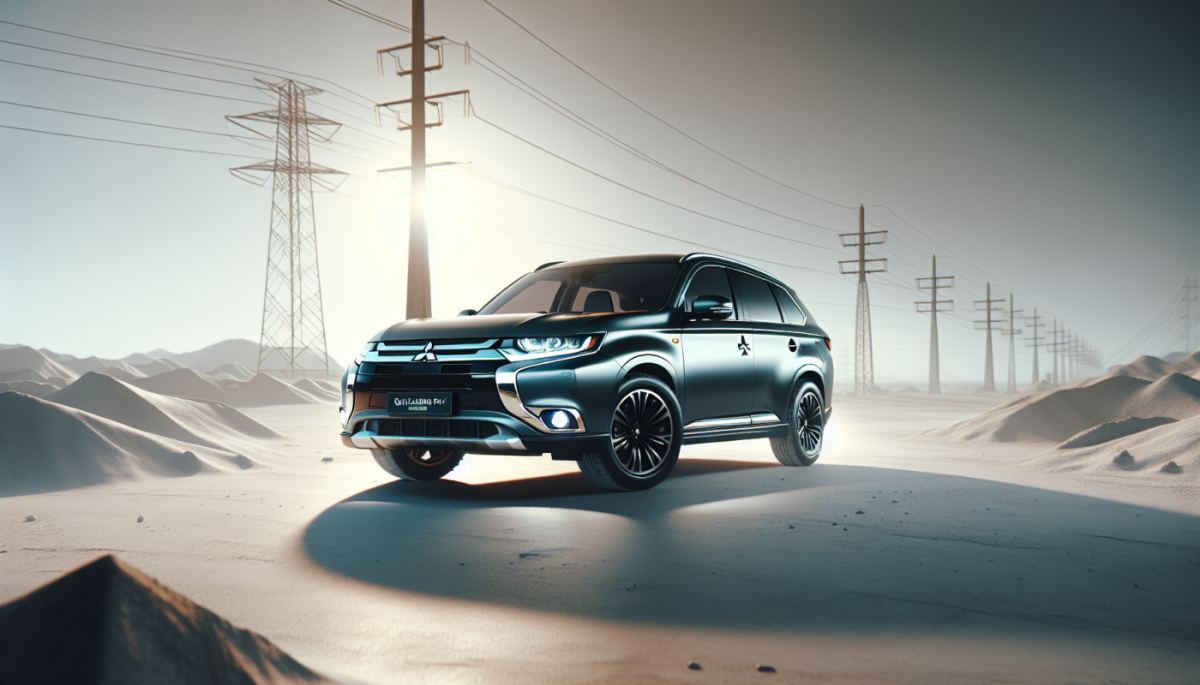
There is a particular kind of discipline required to refresh a vehicle, add meaningful power, and still keep the sticker price below a psychological threshold that matters enormously to American car buyers. Mitsubishi has managed exactly that with the 2026 Outlander PHEV, nudging the base price up by $2,845 while delivering a revised plug-in hybrid powertrain that pushes output to nearly 300 horsepower. The number under $45,000 is not accidental. It is a calculated position in a market where the difference between $44,999 and $45,001 can determine whether a buyer walks onto a lot or keeps scrolling.
The compact SUV segment is one of the most brutally competitive spaces in the American automotive market, and the PHEV variant of that segment is becoming its own distinct battlefield. Buyers here are not purely environmentally motivated, nor are they purely performance-focused. They are, in large part, pragmatists who want the flexibility of electric driving for daily commutes without the anxiety of a fully battery-dependent vehicle on longer trips. Mitsubishi has understood this buyer profile for years, having introduced the Outlander PHEV to global markets well before most mainstream brands took plug-in hybrids seriously. That early-mover experience is now being leveraged in a market that has finally caught up to the concept.
Keeping the price below $45,000 is not simply a marketing decision. It reflects a deeper awareness of how federal incentives, state rebates, and consumer psychology interact. The Inflation Reduction Act's clean vehicle tax credits have reshaped buyer calculations, and while eligibility rules around battery sourcing and income caps have created considerable confusion, the general principle holds: a lower base price combined with available credits can bring the effective cost of a PHEV into territory that genuinely competes with non-electrified alternatives. Mitsubishi is threading a needle here, absorbing some of the cost of the powertrain upgrade rather than passing it entirely to the consumer, betting that volume and brand repositioning are worth more than short-term margin.
The $2,845 price increase, spread across what is clearly a more capable powertrain, is also a statement about where Mitsubishi sees its competitive pressure coming from. The brand is not trying to out-luxury Volvo's Recharge lineup or out-tech Ford's Escape PHEV. It is targeting the buyer who finds the Toyota RAV4 Prime perpetually out of stock and the Hyundai Tucson PHEV slightly underwhelming in power delivery. Nearly 300 horsepower in a compact SUV that still qualifies as a plug-in hybrid is a genuine differentiator, and Mitsubishi is pricing it to be noticed rather than aspirational.
What is easy to miss in a story about a refreshed SUV and a modest price adjustment is the broader signal it sends through the supply chain and competitive landscape. When a mid-tier automaker successfully holds a price ceiling while upgrading core technology, it creates pressure on competitors to justify their own pricing structures. If Mitsubishi can deliver 300 horsepower and plug-in capability for under $45,000, the question becomes uncomfortable for brands charging $48,000 or $52,000 for comparable specifications. That kind of price anchoring has a way of cascading through a segment, compressing margins industry-wide and accelerating the timeline on which electrified powertrains become table stakes rather than premium features.
There is also a feedback loop worth considering on the consumer side. As more buyers experience PHEV ownership through vehicles like the Outlander, the data on real-world electric range usage, charging behavior, and fuel savings accumulates. That data tends to reinforce PHEV adoption among pragmatic buyers while simultaneously building the case for fully electric vehicles among those who discover they rarely use the combustion engine at all. Mitsubishi, perhaps unintentionally, is running a large-scale trial that benefits the broader transition to electrified transport.
The 2026 Outlander PHEV will not dominate headlines the way a Tesla refresh or a new Rivian variant might. But the quiet competence of its pricing strategy and powertrain upgrade may prove more consequential than it appears, particularly if the sub-$45,000 PHEV becomes the new baseline expectation rather than the exception.

Discussion (0)
Be the first to comment.
Leave a comment