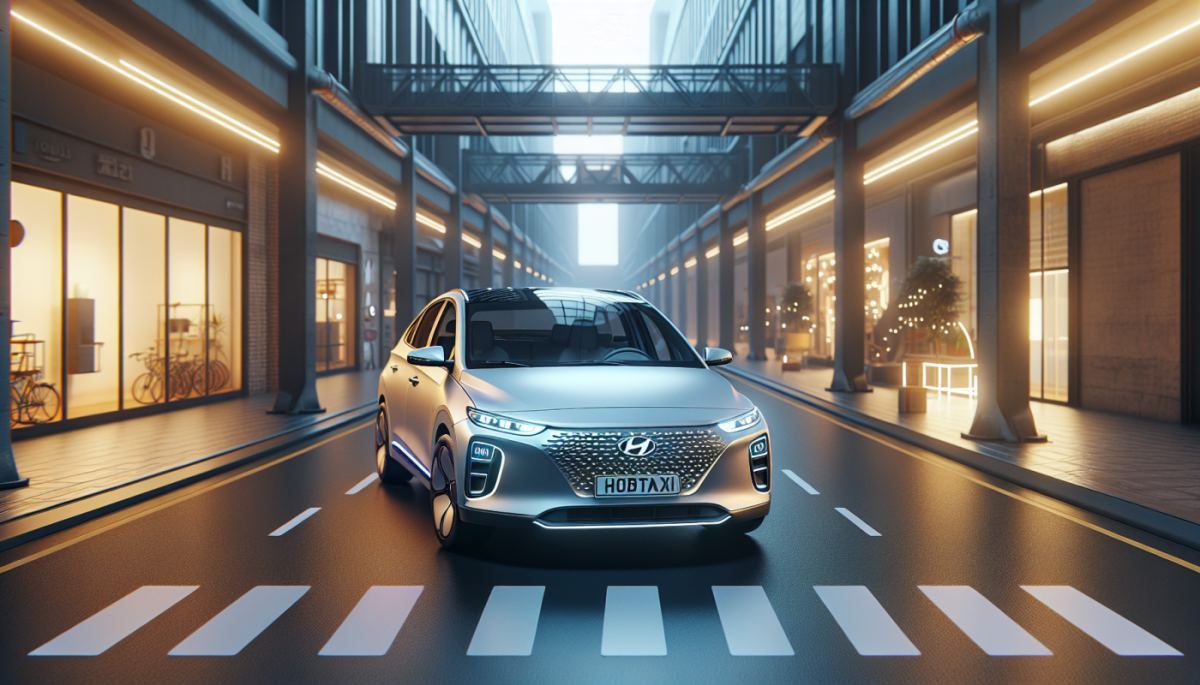
Las Vegas has always been a city built on calculated risk, so perhaps it is fitting that it becomes the next proving ground for autonomous vehicles. Hyundai's self-driving subsidiary, Motional, has announced a partnership with Uber to deploy its Ioniq 5 robotaxis on the ride-hailing platform in Las Vegas, marking one of the more consequential moves in the increasingly crowded autonomous vehicle space. The deal is not just a technology demonstration. It is a signal about who survives the next phase of the AV shakeout, and how.
Motional is not a newcomer to this game. The company, a joint venture between Hyundai and the automotive technology firm Aptiv, has been testing driverless vehicles in Las Vegas for years. What changes now is the distribution layer. By plugging into Uber's existing rider network, Motional sidesteps one of the most punishing problems facing AV startups: customer acquisition. Building a robotaxi fleet is expensive enough. Building the app, the brand trust, and the geographic density of riders to make that fleet economically viable is a separate and equally brutal challenge. Uber already solved that problem, at enormous cost, over the better part of a decade.
For Uber, the calculus is equally self-interested. The company has spent years trying to shed the operational weight of its human driver workforce, not by eliminating drivers, but by reducing its structural dependence on them. Every robotaxi mile completed through its platform is a mile where surge pricing, driver shortages, and labor negotiations become someone else's problem. Uber sold its own self-driving unit, Advanced Technologies Group, to Aurora in 2020, effectively outsourcing the hard engineering work while retaining the distribution advantage. Partnerships like the one with Motional are the logical continuation of that strategy.
What makes the Las Vegas deployment particularly worth watching is the city's unusual suitability as an AV environment. The road grid is relatively predictable, the weather is dry and consistent, and the city has cultivated a regulatory culture that welcomes technology experimentation. Nevada was one of the first states to pass legislation permitting autonomous vehicle testing back in 2011, and its regulators have generally moved faster than their counterparts in states like California, where the DMV's oversight process is more layered. That regulatory arbitrage is not accidental. Las Vegas has actively positioned itself as a destination for mobility innovation, understanding that being an early host city creates long-term infrastructure and investment advantages.
The Ioniq 5 itself is a meaningful choice of vehicle. Built on Hyundai's dedicated EV platform, it offers the kind of interior space and sensor-mounting geometry that makes autonomous retrofitting more practical than on traditional combustion platforms. Motional has equipped the vehicle with a suite of cameras, radar, and lidar systems, and the company has emphasized a safety driver-free operational model for its most mature deployments. That driverless capability is the threshold that separates genuine commercial AV operations from expensive public relations exercises, and Motional's ability to cross it in a real urban environment with paying passengers is not trivial.
The partnership structure itself carries a systems-level consequence that most coverage will miss. When autonomous vehicles are deployed through a platform like Uber rather than through a proprietary app, the data generated by those rides flows through a commercial relationship with its own incentive structures. Uber gains insight into how robotaxi demand patterns compare to human-driven demand, which neighborhoods generate the most AV-compatible trips, and how riders respond to the driverless experience. That data is competitively valuable, and the terms under which Motional can access and use it will shape the long-term power dynamic between the two companies. Partnerships in the AV space have a history of becoming acquisitions, and the company that controls the rider relationship often ends up controlling the narrative.
There is also a labor dimension that will unfold slowly but meaningfully. Las Vegas's service economy is heavily unionized, and the Culinary Workers Union has already demonstrated its willingness to engage aggressively with technology displacement issues. Robotaxis do not directly threaten casino workers, but they establish a visible precedent for automation in a city where that conversation is already charged. The normalization of driverless vehicles on Las Vegas streets could accelerate the political and cultural conditions under which broader automation debates play out in the region.
The real question is not whether Motional's Ioniq 5 can navigate the Strip. It almost certainly can. The question is whether the commercial and regulatory architecture being assembled around it is durable enough to survive the inevitable friction of scale, and whether Las Vegas remains a launchpad or becomes a ceiling.
Discussion (0)
Be the first to comment.
Leave a comment