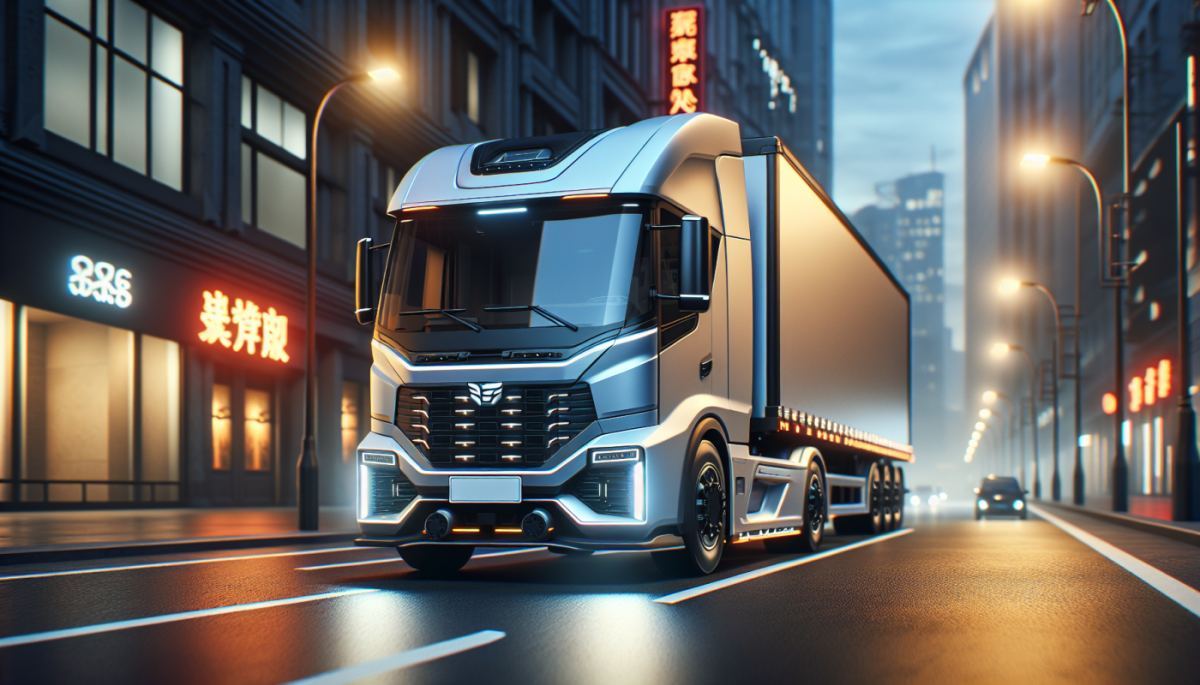
Europe's automotive establishment has spent the better part of a decade watching Chinese electric vehicle makers dismantle its passenger car assumptions. Now the same forces are arriving at the loading dock. Chinese manufacturers are moving aggressively into the heavy-duty electric truck segment, and the people who build lorries for a living in Germany, Sweden, and the Netherlands are, by their own admission, frightened.
The anxiety is not irrational. The cost advantage that Chinese EV makers carried into the passenger car market did not emerge from nowhere. It was built over years through state-backed investment in battery supply chains, vertically integrated manufacturing, and a domestic market large enough to absorb the losses that come with scaling new technology. CATL, BYD, and their ecosystem of suppliers now produce battery cells at a cost that European and American rivals have struggled to approach even with significant subsidy support. When that same structural advantage is applied to a 40-tonne truck, the numbers become genuinely alarming for incumbents like Volvo, Daimler Truck, and Traton.
Heavy-duty trucking is not a niche. It is the circulatory system of the European economy. Roughly 75 percent of all goods transported within the EU move by road, and the decarbonisation of that fleet is now a regulatory obligation, not a choice. The EU's revised CO2 standards for heavy vehicles require manufacturers to cut emissions by 45 percent by 2030 compared to 2019 levels, rising to 90 percent by 2040. That regulatory pressure was supposed to be a forcing function that would accelerate European innovation. Instead, it may have opened a door.
The core problem for European truck makers is that the transition to electric drivetrains strips away some of their most durable competitive advantages. Decades of expertise in diesel engine refinement, transmission engineering, and combustion efficiency become less relevant when the powertrain is essentially a battery pack and an electric motor. What matters instead is battery cost, software integration, and charging infrastructure — areas where Chinese manufacturers have been investing at scale for longer.
Industry insiders have begun using language that would have seemed hyperbolic five years ago. The phrase "they will eat our lunch" has circulated in European trucking circles with enough frequency to suggest it reflects genuine boardroom sentiment rather than competitive posturing. Chinese brands including Dongfeng, FAW, and Geely-backed Volvo's Chinese competitors are already present at European trade shows, and some are actively pursuing fleet operator contracts on the continent.
Fleet operators, for their part, are caught between loyalty to established suppliers and the arithmetic of total cost of ownership. An electric truck that costs significantly less upfront, even accounting for tariffs, changes the calculation for logistics companies operating on margins that rarely exceed three or four percent. The European Commission introduced additional tariffs on Chinese electric vehicles in 2024, but the measures were calibrated primarily around passenger cars. Heavy trucks occupy a different regulatory category, and the tariff architecture around them remains less developed.
The competitive threat to truck manufacturers is the visible layer of this story. Beneath it sits a more consequential dynamic. European truck makers employ hundreds of thousands of workers directly and anchor regional industrial ecosystems across Sweden, Germany, and the Netherlands. Södertälje, where Scania operates, is essentially a company town. Stuttgart's industrial identity is inseparable from Daimler. If Chinese competitors capture meaningful market share in the electric transition, the downstream effects on employment, tax revenue, and regional economic stability could be severe in ways that passenger car competition alone would not produce.
There is also a feedback loop worth watching. European logistics companies that adopt lower-cost Chinese electric trucks will reduce their operating costs, potentially improving their own competitiveness. But that efficiency gain, if it comes at the expense of European manufacturing employment, could suppress the consumer spending that sustains the broader economy those logistics companies serve. The system has a way of returning costs that appear to have been eliminated.
What makes the current moment particularly unstable is that the European response remains fragmented. Industrial policy, trade policy, and climate policy are pulling in different directions simultaneously, and the timeline for resolving that tension is shorter than most policymakers seem to appreciate. The trucks being ordered today will be on European roads in 2026 and beyond. The decisions being deferred in Brussels and Berlin are not abstract. They are being made by default, one fleet contract at a time, in the logistics parks outside Rotterdam and Lyon and Hamburg.
Discussion (0)
Be the first to comment.
Leave a comment