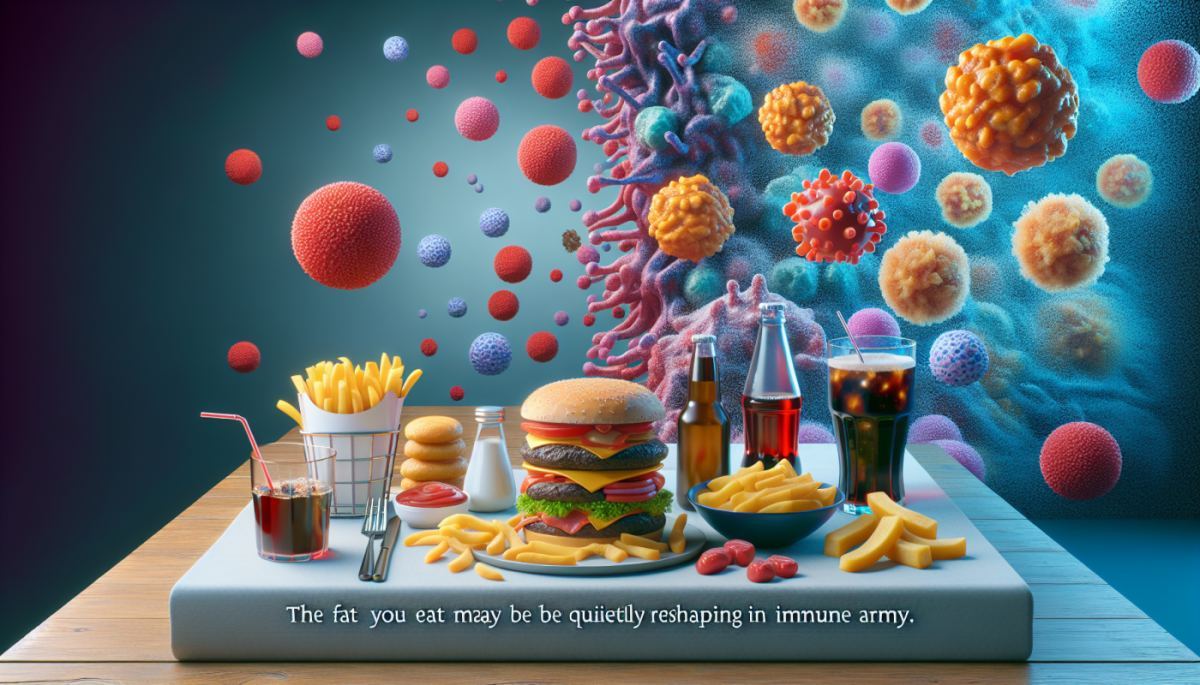
Most people think about dietary fat in terms of heart disease or waistlines. Researchers are now finding that the conversation needs to expand considerably, because the specific composition of fat in your diet appears to influence whether your T cells live or die, and whether your immune system can mount a credible defense against tumors and pathogens alike.
A new body of scientific work has identified that the ratio between polyunsaturated fatty acids and monounsaturated fatty acids plays a meaningful role in T cell viability, as well as in both humoral immunity and anti-tumor immunity. These are not peripheral functions. T cells are among the most consequential actors in adaptive immunity, responsible for recognizing and destroying infected or cancerous cells. Humoral immunity, driven largely by antibody-producing B cells that T cells help activate, is the mechanism behind why vaccines work. When the lipid environment surrounding these cells shifts, the downstream effects ripple through the entire immune architecture.
The biology here is subtle but important. Cell membranes are built substantially from fatty acids, and their fluidity, receptor function, and signaling capacity all depend on which fatty acids are present. Polyunsaturated fatty acids, found in foods like fatty fish, walnuts, and flaxseed, tend to increase membrane fluidity. Monounsaturated fatty acids, abundant in olive oil and avocados, have different structural properties. When the balance between these two classes shifts, the physical and biochemical environment of immune cells changes with it.
T cells are particularly sensitive to this because their activation, proliferation, and survival depend on precise membrane dynamics and lipid-mediated signaling cascades. A membrane that is too rigid or too fluid can impair the clustering of T cell receptors, blunt the activation signals that tell a T cell to multiply, or accelerate apoptosis, the programmed cell death that removes immune cells from circulation before they have finished their work. The finding that this ratio affects T cell viability suggests that dietary fat is not just fuel but something closer to an architectural material for immune function.
What makes this particularly striking is the connection to anti-tumor immunity. The immune system's ability to surveil and destroy nascent cancer cells is an area of intense research interest, and T cells, specifically cytotoxic CD8+ T cells, are central to that process. Oncology has spent the last decade learning how to reinvigorate exhausted T cells through checkpoint inhibitors like pembrolizumab and nivolumab. If dietary fat composition can independently influence T cell survival and function, it introduces a variable that the clinical world has barely begun to account for.
Consider the feedback loop embedded in modern dietary patterns. Ultra-processed foods, which now account for more than half of caloric intake in countries like the United States and the United Kingdom according to repeated dietary surveys, tend to be high in refined vegetable oils with specific fatty acid profiles that may not favor optimal immune ratios. If those ratios suppress T cell viability over time, populations eating these diets may carry a quietly degraded immune capacity, one that would not show up in standard clinical markers but could manifest as reduced vaccine efficacy, slower clearance of infections, or subtly impaired cancer surveillance.
This creates a second-order effect worth taking seriously: public health systems that invest heavily in vaccine development and immunotherapy may be operating against a dietary headwind they have not measured. A population with compromised T cell function due to chronic lipid imbalance would extract less benefit from both preventive and therapeutic immunological interventions. The return on investment for those interventions, measured in lives and healthcare costs, would be lower than models currently assume.
There is also an implication for clinical nutrition in oncology. Patients undergoing immunotherapy are rarely given structured guidance on dietary fat composition, despite growing evidence that the metabolic environment shapes immune outcomes. If the ratio of polyunsaturated to monounsaturated fatty acids turns out to be a modifiable lever for T cell function, the oncology ward may eventually need a nutritionist as standard equipment rather than an optional referral.
The science is still developing, and translating cellular findings into dietary recommendations requires careful clinical validation. But the direction of the evidence is clear enough to demand attention. The immune system does not operate in isolation from the food supply, and the fat composition of that supply may be doing more immunological work, for better or worse, than medicine has yet given it credit for.


Discussion (0)
Be the first to comment.
Leave a comment