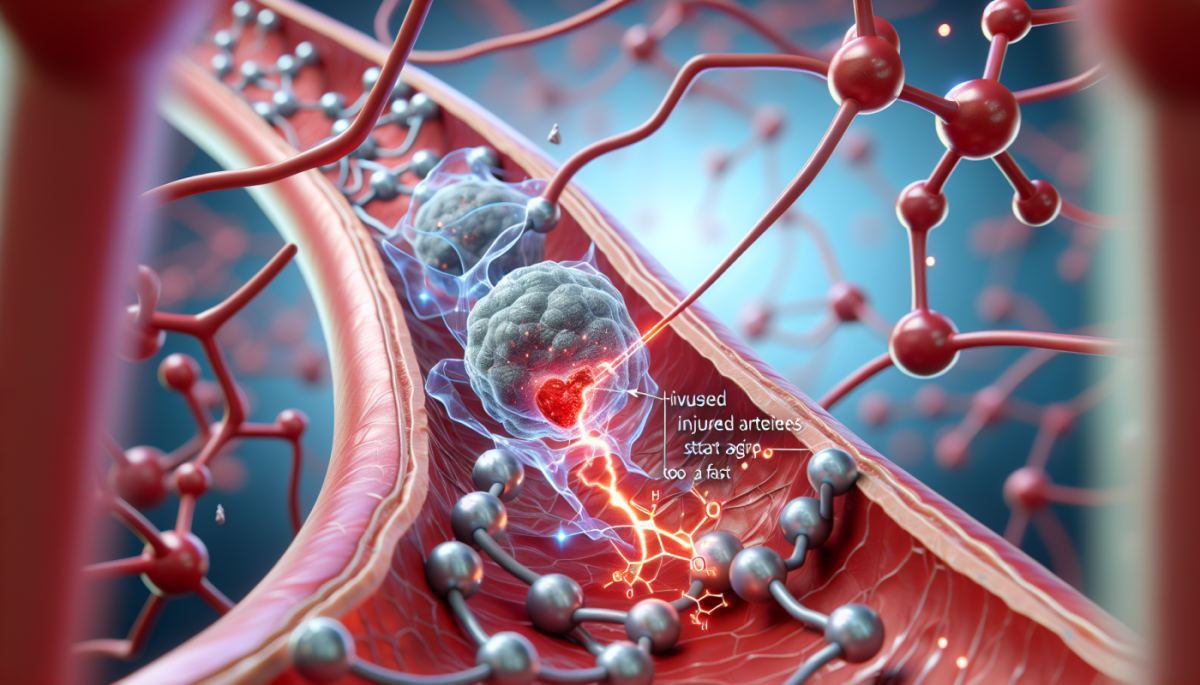
When an artery is injured, the damage does not stop at the wound itself. Something subtler and more consequential begins to unfold inside the cells lining the vessel wall. Their nuclei, the command centers that regulate cellular identity and function, start to lose their shape. And once that architecture collapses, the cells begin aging at an accelerated rate, setting off a chain of events that researchers are only now beginning to map with precision.
A study published in Aging Cell has identified this nuclear deformation as a critical early step in the deterioration of vascular smooth muscle cells following arterial injury. The finding reframes how scientists think about vascular aging, shifting attention away from the usual suspects like inflammation and oxidative stress, and toward the structural integrity of the cell nucleus itself. What the researchers also found, perhaps more surprisingly, is that zinc appears to play a meaningful protective role in halting this process.
The nucleus is not simply a passive container for DNA. Its shape is actively maintained by a scaffolding of proteins, and that shape matters enormously for how genes are expressed and how cells respond to stress. When arterial cells are injured, that scaffolding degrades. The nucleus warps. The cell, now reading its own genome through a distorted lens, begins behaving like an old cell even if it is not one. This is accelerated senescence, and in the context of arteries, it is a serious problem.
Senescent cells do not simply stop working. They become actively disruptive, secreting inflammatory signals that damage neighboring tissue, stiffening vessel walls, and impairing the artery's ability to heal properly. In cardiovascular medicine, this kind of cellular aging is increasingly understood as a driver of atherosclerosis, restenosis after surgical interventions, and broader arterial dysfunction. The question the Aging Cell researchers were chasing was not just what causes this cascade, but whether it can be interrupted.
That is where zinc enters the picture. The mineral, long associated with immune function and wound healing, appears to stabilize the nuclear architecture in injured vascular cells, preventing the deformation that triggers premature aging. The mechanism is not yet fully characterized, but the implication is striking: a relatively simple nutritional factor may be acting as a structural guardian at one of the most vulnerable moments in a cell's life.
The cardiovascular implications are significant on their own terms. Arterial injury is not a rare event. It happens during angioplasty, stent placement, and bypass surgery, procedures performed on millions of patients every year. Restenosis, the re-narrowing of arteries after these interventions, remains a persistent clinical problem, and the cellular aging triggered by injury is one of the mechanisms thought to drive it. If zinc can slow or prevent that process, even partially, it opens a therapeutic avenue that is both accessible and relatively low-risk.
But the second-order consequences reach further than cardiology. The discovery that nuclear shape is a proximate cause of accelerated cellular aging, rather than merely a symptom of it, adds weight to a growing body of research on the nuclear lamina and its role in age-related disease. Conditions like progeria, the rare rapid-aging disorder, are caused by mutations in the proteins that maintain nuclear structure. The new findings suggest that even in ordinary injury contexts, the same architectural fragility is at work, just more slowly and more quietly.
This also raises questions about zinc deficiency at a population level. Deficiency is more common than most people assume, particularly among older adults, people with diabetes, and those with gastrointestinal conditions that impair absorption. If zinc is genuinely protective against injury-induced vascular senescence, then populations already running low on the mineral may be accumulating arterial damage faster than their peers, with no obvious clinical signal until something goes wrong.
The research does not yet tell us whether zinc supplementation in patients undergoing vascular procedures would produce measurable benefits, or what doses and timing would matter. Those are the questions that will need clinical trials to answer. But the underlying logic is now clearer than it was: injury destabilizes nuclear architecture, destabilized nuclei age prematurely, and zinc appears to hold that architecture together long enough for repair to take hold.
What makes this finding genuinely interesting is not just the mechanism but the implication that aging, even at the cellular level, is not always a slow and inevitable drift. Sometimes it is a structural failure waiting for the right stressor to trigger it, and sometimes the difference between resilience and collapse is a mineral most people never think about.


Discussion (0)
Be the first to comment.
Leave a comment