
Blue Origin's New Glenn rocket is preparing for its third flight, and this time it will carry something that changes the calculus of the entire mission: a booster that has already been to space and back. That single fact, easy to gloss over in a headline, represents a meaningful threshold for Jeff Bezos's rocket company, which has spent years watching SpaceX normalize reusability while New Glenn was still finding its footing.
The first New Glenn flight in January 2025 reached orbit but failed to land its booster. The second flight succeeded on both counts, recovering the first stage on the company's drone ship in the Atlantic. Now, for the third mission, Blue Origin is doing what SpaceX has done dozens of times with Falcon 9: flying a booster that has already proven itself. It sounds routine. It isn't.
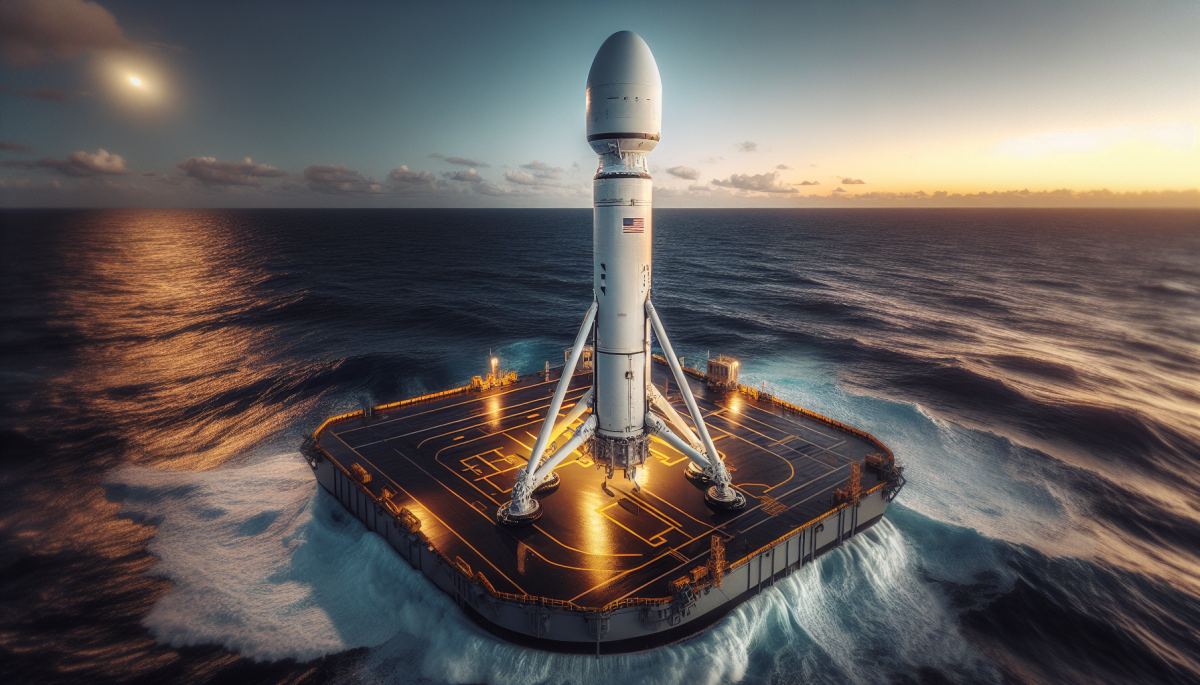
Reusability is not just an engineering achievement. It is an economic forcing function. The entire logic of reusable rocketry is that the marginal cost of each additional flight drops sharply once the fixed cost of building the vehicle has been absorbed. SpaceX understood this early and built Falcon 9's business model around it, eventually flying single boosters more than twenty times. Blue Origin is now entering that same compounding curve, albeit several years behind.
The timing matters more than it might appear. The commercial launch market is not waiting for Blue Origin to catch up. SpaceX's Falcon 9 has become so dominant that it now handles a majority of global orbital launches, and Starship, which recently completed a full-duration static fire of its upgraded V3 Raptor engines, is being designed to make even Falcon 9 look expensive. Meanwhile, the European Space Agency is taking what reporters are calling a "tentative step" toward crewed launch capability, a sign that sovereign launch ambitions are still alive but fragile across the Atlantic.
For Blue Origin, the window to establish New Glenn as a credible alternative is real but not unlimited. Amazon's Project Kuiper constellation needs launch capacity, and New Glenn is expected to carry a significant share of those satellites. That internal demand gives Blue Origin a guaranteed manifest that SpaceX never had in its early years, which is both an advantage and a crutch. The risk is that New Glenn becomes optimized for Kuiper rather than hardened into a general-purpose commercial workhorse.
There is also the matter of government contracts. The U.S. Space Force and NASA both represent anchor customers that can stabilize a launch provider's revenue long enough to iterate toward reliability. Blue Origin has pursued those relationships, but credibility in that market is earned through demonstrated cadence, not press releases. Flying a reused booster on the third mission sends a signal that the company is serious about operational tempo.
The broader systems consequence here is what economists might call competitive discipline. When two or more providers can credibly offer reusable orbital launch, the pricing pressure on the entire market intensifies. Rocket Lab has already felt this with its Electron vehicle, pivoting toward the larger Neutron rocket partly in response to the shifting economics above it. If New Glenn establishes a reliable reuse cadence, mid-market launch providers face a squeeze from both ends: Falcon 9 and New Glenn competing on price and reliability for medium-to-heavy payloads, while smaller vehicles fight over the rideshare and small-sat segments.
For the ESA, the pressure is existential in a quieter way. Ariane 6, which finally flew in 2024 after years of delays, is not reusable. European governments are now funding studies into next-generation reusable systems, but those vehicles are years away. Every successful New Glenn reuse flight is a data point that European launch advocates will use in budget arguments, and every delay in Europe's own reusability roadmap widens the gap.
What Blue Origin does with this third flight will not determine the outcome of the launch market. But it will tell observers something important about whether the company has internalized the operational discipline that reusability demands. Recovering a booster once is a milestone. Flying it again is the beginning of a system.
Discussion (0)
Be the first to comment.
Leave a comment