
There is something almost paradoxical about a cell that refuses to die. It stops dividing, loses its purpose, and yet lingers in tissue like an uninvited guest that won't leave and won't stop making noise. These are senescent cells, sometimes called zombie cells, and the science building up around them has quietly become one of the most consequential frontiers in medicine.
Cellular senescence is not a new concept. Biologists have understood since the 1960s that human cells have a finite capacity to replicate, a limit now associated with the shortening of telomeres and various forms of cellular stress. What has changed dramatically in the past decade is the recognition that senescent cells don't just sit there harmlessly. They secrete a toxic cocktail of inflammatory proteins, enzymes, and signaling molecules collectively known as the senescence-associated secretory phenotype, or SASP. This chemical chatter damages neighboring cells, degrades tissue architecture, and drives chronic inflammation, the kind of low-grade, persistent inflammation now linked to Alzheimer's disease, cardiovascular disease, diabetes, osteoarthritis, and a growing list of age-related conditions.
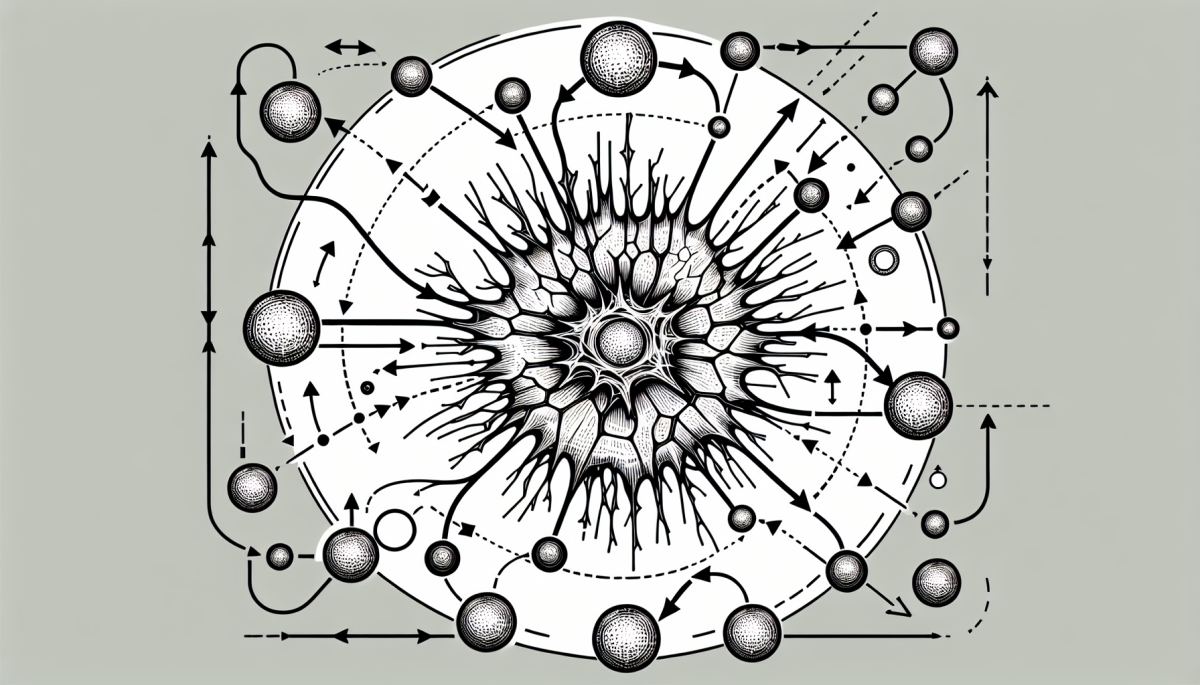
The accumulation of senescent cells is not uniform or random. It accelerates with age, with obesity, with chronic stress, and with exposure to radiation or chemotherapy. This last point carries a particular irony: cancer treatments that save lives by stopping tumor cells from dividing also seed the body with senescent cells that may contribute to the long-term health decline many cancer survivors experience. The therapy that defeats one disease may quietly accelerate others.
The field responding to this challenge is called senotherapeutics, and it has attracted serious scientific and commercial attention. The two main strategies are senolytics, drugs that selectively kill senescent cells, and senomorphics, compounds that suppress the SASP without necessarily eliminating the cells themselves. The distinction matters. Senolytics aim for clearance; senomorphics aim for quieting. Both approaches carry different risk profiles and different implications for long-term use.
Among the most studied senolytic combinations is dasatinib and quercetin, a pairing of a cancer drug and a plant-derived flavonoid that has shown promise in early human trials for conditions including diabetic kidney disease and pulmonary fibrosis. The Mayo Clinic has been a center of gravity for much of this research, with teams led by scientists like James Kirkland publishing findings that have helped move senolytic research from mouse models into human clinical trials. Navitoclax, a BCL-2 inhibitor originally developed for leukemia, has also shown senolytic properties, though its side effects, particularly platelet reduction, complicate its use in healthy aging populations.
The challenge the field now faces is one of translation and trust. Mouse studies have repeatedly shown that clearing senescent cells extends healthspan, delays disease, and in some experiments extends lifespan itself. But mice are not humans, and the history of longevity science is littered with interventions that worked beautifully in rodents and failed or caused harm in people. The pressure to move quickly is real, driven partly by a graying global population and partly by the enormous commercial interest that has flooded into longevity biotechnology over the past five years.
Here is where systems thinking becomes essential. Senescent cells are not purely destructive. Research has shown they play roles in wound healing, embryonic development, and tumor suppression. A therapy that clears them too aggressively, or in the wrong tissue context, could disrupt processes the body depends on. This is the central tension the field has not yet resolved: how to distinguish the harmful accumulation of senescent cells in aged tissue from the beneficial, transient senescence that serves a biological function.
There is also a second-order consequence worth watching carefully. If senolytic therapies become widely available and are perceived as safe, they could alter how people think about the lifestyle factors that drive senescent cell accumulation in the first place. Obesity, smoking, chronic stress, and sedentary behavior all accelerate senescence. A pill that appears to clean up the damage could, perversely, reduce the incentive to address the upstream causes, creating a moral hazard embedded in the biology of aging itself.
The science of senescence is genuinely exciting, and the researchers advancing it are asking some of the most important questions in medicine. But the history of complex biological interventions suggests that the cells we are trying to silence may have more to say than we currently understand. The next decade of clinical trials will be less about whether senotherapeutics work and more about learning, carefully, when and for whom they should.
References
- Kirkland et al. (2017) — Senolytic drugs: from discovery to translation
- He & Sharpless (2017) — Senescence in Health and Disease
- Tchkonia et al. (2013) — Cellular senescence and the senescent secretory phenotype
- Zhu et al. (2015) — The Achilles' heel of senescent cells: from transcriptome to senolytic drugs
- van Deursen (2014) — The role of senescent cells in ageing



Discussion (0)
Be the first to comment.
Leave a comment