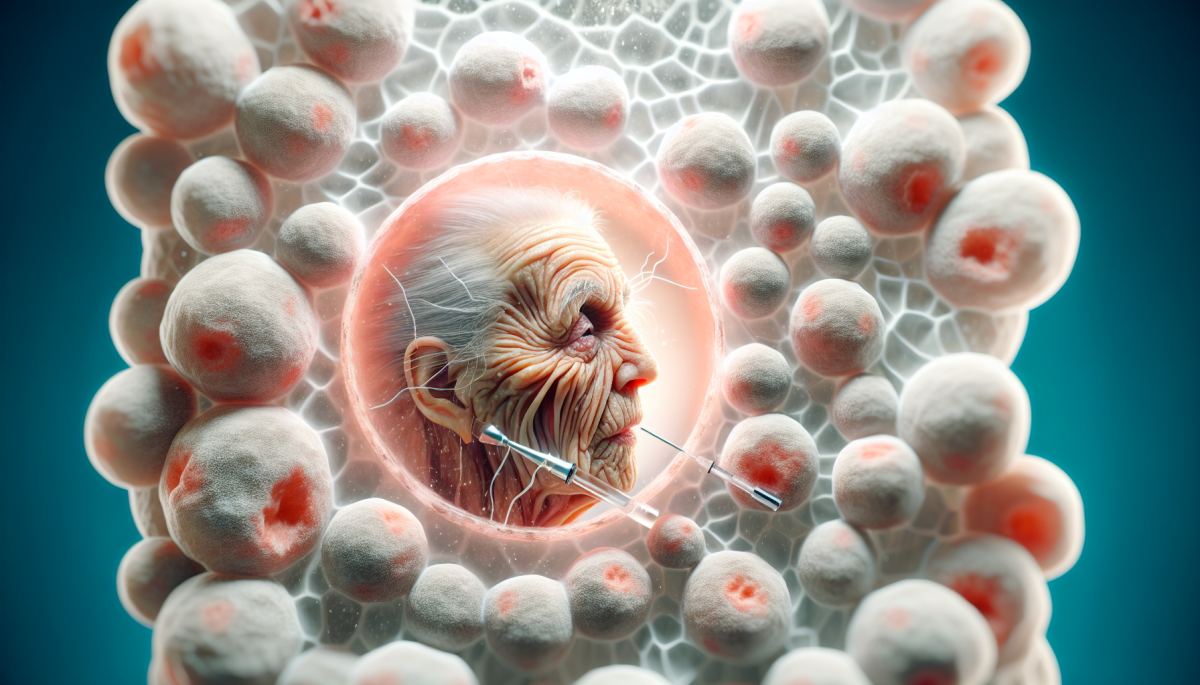
Skin aging is one of those biological processes that feels gradual until it suddenly doesn't. Wrinkles deepen, wounds heal more slowly, and the skin loses the plump resilience of youth. For decades, researchers attributed much of this to collagen loss or sun damage. But a study published in Aging Cell is pointing toward something more fundamental: a dermal protein that appears to govern the very population of fast-cycling skin cells that keep the skin renewing itself.
Not all skin cells behave the same way. The epidermis, the outermost layer of skin, depends on a constant supply of rapidly dividing keratinocytes to replace cells lost through daily wear. These fast-cycling cells are the workhorses of skin renewal, and their numbers are not fixed. They are maintained, regulated, and apparently dependent on signals from the dermis, the deeper connective tissue layer beneath. What the Aging Cell research describes is how a specific dermal protein plays a direct role in sustaining those fast-cycling populations. When the protein's presence or function declines, as it appears to do with age, the pool of actively dividing cells shrinks, and the skin's capacity for self-renewal diminishes with it.
This is a meaningful shift in how scientists frame skin aging. Rather than treating the epidermis as the primary site of failure, the research draws attention to the dermis as a kind of command layer, one that sends maintenance signals upward. The skin, in this framing, is less a passive barrier wearing out over time and more a dynamic system whose aging is partly orchestrated from below.
What makes this finding particularly interesting from a systems perspective is the feedback architecture it implies. Fast-cycling cells don't just renew the skin surface. They also contribute to the structural and signaling environment that supports the dermis itself. If dermal protein levels decline with age and that decline reduces the fast-cycling cell population, the resulting loss of epidermal activity could in turn reduce the biochemical signals that help maintain dermal integrity. You end up with a loop where each layer's deterioration accelerates the other's.
This kind of coupled decline is well-documented in other organ systems. In bone, for instance, the balance between osteoblasts and osteoclasts is maintained through reciprocal signaling, and disrupting one side of that relationship cascades through the entire tissue. The skin may operate on a similar principle, and if so, interventions that target only the epidermis, as most topical anti-aging products do, may be addressing symptoms rather than the underlying regulatory failure.
The dermal environment is also shaped by factors well beyond any single protein. Chronic inflammation, UV exposure, hormonal shifts, and metabolic changes all remodel the dermis over time. The protein identified in this research likely doesn't act in isolation. It probably sits within a broader network of growth factors, extracellular matrix components, and cell-to-cell communication pathways. Understanding where it fits in that network will be essential before any therapeutic application becomes realistic.
The practical implications of this research extend beyond cosmetics. Skin integrity is a genuine clinical concern, particularly in older adults. Impaired wound healing, increased infection risk, and pressure ulcer formation are all linked to the declining regenerative capacity of aging skin. If dermal signaling is a meaningful lever in that decline, it opens a new class of potential interventions, ones aimed at restoring or mimicking the protein's function in aged tissue rather than simply moisturizing the surface.
There is also a broader scientific implication. Research like this reinforces the idea that aging in complex tissues is rarely a single-pathway problem. It tends to emerge from the gradual uncoupling of systems that once maintained each other. The skin is a relatively accessible organ, which makes it a useful model for studying these dynamics. Insights gained here could inform how researchers think about regenerative decline in less accessible tissues, from the gut lining to the lung epithelium.
The more researchers look at aging through a systems lens, the more it resembles a slow unraveling of coordination rather than a simple wearing out of parts. That distinction matters enormously for how medicine will eventually intervene, and the skin may turn out to be one of the clearest windows into that process.


Discussion (0)
Be the first to comment.
Leave a comment