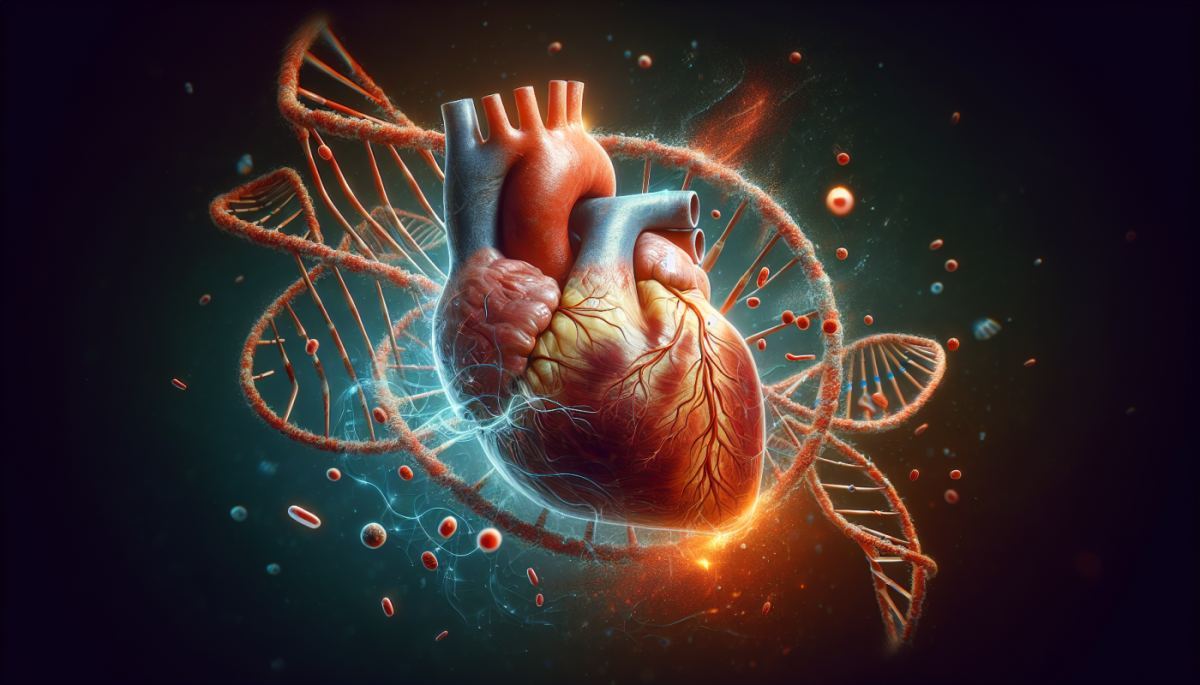
The heart is the only organ we can feel working. It announces itself with every sprint, every shock, every quiet moment of anxiety. And yet for all its intimacy, the biological story of how it ages has remained surprisingly murky, a tangle of cellular processes that medicine has struggled to map with precision. A new review published in the European Heart Journal is changing that, offering one of the more comprehensive accounts yet of what actually happens inside cardiac tissue as the decades accumulate.
The review centers on several interlocking mechanisms, with mitochondrial dysfunction emerging as a central villain in the story. Mitochondria, the energy-producing structures inside cells, are particularly critical in heart muscle cells because the heart never rests. It demands a continuous, enormous supply of ATP, the cellular currency of energy. As we age, mitochondria in cardiac cells become less efficient, more prone to producing damaging reactive oxygen species, and less capable of repairing or replacing themselves through a quality-control process called mitophagy. The result is a kind of slow energy crisis playing out inside the very muscle responsible for keeping everything else alive.
What makes the aging heart such a compelling systems-level story is that no single failure explains the decline. Mitochondrial dysfunction does not operate in isolation. It interacts with a broader deterioration in cellular repair mechanisms, changes in the extracellular matrix that makes heart tissue progressively stiffer, and a shift in the balance between cell death and cell renewal that tips, over time, toward loss. Cardiomyocytes, the specialized muscle cells of the heart, have almost no capacity to regenerate in adult humans. When they die, they are replaced not by new muscle cells but by fibrous scar tissue, which contracts less effectively and conducts electrical signals less reliably. This fibrosis is not a disease in the traditional sense. It is the heart doing its best with the tools available, and it is quietly, incrementally, making the organ worse at its job.
The inflammatory dimension adds another layer. Aging is now widely understood to involve a state of chronic low-grade inflammation that researchers sometimes call "inflammaging." In the heart, this manifests as persistent immune activation that accelerates the very cellular damage it is nominally trying to repair. Macrophages and other immune cells that should be clearing debris and supporting tissue maintenance instead contribute to a feedback loop of oxidative stress and fibrosis. The review's attention to these overlapping cycles is what elevates it beyond a simple catalogue of age-related changes. The heart does not just wear out. It gets caught in a series of self-reinforcing traps.
The implications here extend well beyond cardiology wards. Heart failure in older adults is already one of the most expensive and resource-intensive conditions in healthcare systems across the developed world. In the United States alone, heart failure accounts for more hospitalizations among people over 65 than any other diagnosis. As populations in Europe, North America, and East Asia age rapidly, the downstream pressure on health systems from cardiac aging is not a distant concern. It is arriving now, and the cellular mechanisms described in this review are the upstream causes of that pressure.
Understanding those mechanisms also opens a more precise conversation about intervention. For decades, cardiac medicine has focused heavily on managing risk factors like hypertension, cholesterol, and diabetes, all of which accelerate the aging process in the heart. But if mitochondrial dysfunction and fibrosis are the actual tissue-level events driving decline, then therapies that target those processes directly, including senolytic drugs that clear aged and dysfunctional cells, mitochondria-targeted antioxidants, and compounds that modulate the fibrotic response, become more than experimental curiosities. Several are already in clinical trials.
The second-order consequence worth watching is how this kind of mechanistic clarity reshapes the boundary between aging and disease. If the cellular changes described in this review are universal features of the aging heart rather than pathological exceptions, then the question of when normal aging becomes heart failure becomes harder to answer, and harder to ignore. That ambiguity has real consequences for how and when treatment begins, how clinical trials are designed, and ultimately how societies decide to allocate care for their oldest members.
The heart has always been a symbol of vitality. What science is now revealing is that its vulnerability is written into its biology from the start, and that the race to understand that vulnerability is, in the most literal sense, a matter of life and death.



Discussion (0)
Be the first to comment.
Leave a comment