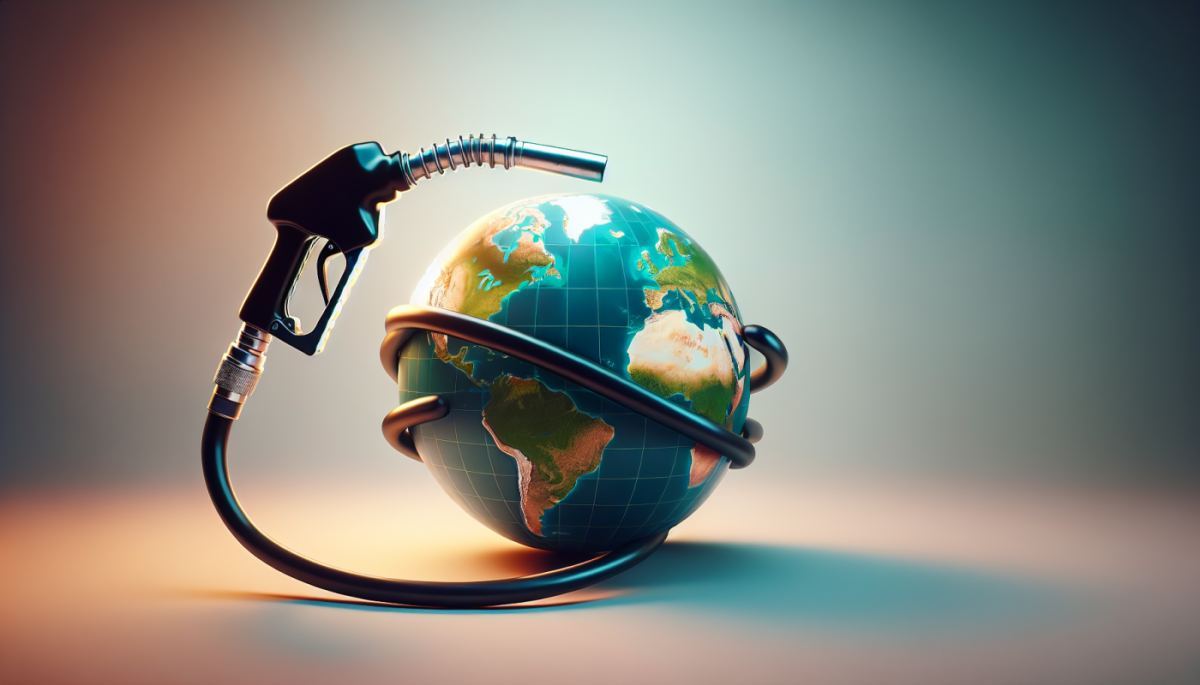
Energy price shocks don't land equally. When oil and gas markets convulse, the pain radiates outward in waves, and the countries least responsible for the volatility tend to absorb the worst of it. Wealthy nations have buffers: strategic reserves, diversified energy mixes, subsidized consumers, and central banks with room to maneuver. Much of the developing world has none of those things. What it has instead is import dependency, dollar-denominated energy bills, thin fiscal margins, and populations already spending a disproportionate share of income on fuel and food.
The question of which country suffers most from an energy shock is not simply a matter of who imports the most oil. It is a systems problem, shaped by at least four overlapping pressures: the share of energy in the national import bill, the availability of foreign exchange reserves to pay that bill, the degree to which domestic energy prices are subsidized or pass-through, and the political capacity to absorb the social fallout when prices rise anyway. A country can score badly on all four simultaneously, and several do.
Sub-Saharan Africa presents some of the starkest cases. Nations like Malawi, Senegal, and Ethiopia import nearly all of their petroleum products while earning foreign exchange from a narrow base of agricultural exports. When oil prices rise, the import bill swells in dollar terms precisely when commodity export revenues may be stagnating or falling, a double squeeze that drains reserves fast. The International Monetary Fund has documented how energy import shocks in low-income countries translate almost immediately into currency pressure, inflation, and current account deterioration in ways that take years to unwind.

South Asia adds another dimension. Pakistan and Sri Lanka both experienced acute foreign exchange crises in recent years that were significantly worsened by energy import costs. Sri Lanka's 2022 collapse was not caused solely by oil prices, but the energy bill was a critical accelerant, consuming foreign reserves that might otherwise have serviced debt or stabilized the rupee. Pakistan has repeatedly turned to the IMF for emergency support, with energy subsidies and import costs forming a central part of the fiscal stress. These are not isolated failures. They are predictable outputs of a system in which poor countries are price-takers in a market designed around the needs of wealthy consumers.
The buffer question matters enormously here. Countries with sovereign wealth funds, deep reserve pools, or access to concessional financing can smooth the shock over time. Countries without those tools must either pass the full price increase to consumers, cut other spending, or borrow at punishing rates. Each of those choices carries its own cascade. Passing costs to consumers fuels inflation and can trigger social unrest. Cutting spending hollows out health and education systems. Borrowing at high rates deepens debt traps that constrain future resilience.
What rarely gets discussed is how energy shocks interact with food systems in import-dependent countries. Fertilizer is a petroleum derivative. Transport runs on diesel. Cold chains for perishables require electricity. When energy prices spike, food production costs rise, distribution costs rise, and food prices follow. For households in low-income countries already spending 40 to 60 percent of income on food, this is not an abstract economic statistic. It is a direct reduction in caloric intake, a withdrawal of children from school, a decision to delay medical care.
The second-order effect that deserves more attention is what sustained energy vulnerability does to investment incentives. When governments in poor countries are repeatedly forced into crisis mode by energy shocks, long-term planning collapses. Infrastructure projects stall. Renewable energy transitions, which would reduce import dependency over time, get deprioritized in favor of immediate fiscal survival. The very shocks that make the case for energy diversification also destroy the fiscal space needed to pursue it. This is a feedback loop with no natural exit unless external financing steps in deliberately and at scale.
The countries most exposed to energy shocks are also, not coincidentally, the countries with the least voice in the institutions that govern global energy markets. OPEC decisions, Federal Reserve interest rate moves that strengthen the dollar, and geopolitical disruptions in producing regions all ripple through to Nairobi, Dhaka, and Colombo with force that policymakers there can neither anticipate fully nor cushion adequately.
The transition to cleaner energy offers a genuine escape route from this trap, but only if the financing architecture changes alongside the technology. Without that, the next energy shock will find the same countries exposed, the same buffers absent, and the same cascades running their course.
References
- IMF Staff (2022) — How Energy Price Shocks Affect Economies
- World Bank (2022) — Commodity Markets Outlook: The Impact of the War in Ukraine on Commodity Markets
- Guénette et al. (2022) — Implications of the War in Ukraine for the Global Economy
- IMF (2023) — World Economic Outlook: A Rocky Recovery
- IEA (2022) — World Energy Outlook 2022
Discussion (0)
Be the first to comment.
Leave a comment