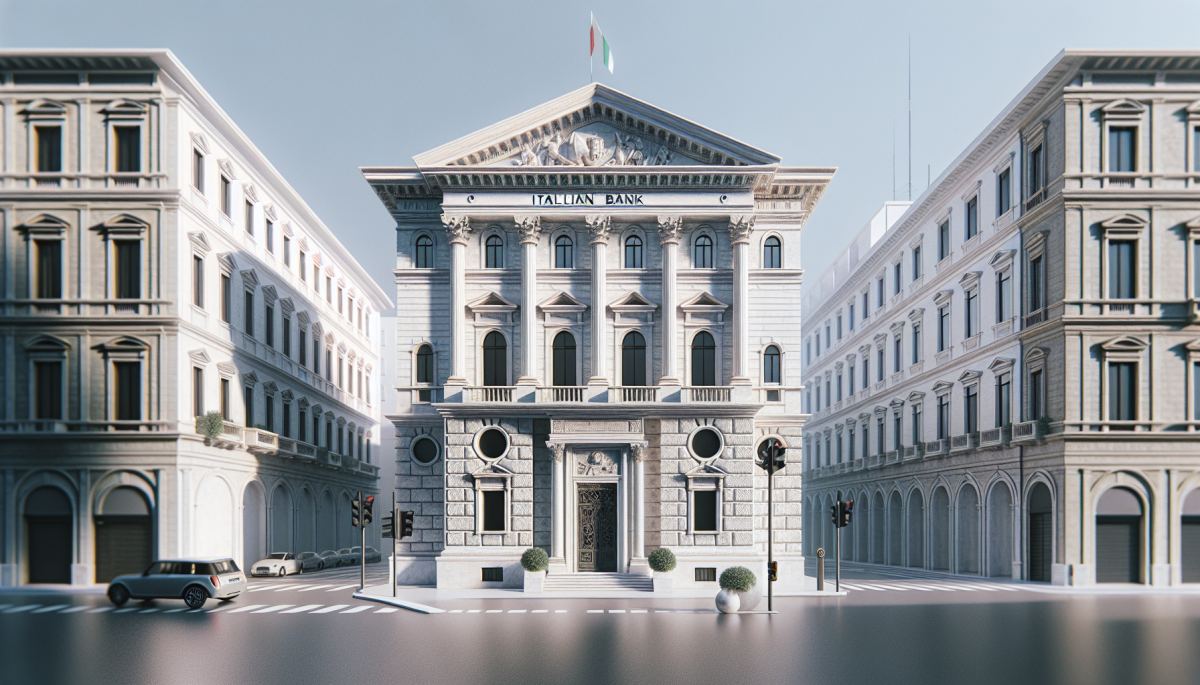
When the history of Italian banking is written, the past few months may warrant their own chapter. A boardroom coup, allegations of conspiracy, and the kind of shadowy maneuvering that makes observers wonder whether Italian high finance ever really left the era of the old merchant families, all of it has converged into a scandal that cuts to the heart of how power actually moves through European financial institutions.
The drama centers on a hostile takeover bid and the fierce resistance it has provoked, drawing in regulators, politicians, and figures whose connections stretch across the Italian establishment. What looks on the surface like a corporate governance dispute is, at its core, a contest over who controls the arteries of Italian capital, and by extension, who shapes the economic fate of one of the eurozone's largest economies.
Italy's banking sector has long operated as something closer to a political ecosystem than a conventional market. The country's fondazioni bancarie, the charitable foundations that hold significant stakes in major banks, were designed after the 1990 Amato Law to separate banking from politics. In practice, they have often done the opposite, becoming vehicles through which local political networks maintain influence over credit allocation, regional investment, and ultimately, electoral outcomes. When a major bank changes hands, it is not merely shareholders who feel the tremor.
This structural reality explains why the current conflict has escalated so quickly beyond the boardroom. The stakes are not simply financial returns. They involve relationships between banks and local governments, between lenders and the small and medium enterprises that form the backbone of the Italian economy, and between Italian capital and the broader European financial architecture that has been slowly consolidating since the 2008 crisis. The European Central Bank has pushed for years toward a more integrated, cross-border banking union, and Italian institutions have often been the most resistant, partly because their entanglements with domestic politics make foreign ownership genuinely complicated.
The alleged conspiracy elements of the current affair, whatever their ultimate legal resolution, reflect something real about how these institutions defend themselves. When outsiders attempt to acquire control, the response frequently involves mobilizing political contacts, leaking damaging information, and constructing coalitions of resistance that span government ministries and regulatory bodies. Whether or not any laws were broken in this instance, the playbook is familiar.
The second-order consequences of this kind of instability are easy to underestimate. Italian banks remain heavily exposed to domestic sovereign debt, a feedback loop that the ECB has flagged repeatedly as a systemic vulnerability. When confidence in a major institution wavers, even briefly, the ripple effects can tighten credit conditions for businesses that have no direct connection to the dispute. Small manufacturers in Lombardy or agricultural cooperatives in Sicily do not follow banking news closely, but they feel it when their credit lines are quietly reviewed.
There is also a European dimension that deserves attention. The EU's banking union project has stalled partly because member states, Italy prominent among them, have been reluctant to surrender the national tools they use to manage their banking sectors. Every episode that reinforces the perception of Italian banking as politically entangled makes it harder to build the cross-border trust that a genuine banking union requires. Investors and counterparties in Frankfurt or Amsterdam watch these episodes and quietly adjust their risk models.
The corpse reportedly connected to the affair, its relevance still unclear, adds a layer of gothic atmosphere that Italian financial scandals have historically been prone to. From the death of Roberto Calvi under Blackfriars Bridge in 1982 to the long unraveling of Monte dei Paschi di Siena, Italy has a documented history of banking crises that refuse to stay within the boundaries of spreadsheets and regulatory filings.
What the current episode ultimately reveals is that the modernization of Italian banking, however real in technical terms, has not fully dissolved the older structures of influence that give these institutions their peculiar character. The question worth watching is not who wins the immediate boardroom battle, but whether the outcome accelerates or delays the deeper integration that European financial stability actually requires.
Discussion (0)
Be the first to comment.
Leave a comment