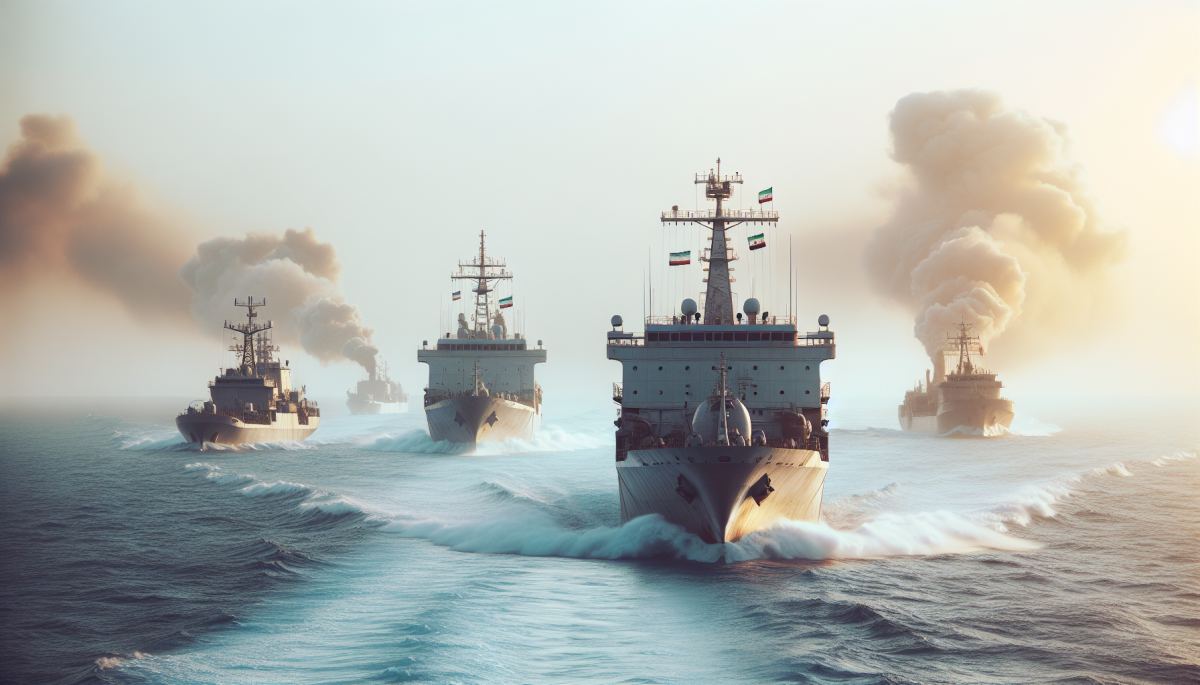
The Strait of Hormuz has long functioned as one of the world's most consequential pressure valves, a narrow chokepoint through which roughly a fifth of global oil supply passes each day. Tehran's recent decision to allow Iraqi vessels transit rights through the strait carries implications that extend well beyond a bilateral shipping arrangement. If the move unlocks access to approximately 3 million barrels per day of Iraqi crude for international markets, it could reshape the supply-demand calculus that has kept oil prices from collapsing entirely in a year already defined by demand uncertainty.

Iraq is OPEC's second-largest producer, and its oil has not always moved freely. The geography of the Persian Gulf means that Iraqi exports are heavily dependent on infrastructure and political relationships that Iran, sitting astride the strait, can influence. By granting Iraqi ships passage, Tehran is effectively turning a geographic lever, one it has historically used as a tool of pressure, into something that looks more like a concession. The question worth asking is why now, and for whose benefit.
Iran's motivations are rarely singular. The country remains under heavy U.S. sanctions, and its own oil exports move through shadow fleets and gray-market channels that obscure the true volume reaching buyers, particularly in China. Allowing Iraqi ships through Hormuz does not directly ease Iran's own sanctions burden, but it does something potentially more valuable: it positions Tehran as a cooperative regional actor at a moment when it is under pressure from multiple directions, including stalled nuclear negotiations and continued economic strain at home.
There is also a subtler dynamic at play. Iraq and Iran share deep economic and political entanglement. Iranian gas powers a significant portion of Iraq's electricity grid, and Iraqi markets absorb Iranian goods that cannot easily reach Western buyers. A gesture that benefits Iraqi oil revenues is, indirectly, a gesture that stabilizes a neighbor whose dysfunction would create serious problems for Tehran. The two countries' fates are more intertwined than most Western energy analysis tends to acknowledge.
For global oil markets, the timing matters enormously. OPEC+ has been engaged in a delicate and increasingly strained effort to manage production cuts, with Saudi Arabia bearing a disproportionate share of the burden. Any significant increase in Iraqi supply reaching international buyers, even if gradual, adds pressure to a coalition already showing fracture lines. Brent crude has faced persistent headwinds from weakening Chinese demand and a stronger-than-expected U.S. shale output recovery. Adding 3 million barrels per day of newly accessible Iraqi crude to that environment is not a neutral event.
The systems-level consequence that deserves attention here is what this does to OPEC+ cohesion over the medium term. Saudi Arabia has repeatedly demonstrated willingness to cut its own production to defend a price floor, but that willingness has limits, and those limits are tested every time another member state finds a way to move more oil without formally breaking quota agreements. Iraq has a long history of producing above its OPEC+ targets and then negotiating forgiveness after the fact. If Iranian cooperation now makes it easier for Iraqi barrels to reach market, Riyadh faces a harder choice: absorb the price impact, cut further, or begin to question whether the coalition's architecture is worth maintaining.
A weakening OPEC+ is not simply a story about oil prices. It is a story about the fiscal stability of governments across the Gulf, about petrodollar recycling into U.S. Treasuries, and about the speed at which energy transition investment gets funded or deferred. Lower oil revenues compress the budgets of states that have staked their social contracts on hydrocarbon wealth. That compression, in turn, accelerates domestic political pressures that rarely stay contained within borders.
The strait of Hormuz has always been more than a shipping lane. It is a signal. When Iran opens it, closes it, or threatens to mine it, markets and governments pay attention not just to the immediate flow of oil but to what the gesture reveals about the underlying balance of power in the Gulf. This opening, quiet as it appears, may be telling us something about where that balance is shifting, and the answer will show up in prices, budgets, and politics long before it shows up in any formal diplomatic communique.
Discussion (0)
Be the first to comment.
Leave a comment