
China closed 2024 meeting its official GDP growth target of around 5 percent, a result that drew predictable applause from state media and cautious relief from global markets. But the composition of that growth tells a more complicated story, one that reveals deep structural tensions inside the world's second-largest economy and raises serious questions about whether this kind of performance can be sustained.
The headline number was propped up largely by an extraordinary surge in exports. Chinese manufacturers, facing a domestic economy still hobbled by a property sector downturn and persistently weak consumer confidence, redirected their output outward with remarkable aggression. Export volumes climbed sharply, driven by electric vehicles, solar panels, batteries, and a broad range of industrial goods that China now dominates at a global scale. Meanwhile, fixed asset investment, long one of the core engines of Chinese growth, remained sluggish. Domestic consumption, despite repeated government pledges to rebalance the economy toward household spending, continued to underperform relative to its potential.
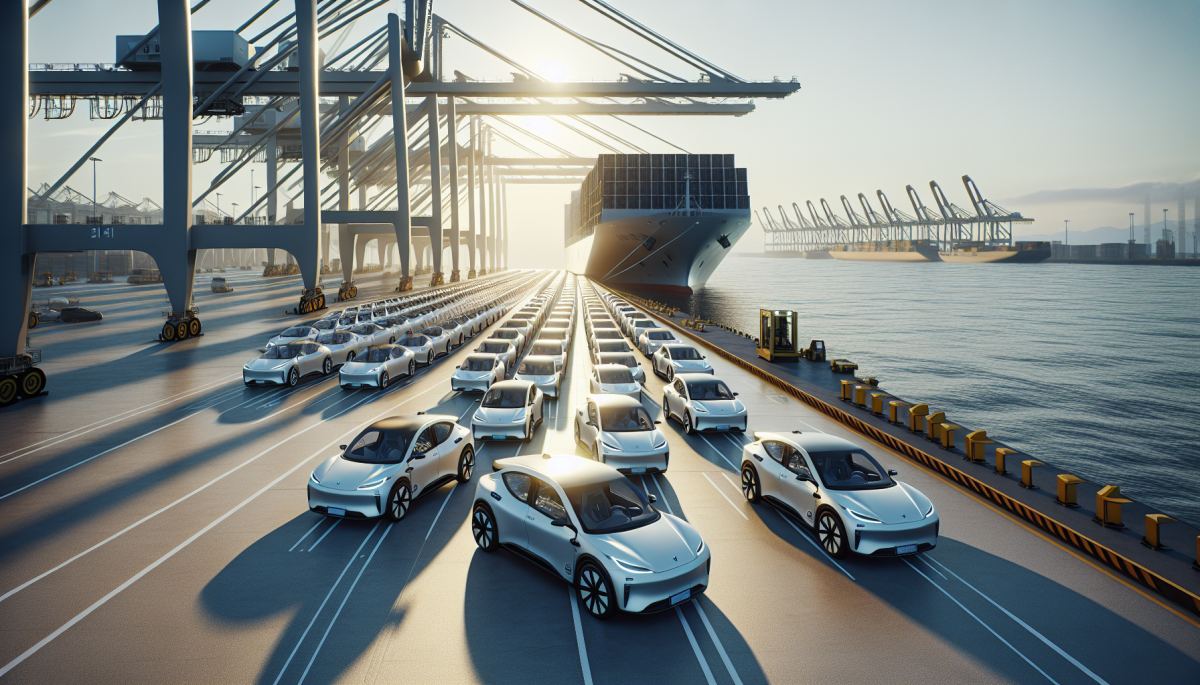
What this means, in practical terms, is that China essentially exported its way to its target. That is not inherently unusual for a manufacturing-heavy economy, but the degree to which exports compensated for internal weakness is striking. It reflects a pattern that economists have flagged for years: China's growth model remains dangerously tilted toward production over consumption, supply over demand, and external markets over domestic ones.
The reliance on exports to paper over domestic weakness creates a feedback loop with consequences that extend well beyond China's borders. When Chinese factories overproduce to compensate for soft home demand, the surplus floods global markets, depressing prices in sectors from steel to semiconductors to clean energy hardware. Trading partners, particularly in Europe and Southeast Asia, find their own manufacturers undercut. The political response, predictably, is tariffs and trade barriers, which is precisely what has been unfolding across the European Union and the United States over the past two years.
The Biden administration's tariff escalations on Chinese EVs and solar products, continued and expanded under the Trump administration, are a direct reaction to this dynamic. The EU launched its own anti-subsidy investigation into Chinese electric vehicles in 2023, ultimately imposing additional duties in late 2024. These measures do not simply affect bilateral trade flows. They reshape global supply chains, accelerate industrial policy competition, and push countries to pick sides in ways that fragment the open trading system that underpinned global growth for three decades.
The second-order effect worth watching closely is what happens to the countries caught in the middle, particularly emerging economies in Africa, Latin America, and Southeast Asia that have welcomed cheap Chinese goods and investment but are now being pressured by Western partners to limit their exposure to Chinese technology and infrastructure. They face a genuine dilemma: affordable Chinese industrial inputs help their own development, but deepening ties with Beijing carries growing geopolitical costs.
Back inside China, the failure to meaningfully boost domestic consumption is not simply a policy oversight. It is rooted in structural features of the Chinese economy that are genuinely difficult to change quickly. Chinese households save at extraordinarily high rates, partly because the social safety net, covering healthcare, pensions, and education, remains underdeveloped relative to the country's income level. Without confidence that the state will catch them if they fall, households hold back spending. The property crisis has compounded this by destroying household wealth: real estate accounts for roughly 70 percent of Chinese household assets, according to estimates from Peking University researchers, and years of falling prices have left millions of families feeling poorer even as official GDP figures look respectable.
Beijing has announced stimulus measures, including consumer goods trade-in subsidies and modest expansions of social spending, but analysts broadly agree these fall short of the scale needed to fundamentally reorient the economy. The political incentives within the Chinese system still reward local officials for infrastructure investment and industrial output, not for cultivating service sectors or boosting household incomes.
If China continues to rely on export surges to meet its growth targets while domestic demand stagnates, the pressure on global trade relationships will only intensify. The countries and institutions that spent decades building the architecture of open trade may find that architecture increasingly difficult to defend, not because of ideology, but because the imbalances have simply grown too large to absorb quietly.
References
- IMF (2024) — World Economic Outlook, October 2024
- European Commission (2024) — Anti-subsidy investigation on electric vehicles from China
- Huang, Y. et al. (2023) — Household Wealth and Consumption in China, Peking University
- World Bank (2024) — China Economic Update
- Reuters (2025) — China 2024 GDP growth hits 5% target as exports surge
Discussion (0)
Be the first to comment.
Leave a comment