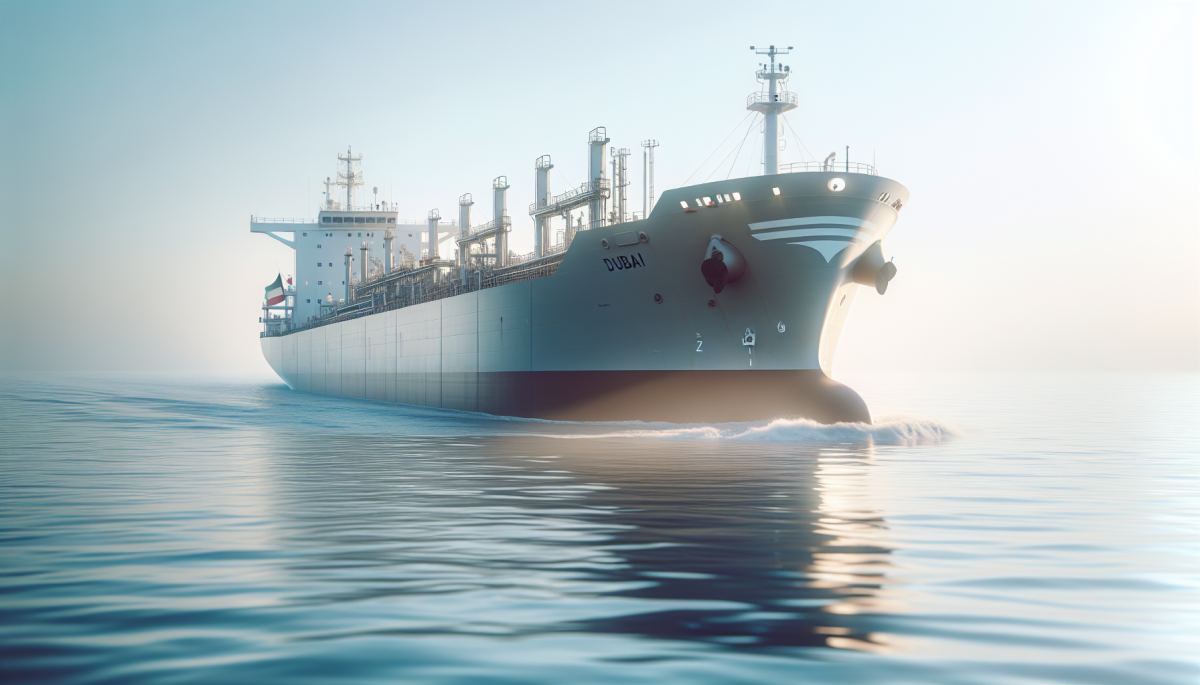
The Persian Gulf has never been a quiet neighborhood, but the striking of a Kuwaiti oil tanker off the coast of Dubai landed with particular weight this week, arriving at a moment when energy markets were already absorbing punishment from a broader Asian sell-off. The fire that broke out aboard the vessel was brought under control, which helped oil prices pare their initial gains, but the incident is a reminder of how quickly a single flash point in one of the world's most strategically loaded waterways can reverberate across global commodity markets.
Oil's muted response once the fire was contained tells its own story. Traders are increasingly calibrating their reactions to Gulf incidents on a sliding scale of severity, a kind of threat normalization that has developed over years of tanker incidents, drone strikes, and maritime confrontations in the region. When the damage is contained and the cargo keeps moving, markets exhale. But that exhale can be deceptive. The underlying infrastructure of risk, the insurance premiums, the routing decisions, the quiet conversations between shipping companies and their underwriters, keeps tightening with each new incident, even when the headlines fade.
The waters around Dubai and the broader Strait of Hormuz corridor are not just a shipping lane. They are the circulatory system of global oil supply, with roughly 20 percent of the world's petroleum liquids passing through the strait annually, according to the U.S. Energy Information Administration. An attack on a single tanker, even one that causes no lasting damage, introduces friction into that system. Shipping companies quietly adjust routes or speeds. War risk insurance premiums tick upward. Crews grow more cautious. None of these adjustments make headlines, but collectively they raise the cost of moving energy from producer to consumer.
The timing of this incident compounds its significance. Asian equity markets were already extending a sell-off when news of the tanker strike broke, meaning the psychological environment was already fragile. Oil markets exist in constant dialogue with broader financial sentiment, and when risk appetite is contracting across asset classes simultaneously, even a contained maritime incident can amplify the mood. The fact that oil pared its gains rather than sustaining them suggests traders were leaning on the "fire under control" narrative to avoid adding energy volatility to an already stressed portfolio environment.
The more consequential story here may not be the tanker itself but what accumulates beneath the surface over time. Each incident in Gulf waters adds a data point to the risk models used by the shipping and insurance industries. Lloyd's of London and its peers have been recalibrating war risk zones in the Middle East for several years, and those recalibrations have real costs that eventually pass through to consumers in the form of higher energy prices, even when no single event is dramatic enough to move markets on its own.
There is also a second-order effect worth watching in the context of energy transition politics. Every time Gulf shipping lanes demonstrate their vulnerability, it quietly strengthens the argument made by energy security hawks that domestic production and supply chain diversification are strategic necessities rather than optional policy choices. That argument has been gaining traction in Washington, Brussels, and Tokyo regardless of climate commitments, and incidents like this one feed the political appetite for energy independence narratives that can, paradoxically, slow the pace of coordinated international climate action by redirecting investment toward fossil fuel security infrastructure.
Kuwait's state oil company, Kuwait Petroleum Corporation, operates within a Gulf ecosystem that has spent decades building redundancy into its export infrastructure precisely because of this kind of risk. But redundancy has limits, and the cumulative stress on maritime security in the region is not diminishing. If anything, the pattern of incidents over the past several years suggests a new baseline of instability that markets have learned to absorb, perhaps too comfortably.
The fire is out. The tanker will likely resume operations. Oil prices will find their level. But the quiet ratcheting of risk in the world's most critical energy corridor does not reset between incidents, and the next time the margin for containment may be narrower.
References
- U.S. Energy Information Administration (2024) — Strait of Hormuz is a critical chokepoint for global energy
- Lloyd's Market Association (2023) — Joint War Committee Hull War, Strikes, Terrorism and Related Perils Listed Areas
- Reuters (2024) — Oil tanker incidents in the Middle East and their market impact
- International Energy Agency (2024) — Oil Market Report
Discussion (0)
Be the first to comment.
Leave a comment