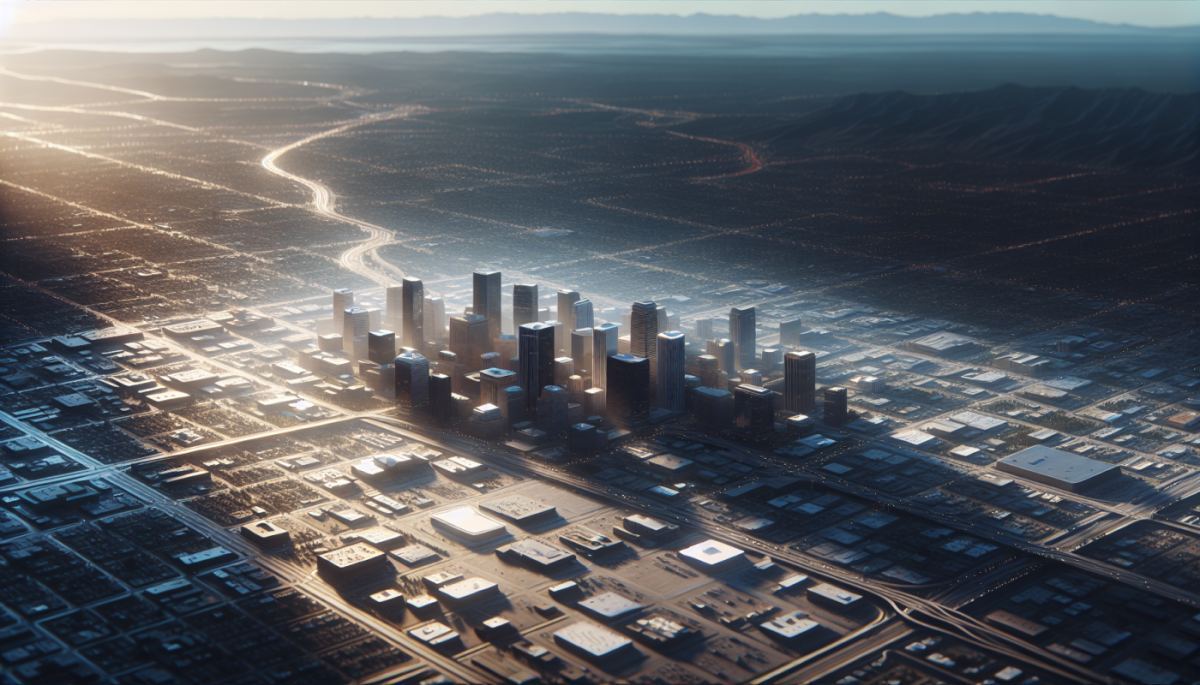
Mormon pioneers arriving in the Salt Lake Valley in 1847 found something that looked, to exhausted eyes, like paradise. Creeks tumbled down from the Wasatch Front. Grasses covered the valley floor. The soil was deep and workable. And in a geographic echo that carried spiritual weight for the settlers, the valley held both a freshwater lake and a saline one — Utah Lake and the Great Salt Lake — mirroring the Sea of Galilee and the Dead Sea in the Holy Land they had studied all their lives. It felt chosen. It felt permanent.
Nearly 180 years later, the Great Salt Lake has lost roughly two-thirds of its historic water volume. Its surface area has shrunk by more than half. The exposed lakebed — called a playa — now stretches across hundreds of square miles, and when the wind picks up, it lifts arsenic, mercury, and fine particulate dust into the air over a metro area of more than 1.2 million people. What the pioneers read as abundance, systems scientists now recognize as a basin in a delicate, semi-arid equilibrium that was never designed to absorb the demands of a modern city.
The story of Salt Lake is not simply a story about drought or climate change, though both are real accelerants. It is a story about how human settlements lock in assumptions about a landscape at the moment of founding, and then spend generations doubling down on those assumptions even as the underlying conditions shift.
The mechanism here is worth examining carefully, because it repeats itself across the American West and in water-stressed regions worldwide. When settlers arrived, they diverted rivers for irrigation, which worked brilliantly in the short term and encouraged more settlement, which required more diversion, which reduced inflows to the lake, which shrank the lake, which reduced the moderating effect the lake had on local climate — including the lake-effect snow that feeds the very mountain snowpack the city depends on for its water supply. Each step in this chain felt rational in isolation. Together, they form a classic reinforcing feedback loop, the kind that accelerates quietly until it doesn't.

Utah now diverts roughly 75 percent of the water that would naturally flow into the Great Salt Lake, according to data from the Utah Division of Water Resources. Agriculture accounts for the overwhelming majority of that diversion. The lake's elevation has dropped to historic lows in recent years, and while modest recoveries have followed wet winters, the structural imbalance between what the basin receives and what the region consumes has not been resolved. A 2023 report from a team of scientists convened by the state estimated that the lake needs an additional 1 million acre-feet of water per year just to stabilize — a number that would require renegotiating water rights that communities have built entire economies around.
This is where the second-order consequences become genuinely alarming. The Great Salt Lake is a critical stopover on the Pacific Flyway, one of North America's major migratory bird routes. An estimated 10 million birds depend on the lake's brine shrimp and brine flies each year. As salinity levels rise with shrinking volume, even those salt-adapted ecosystems begin to collapse. The brine shrimp industry, which supplies a significant share of the world's aquaculture feed, is already under stress. A lake that disappears doesn't just hurt the people living next to it — it sends disruptions cascading through food systems and ecosystems thousands of miles away.
It would be unfair to blame the pioneers. They were working with the information available to them, in conditions of genuine hardship, and they built something extraordinary. The harder question is what we do with the information available to us now, which is considerably more complete and considerably more troubling.
Salt Lake is not unique. The Aral Sea, Lake Chad, and Iran's Lake Urmia have all undergone similar trajectories — freshwater diversion, agricultural expansion, and then a collapse that arrives faster than the political systems surrounding the lake can respond. What makes Salt Lake instructive is that it is happening in a wealthy, technically sophisticated country with functioning institutions, and it is still proving extraordinarily difficult to reverse.
The lesson may be less about water management specifically and more about the general human difficulty of redesigning a system while living inside it. Cities, once built, generate their own political gravity. Water rights, once granted, become property. Farms, once established, become identities. The feedback loops that drive a lake toward collapse are matched, almost perfectly, by the social feedback loops that make intervention feel impossible until the crisis is undeniable.
What the Salt Lake Valley is now being forced to confront — slowly, imperfectly, and under duress — is whether a civilization can learn to read the landscape it inhabits more honestly than the one that came before it. The answer to that question will matter far beyond the Wasatch Front.
References
- Wurtsbaugh et al. (2017) — Decline of the world's saline lakes
- Utah Division of Water Resources (2023) — Great Salt Lake Advisory Council Final Report
- Null et al. (2013) — Hydrologic impacts of climate change on Great Salt Lake
- Morison et al. (2023) — Arid lake systems and cascading ecological collapse

Discussion (0)
Be the first to comment.
Leave a comment