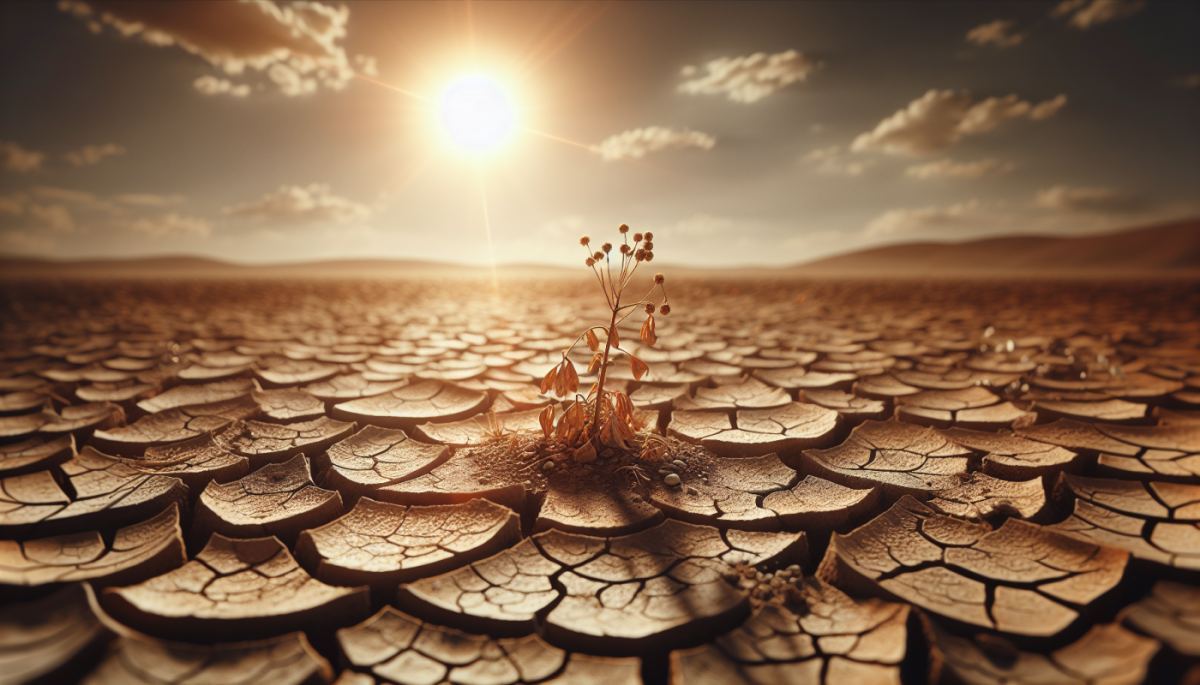
The numbers alone are staggering. Temperatures across the American West this week climbed as much as 30 degrees Fahrenheit above seasonal averages, turning what should have been a routine stretch of spring or early summer weather into something that, not long ago, would have been considered a meteorological impossibility. Millions of people from the Pacific coast to the Rocky Mountains found themselves baking under conditions that scientists have now formally attributed, with striking directness, to the climate crisis. Without it, researchers say, this week's heatwave would have been "virtually impossible."
That phrase carries more weight than it might first appear. Attribution science, the field that quantifies how much climate change alters the probability of extreme weather events, has matured considerably over the past decade. What scientists can now say, with increasing confidence, is not just that the planet is warming in the abstract, but that specific events, the heat dome sitting over Phoenix, the record overnight lows in Los Angeles, the dangerous conditions stretching into the Rockies, bear a measurable fingerprint of human-caused warming. The West's heatwave is not an anomaly to be filed away and forgotten. It is a data point in a trend line that keeps bending upward.
To understand why these events are intensifying, it helps to think about what a heatwave actually is at a physical level. Heat domes form when high-pressure systems trap warm air and prevent it from dispersing. The atmosphere acts like a lid on a pot. What climate change does is raise the baseline temperature of the air being trapped. A heat dome that might have produced uncomfortable but manageable conditions in 1980 now supercharges temperatures that push into genuinely dangerous territory. The 30-degree anomaly recorded this week is not just a weather story. It is a story about how a warming baseline transforms the upper end of what any given weather pattern can produce.
The cascading effects of that transformation are already visible in the systems that depend on predictable seasonal temperatures. Snowpack across the Sierra Nevada and the Rockies, which serves as a slow-release reservoir for much of the West's water supply, melts faster and earlier under these conditions. That accelerates the onset of drought, which dries out vegetation, which raises wildfire risk, which degrades air quality, which creates a secondary public health emergency layered on top of the heat itself. Each of those consequences feeds back into the others. Drought stresses power grids as air conditioning demand spikes. Wildfires send smoke across state lines, affecting communities hundreds of miles from the flames. The heatwave is not a single event. It is a trigger for a cascade.
The human cost of these events is not distributed evenly, and that asymmetry matters enormously for how policymakers should respond. Outdoor workers, including agricultural laborers, construction crews, and delivery drivers, face direct physiological risk during extreme heat. Elderly residents in poorly insulated housing, low-income families without access to air conditioning, and communities in urban heat islands where asphalt and concrete amplify ambient temperatures all absorb a disproportionate share of the danger. Heat is the deadliest form of extreme weather in the United States, killing more people on average each year than hurricanes or floods, yet it receives a fraction of the emergency preparedness attention and infrastructure investment.
There is a feedback loop embedded in that neglect. As heatwaves become more frequent and more severe, the demand for cooling increases, which drives up electricity consumption, which, in a grid still heavily dependent on fossil fuels, produces more emissions, which warms the atmosphere further. Breaking that loop requires not just individual adaptation, greener buildings, better urban planning, expanded cooling centers, but systemic changes to the energy infrastructure that makes the problem worse with every degree of warming it helps produce.
The scientists who determined this week's heatwave was virtually impossible without climate change are not making a political statement. They are doing arithmetic. And the arithmetic keeps pointing in the same direction: events once considered once-in-a-century are becoming once-in-a-decade, and the window for treating extreme heat as an exceptional disruption rather than a permanent operating condition is closing faster than most public institutions have been willing to acknowledge.
References
- Philip et al. (2021) — Rapid attribution analysis of the extraordinary heat wave on the Pacific Coast of the US and Canada
- NOAA National Centers for Environmental Information (2024) — Billion-Dollar Weather and Climate Disasters
- Diffenbaugh et al. (2017) — Quantifying the influence of global warming on unprecedented extreme climate events
- Mora et al. (2017) — Global risk of deadly heat
Discussion (0)
Be the first to comment.
Leave a comment