Three stories landed in the same week, each seemingly unrelated. A warning about a global food catastrophe. New findings about the real emissions footprint of BECCS, the technology that carbon accounting has quietly leaned on for years. And a heated dispute over a solar farm in the British countryside. Taken individually, each is a policy story. Taken together, they describe something more unsettling: a food and energy system under pressure from multiple directions at once, with feedback loops that most coverage never bothers to trace.

The word "catastrophe" carries weight when it appears in scientific literature, and the April 2026 assessment flagged by Carbon Brief uses it deliberately. Global food systems are facing compounding stressors: climate disruption to growing seasons, water scarcity, soil degradation, and the geopolitical fracturing of supply chains that the pandemic and the war in Ukraine exposed so brutally. What makes the current moment different from prior food security warnings is the convergence of these pressures rather than their isolation.
For decades, the dominant assumption in agricultural policy was that technology and trade would absorb shocks. If a drought hit one breadbasket, another region would compensate. If yields fell, better seeds or fertilizers would recover them. That buffer logic is eroding. The regions most capable of expanding production are often the same ones facing the most severe climate projections. And the political will to maintain open agricultural trade, which that buffer logic depends on, is weakening in almost every major economy simultaneously.
The second-order consequence here is rarely discussed: as food insecurity rises, governments respond with export restrictions and domestic subsidies that further fragment global markets. Each individual decision is rational. The collective result is a system that becomes less resilient precisely when resilience is most needed.
Bioenergy with carbon capture and storage, known as BECCS, has occupied a peculiar position in climate modeling for years. It is the technology that makes the math work in many net-zero scenarios. Grow biomass, burn it for energy, capture the emissions, bury them underground. On paper, the carbon balance is negative. In practice, the picture is considerably messier.
The new emissions findings reported in the Carbon Brief digest suggest that BECCS, when its full land-use footprint is accounted for, may deliver far less carbon removal than models assume, and in some configurations may not be net-negative at all. This matters enormously because BECCS is not a marginal assumption in climate policy. It is load-bearing. The Intergovernmental Panel on Climate Change's mitigation pathways that limit warming to 1.5 degrees Celsius rely heavily on large-scale carbon dioxide removal, and BECCS has historically been the most prominent candidate technology.
If those assumptions are wrong, or even significantly optimistic, then the gap between where emissions trajectories are heading and where they need to go is wider than official scenarios acknowledge. That is not a technical footnote. It is a structural problem for climate governance, because policy ambition has been calibrated against a removal capacity that may not materialize at the scale required.
There is also a land competition dimension that connects directly back to the food story. BECCS at scale requires enormous areas of productive land for biomass cultivation. That land is also needed for food production, biodiversity, and the kind of ecosystem restoration that provides its own carbon and resilience benefits. The technology does not exist in isolation from the food system. It competes with it.
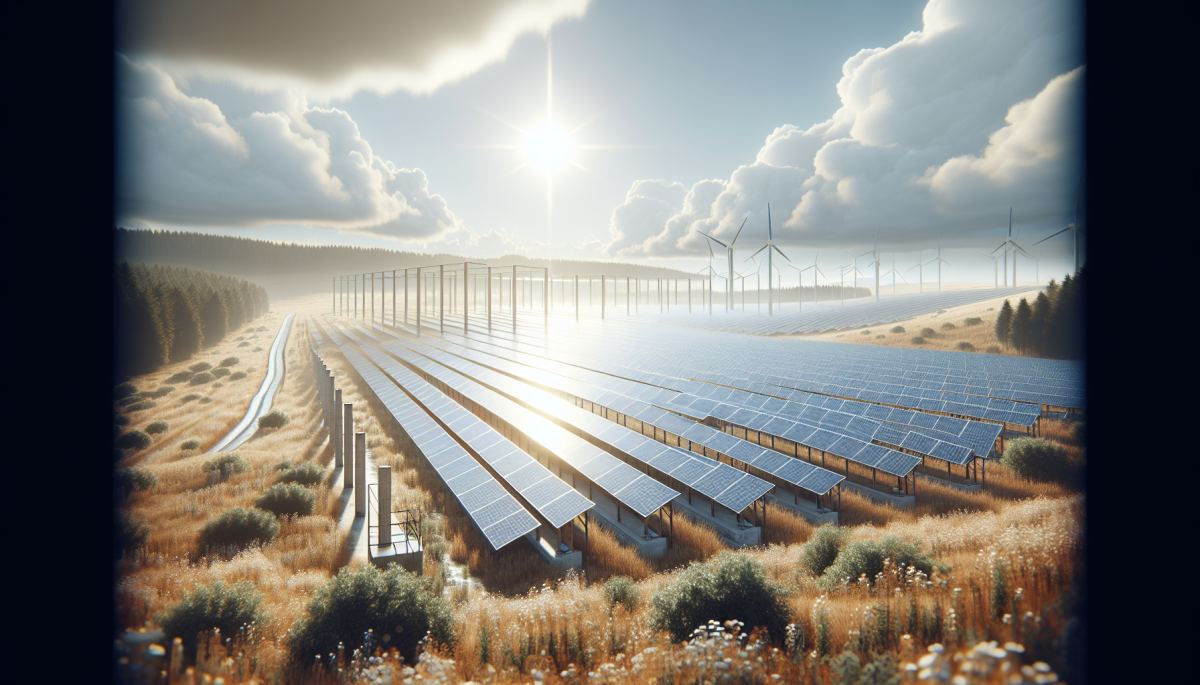
The UK solar farm controversy fits a pattern that has become familiar across Europe and North America. A large renewable energy installation is proposed on agricultural or semi-rural land. Local communities object, citing landscape impact, loss of farmland, and the sense that the energy transition is something being done to them rather than with them. Planning processes stall. Projects are delayed or abandoned.
The systems consequence of this dynamic is underappreciated. Every delayed solar farm is not simply a missed energy opportunity. It is pressure redirected elsewhere: onto gas generation that stays online longer than planned, onto grid operators managing tighter margins, and onto the political economy of energy transition itself, which depends on public legitimacy to sustain momentum.
What connects all three stories is a single underlying tension: the transition away from fossil fuels requires land, and land is already doing many things at once. It is feeding people. It is storing carbon. It is hosting communities. And it is being asked to generate energy. The question of who decides how that land is used, and whose priorities take precedence, is not a technical question. It is a political one, and the answers being given right now will shape the physical landscape of the next century.
The food catastrophe warning, the BECCS accounting problem, and the solar farm dispute are not three separate stories. They are three pressure points on the same system, and the system is not yet designed to handle all three at once.
References
- IPCC (2022) — Mitigation of Climate Change: Working Group III Contribution to the Sixth Assessment Report
- Searchinger et al. (2022) — Bioenergy: The Original Climate Solution That Became a Problem
- Carbon Brief (2026) — Cropped: Global food catastrophe, BECCS emissions, UK solar farm controversy
- FAO (2023) — The State of Food Security and Nutrition in the World
- Fajardy & Mac Dowell (2017) — Can BECCS deliver sustainable and resource efficient negative emissions?
Discussion (0)
Be the first to comment.
Leave a comment