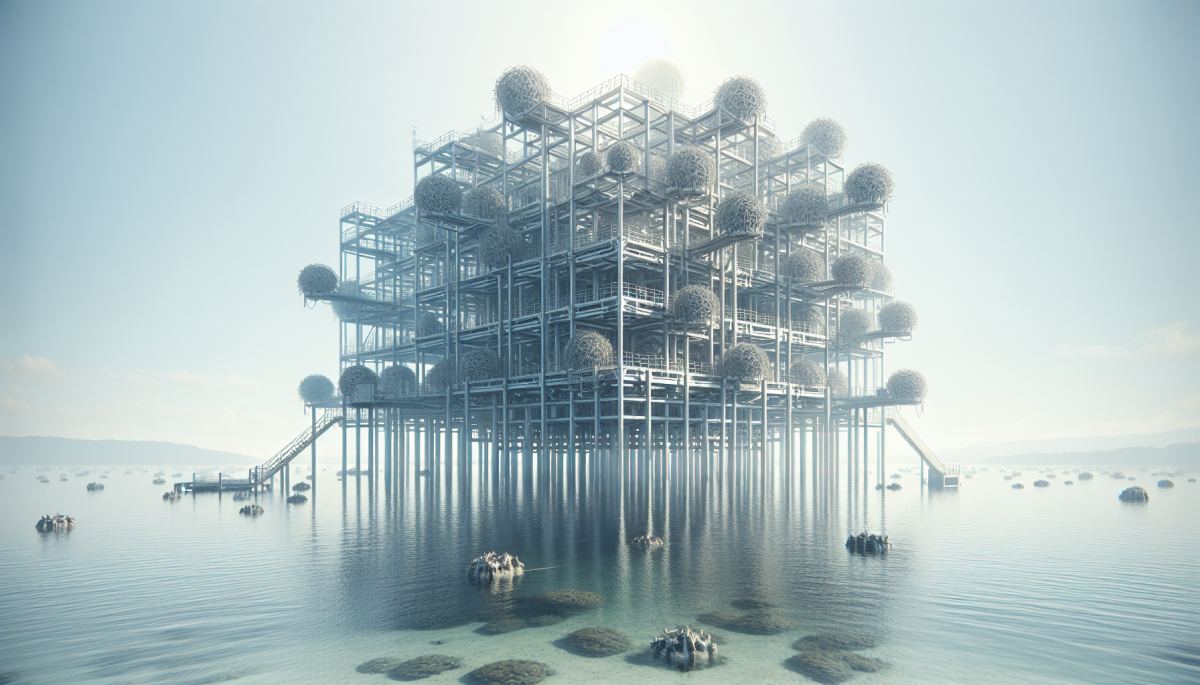
Oyster reefs have lost roughly 85 percent of their global coverage over the past two centuries, a collapse so severe that marine ecologists now classify them among the most endangered marine habitats on Earth. What's been missing from most restoration efforts isn't money or ambition — it's geometry.
A new body of research is revealing that the physical shape of an oyster reef matters as much as its biological composition. Scientists studying reef architecture have found that specific geometric patterns, rather than sheer size or material complexity, determine whether juvenile oysters survive long enough to become the foundation of a functioning ecosystem. The implications stretch far beyond shellfish.
Oyster reefs are not passive structures. They are dynamic, self-organizing systems where the arrangement of shells creates microenvironments that regulate water flow, sediment accumulation, and predator access. Young oysters, called spat, are extraordinarily vulnerable in their first weeks of life. They need surfaces that buffer them from strong currents, reduce desiccation during low tide, and limit exposure to the crabs and fish that pick them off before they can cement themselves permanently.
What researchers have identified is that certain geometric configurations, particularly those that replicate the irregular but patterned ridges found in healthy wild reefs, create the hydraulic conditions spat need to survive. Smoother or more uniform artificial structures, even when built from the same shell material, produce faster water velocities across their surfaces and offer fewer refugia. The difference in juvenile survival rates between optimized and generic designs can be dramatic, and that early survival bottleneck is precisely where most restoration projects have historically failed.
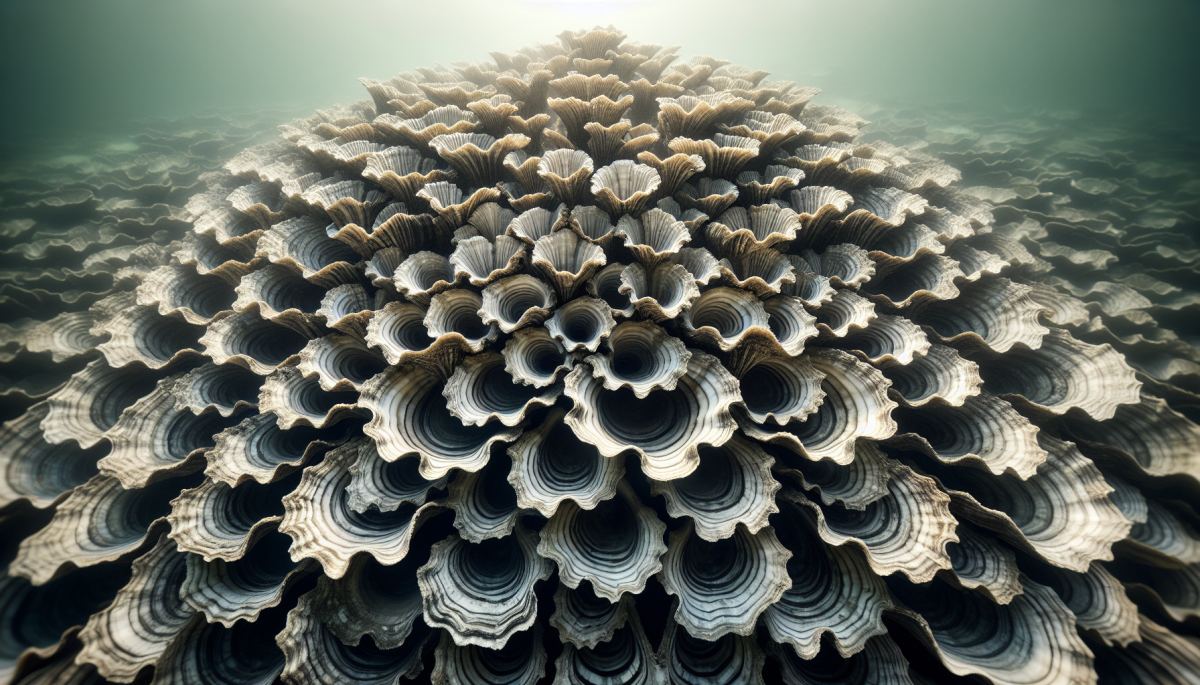
This connects to a broader principle in systems ecology: structure shapes function. The architecture of a reef is not incidental to its biology — it is the mechanism through which the biology operates. When restoration ecologists drop bags of loose shell into an estuary and call it a reef, they are providing raw material without the organizational logic that makes a reef actually work.
The stakes here go well beyond oyster populations. A functioning oyster reef is a keystone structure in estuarine ecosystems. A single adult oyster can filter up to 50 gallons of water per day, removing nitrogen, phosphorus, and suspended sediment that would otherwise fuel algal blooms and hypoxic dead zones. Reefs also provide habitat for hundreds of species of fish and invertebrates, stabilize shorelines against erosion, and buffer coastal communities from storm surge.
When reef restoration fails because the geometry is wrong, all of those services fail with it. And because oysters are ecosystem engineers — meaning their physical presence actively constructs habitat for other species — a reef that doesn't recruit enough juvenile oysters doesn't just stagnate, it degrades. Without continuous recruitment, shell material breaks down, reef elevation drops, and the structure eventually becomes buried in sediment. The system collapses inward.
The second-order consequence worth watching is what geometrically informed restoration could mean for coastal climate adaptation. Shoreline erosion is accelerating in many regions as sea levels rise, and living shorelines anchored by functional oyster reefs are increasingly being proposed as a nature-based alternative to hardened infrastructure like seawalls. But if the reefs underpinning those living shorelines are built to the wrong specifications, they won't persist long enough to provide meaningful protection. The design question is, in that sense, also an infrastructure question.
There is also an economic feedback loop to consider. Oyster aquaculture is a multi-billion dollar global industry, and wild reef restoration often happens in the same coastal waters where aquaculture operations depend on clean, well-oxygenated conditions. Better reef geometry means better filtration, which means better water quality, which means more productive aquaculture. The restoration investment, if designed correctly, pays dividends across the system.
The challenge now is translating these geometric insights into scalable, cost-effective reef designs that practitioners can actually deploy. That means moving findings out of research papers and into the hands of the coastal managers, conservation nonprofits, and government agencies that run restoration programs with limited budgets and tight timelines. The science is pointing toward a clear answer. Whether the infrastructure of restoration can absorb and act on it quickly enough is the harder, more urgent question.
References
- Beck et al. (2011) — Oyster Reefs at Risk and Recommendations for Conservation, Restoration, and Management
- Grabowski et al. (2012) — Economic Valuation of Ecosystem Services Provided by Oyster Reefs
- Lenihan, H.S. (1999) — Physical-biological coupling on oyster reefs: how habitat structure influences individual performance 2.0.CO;2]
- La Peyre et al. (2014) — Restored oyster reefs support similar nekton communities as natural reefs
Discussion (0)
Be the first to comment.
Leave a comment