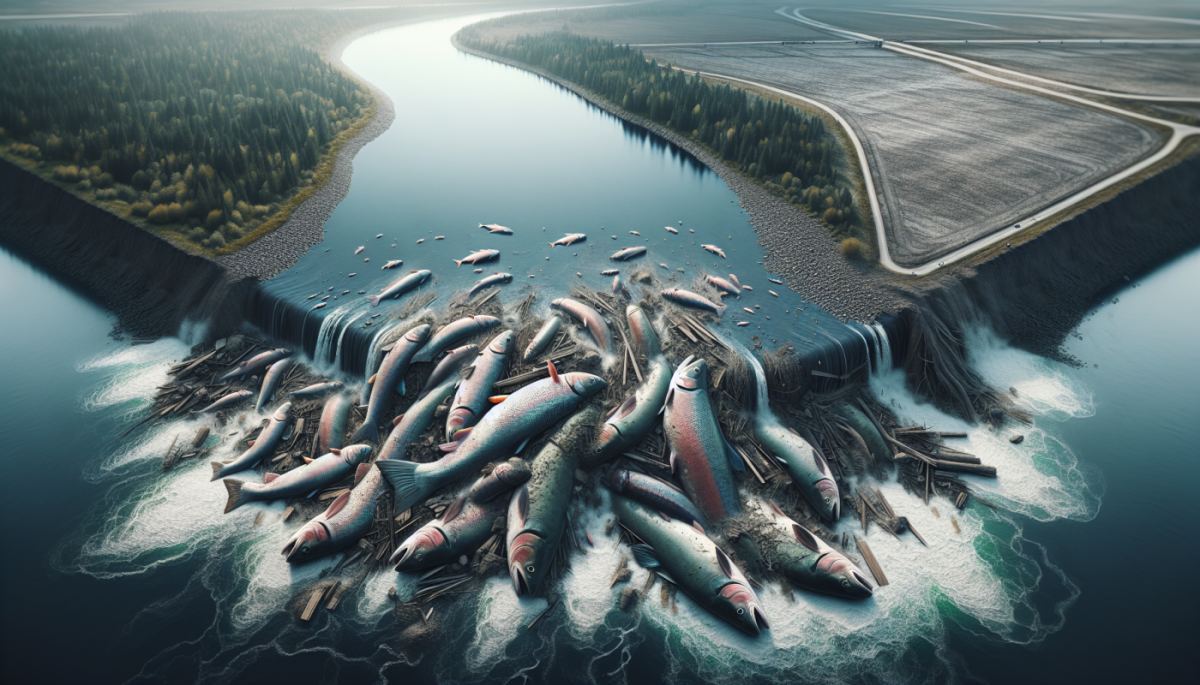
Something ancient is unraveling in the world's rivers. For millions of years, freshwater fish have moved in vast, coordinated pulses through river systems, driven by seasonal floods, spawning instincts, and the geography of watersheds. The Siamese giant carp of the Mekong, the goonch catfish of the Ganges, the beluga sturgeon of the Danube — these are not just individual species in decline. They are the visible edge of a much deeper systemic collapse, one that is quietly dismantling the ecological architecture of the planet's freshwater systems.
Freshwater migratory fish are among the most ecologically consequential animals on Earth, yet they receive a fraction of the attention lavished on their oceanic counterparts. Unlike salmon, which have become a cultural shorthand for migration and conservation, species like the Siamese giant carp or the beluga sturgeon rarely make headlines outside specialist circles. That obscurity is part of the problem. These fish don't just move through rivers — they are the rivers, in a functional sense. They transport nutrients across vast distances, connect upstream and downstream food webs, and serve as prey for everything from river dolphins to subsistence fishing communities that have depended on seasonal runs for generations.
The pressures bearing down on these migrations are not random. They form an interlocking system of stressors that compound one another in ways that make recovery exceptionally difficult. Dams are perhaps the most structurally decisive factor. The Mekong, one of the most biodiverse river systems on the planet, has been transformed by a cascade of hydropower dams, particularly in its upper reaches in China and increasingly in Laos. These structures don't merely block fish passage — they alter the flood pulse that triggers migration in the first place, trap sediment that builds the riverbed habitats fish depend on for spawning, and change water temperatures in ways that disrupt reproductive timing built into species over evolutionary timescales.

Overfishing compounds the damage. When populations are already fragmented by dams and degraded habitat, even moderate harvest pressure can push a species below the threshold needed for self-sustaining reproduction. The beluga sturgeon, which can live over a century and doesn't reach sexual maturity until its late teens or twenties, is particularly vulnerable to this dynamic. A fish that takes 20 years to reproduce simply cannot recover at the pace that industrial fishing or even artisanal overharvest can deplete it. The Danube's beluga population has been functionally extirpated from much of its historic range, a slow-motion disappearance that unfolded across decades and is now nearly irreversible without aggressive intervention.
Climate change is layering additional instability onto already stressed systems. Altered precipitation patterns change the timing and magnitude of seasonal floods, which many migratory species use as environmental cues to begin their journeys. When the flood comes late, or not at all, fish that have evolved to respond to that signal may fail to migrate, fail to spawn, or arrive at spawning grounds that are no longer suitable.
The second-order consequences of losing these migrations extend well beyond the fish themselves. River ecosystems are built around nutrient cycling, and migratory fish are one of the primary mechanisms by which nutrients move through a watershed. When large-bodied fish stop moving in large numbers, the rivers they once traveled become nutrient-impoverished. Aquatic insects, amphibians, birds, and mammals that depend on the seasonal abundance of fish — or on the carcasses and waste they leave behind — all feel the downstream effects of that absence.
For human communities, the stakes are equally concrete. Tens of millions of people across the Mekong basin alone depend on wild-caught fish as their primary source of protein. The seasonal fish runs are not a supplement to local diets — they are the diet, particularly for rural and indigenous communities with limited access to alternative food sources. As those runs thin, the nutritional and economic consequences ripple outward in ways that rarely appear in conservation assessments focused narrowly on species counts.
There is also a subtler, longer-term risk embedded in this story. Migratory fish are genetic connectors between populations separated by hundreds of miles of river. As migrations collapse and populations become isolated in fragmented river segments, genetic diversity erodes. Species that survive the current crisis in small, disconnected pockets may lack the adaptive capacity to respond to future environmental change — a biological debt that won't come due for generations, but will come due.
The rivers are not silent yet. But the migrations that once defined them are becoming thinner each decade, and the window for reversing that trajectory is narrowing faster than most conservation frameworks are designed to recognize.
References
- Welcomme et al. (2010) — Inland Capture Fisheries
- Zarfl et al. (2015) — A global boom in hydropower dam construction
- WWF (2020) — Living Planet Report 2020
- Dudgeon et al. (2006) — Freshwater biodiversity: importance, threats, status and conservation challenges
- Hogan et al. (2004) — Threatened fishes of the world: Pangasianodon gigas
Discussion (0)
Be the first to comment.
Leave a comment