
President William Ruto has made it official: Kenya intends to stop exporting raw minerals and instead process them domestically before they leave the continent. The announcement places Kenya alongside a growing coalition of African governments that have grown tired of watching their geological wealth leave in unrefined form, only to return as finished goods at prices their own citizens can barely afford. It is a familiar frustration, and the policy response — export bans, value-addition mandates, regional processing hubs — is becoming equally familiar. What remains genuinely uncertain is whether this wave of ambition will break differently than the ones that came before it.
The logic behind the push is straightforward enough. Africa holds an extraordinary share of the world's critical minerals, including cobalt, lithium, manganese, and graphite, all of which sit at the center of the global energy transition. Yet the continent captures only a sliver of the economic value those minerals eventually generate. A kilogram of cobalt mined in the Democratic Republic of Congo and refined in China, then built into a battery cell in South Korea and installed in an electric vehicle sold in Germany, creates value at every step of that chain except the first. African governments have watched this arithmetic play out for decades, and the political patience for it is running out.
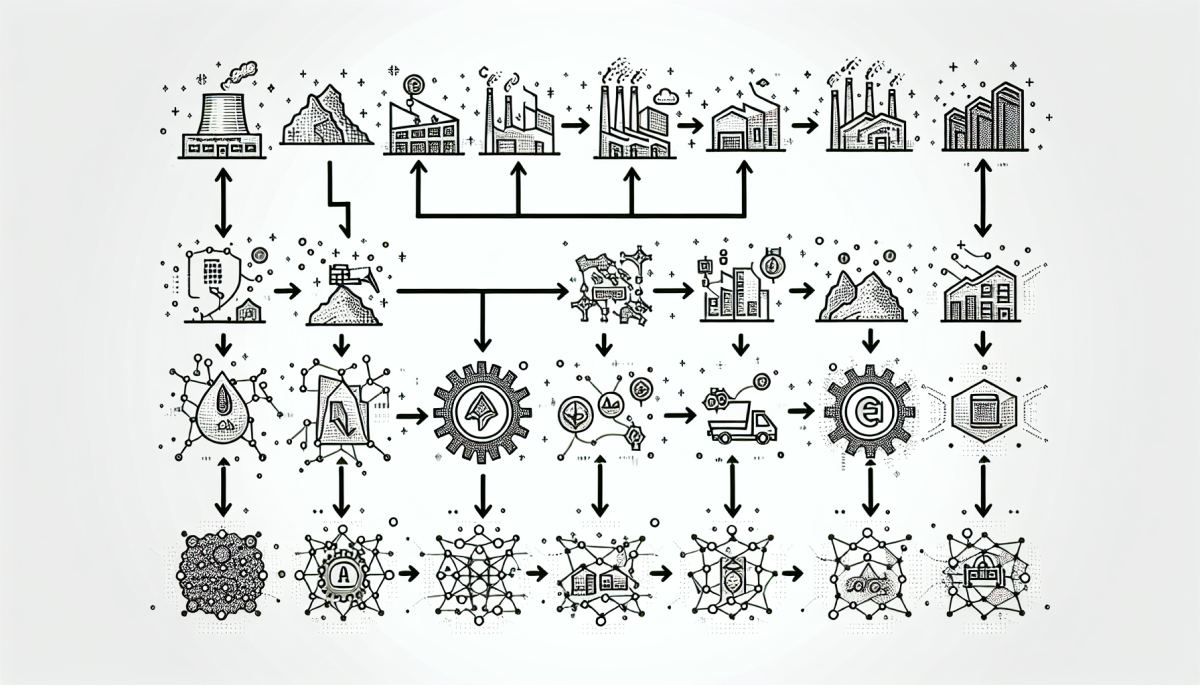
Ruto's call for regional coordination is the part of this story that deserves closer attention. Processing minerals at scale requires infrastructure, energy, technical expertise, and capital that no single African country can easily assemble on its own. Kenya is not a major mining nation in the way that the DRC or Zambia are, which makes its role in any regional value chain more likely to be logistical and financial than extractive. Nairobi has positioned itself as a services and finance hub for East Africa, and there is a plausible version of this story where Kenya becomes the refining, trading, or technology layer in a regional mineral economy rather than the source of the raw material itself.
The harder question is whether regional coordination can actually be sustained. Africa has no shortage of ambitious frameworks for economic integration. The African Continental Free Trade Area, launched in 2021, was supposed to accelerate exactly this kind of intra-African industrial development, but implementation has been uneven and cross-border infrastructure remains a bottleneck. Individual export bans, like Zimbabwe's 2022 ban on raw lithium exports or Tanzania's earlier restrictions on unprocessed gold, have had mixed results. They signal intent, but intent without refining capacity, reliable power grids, and access to technology transfer tends to produce bottlenecks rather than breakthroughs.
There is also the geopolitical dimension. China has spent two decades building deep relationships with African mining sectors, often through infrastructure financing tied to offtake agreements. Western governments, newly alarmed about critical mineral supply chains, are now competing for influence with their own investment vehicles, including the U.S. Minerals Security Partnership and the European Union's Critical Raw Materials Act. African governments are navigating this competition carefully, and some are using it as leverage. The risk is that external pressure from powerful trade partners, who benefit from cheap raw material flows, quietly undermines domestic processing ambitions before they can take root.
If Kenya and its neighbors do manage to build functioning regional mineral value chains, the second-order consequences could be significant and not entirely predictable. Domestic processing industries require skilled labor, which creates pressure on education systems and technical training institutions. They also require stable electricity, which in a region still heavily dependent on fossil fuels and intermittent renewables creates its own infrastructure race. And they generate industrial waste streams that, if poorly managed, could impose serious environmental costs on communities already living near extraction sites.
There is also a feedback loop worth watching on the global side. If African nations successfully capture more value from critical minerals, the cost of those minerals to battery manufacturers and electric vehicle producers in wealthy countries will likely rise. That price signal could accelerate investment in battery recycling, alternative chemistries, and material efficiency, changes that would reduce long-term demand for primary African minerals just as the continent is building the capacity to process them. It would be a bitter irony, and a reminder that commodity markets rarely reward latecomers the way early movers hope.
What Ruto's announcement represents, at minimum, is a political consensus that the old arrangement is no longer acceptable. Whether the institutions, the infrastructure, and the regional solidarity exist to replace it with something better is a question that will take years, not months, to answer.
Discussion (0)
Be the first to comment.
Leave a comment