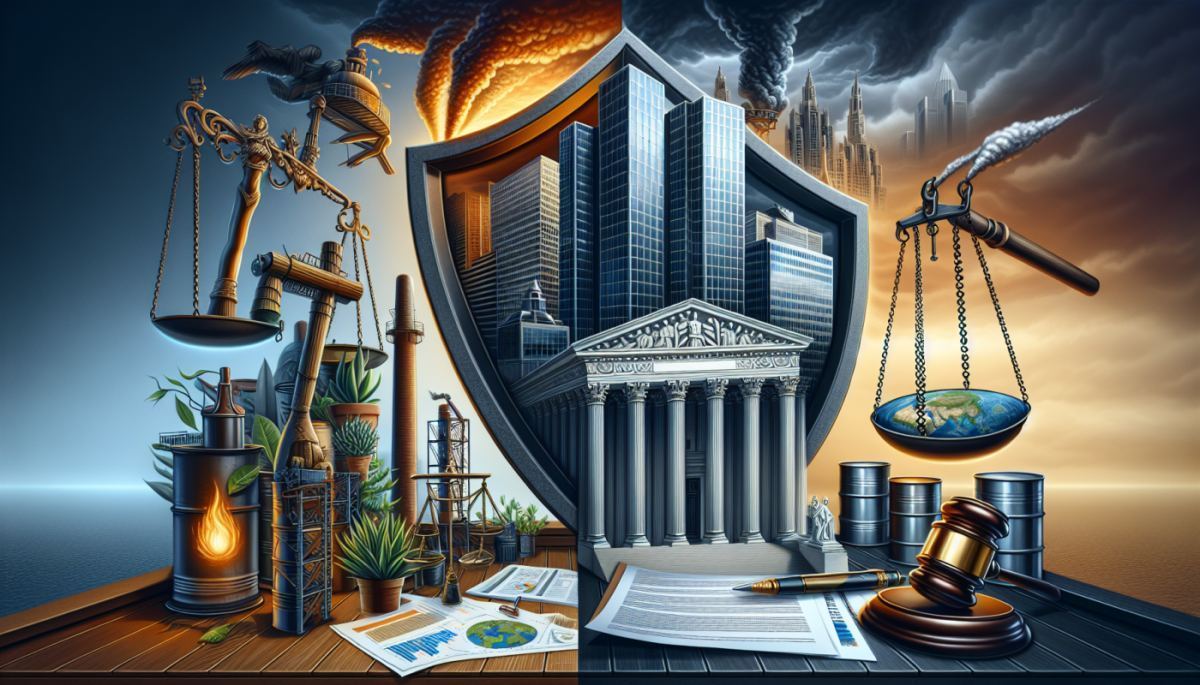
The timing is not accidental. As the Trump administration wages an increasingly aggressive campaign against federal climate science, dismantling research programs and sidelining government experts, the fossil fuel industry is pressing its advantage at the Supreme Court, seeking a ruling that could permanently close one of the last remaining legal doors through which states have tried to hold oil companies accountable for the climate crisis.
The case before the court is the culmination of years of legal maneuvering by the industry, which has fought relentlessly to keep climate liability litigation out of state courts. The core question is jurisdictional: should lawsuits brought by states and municipalities against fossil fuel companies for climate-related damages be heard in federal court, where the industry believes it has more favorable terrain, or in state courts, where plaintiffs have had more success framing the issue as one of consumer deception and public nuisance under local law?
The industry's preference for federal court is not arbitrary. Federal venues allow companies to invoke federal preemption arguments, essentially arguing that national energy policy supersedes state-level accountability claims. State courts, by contrast, have shown a willingness to let cases proceed on the theory that oil companies knew for decades about the dangers of their products and chose to deceive the public rather than disclose them. That framing, rooted in state tort and consumer protection law, is precisely what the industry wants to neutralize.
What makes this moment particularly consequential is the political environment surrounding it. The Trump administration's assault on climate science, cutting funding, suppressing research, and removing scientists from advisory panels, does more than weaken the government's ability to respond to warming. It also degrades the evidentiary ecosystem that plaintiffs rely on in court. Attribution science, the field that links specific extreme weather events to greenhouse gas emissions from identifiable sources, has become increasingly sophisticated and central to climate litigation. If federal agencies are no longer producing or validating that research, the scientific foundation for damages claims becomes harder to assemble and easier to attack.
This is a feedback loop worth watching closely. Political pressure erodes institutional science. Weakened science makes litigation harder. Harder litigation emboldens further political pressure. The fossil fuel industry, which spent decades funding doubt about climate science through organizations like the Global Climate Coalition, understands this dynamic intimately. The current administration's posture toward science is, from the industry's perspective, a structural advantage.
The Supreme Court's conservative supermajority adds another layer of complexity. The court has already demonstrated, through decisions like West Virginia v. EPA in 2022, a disposition to constrain the regulatory reach of federal agencies on climate. A ruling that forces state climate cases into federal court, where they are more likely to be dismissed on preemption or displacement grounds, would extend that logic into the civil liability arena and effectively insulate the industry from the most creative and persistent legal challenges it faces.
The second-order consequences of a ruling favoring the industry would ripple well beyond the immediate cases. Cities and states that have invested years and significant legal resources into these lawsuits, including Baltimore, Honolulu, and several California municipalities, would face the prospect of starting over in a less hospitable forum or abandoning their claims entirely. That would not only deny those governments potential compensation for infrastructure damage, emergency response costs, and public health burdens linked to climate change. It would also send a signal to insurers, investors, and future plaintiffs that the legal system is not a viable mechanism for pricing climate risk back onto the companies most responsible for creating it.
There is also a democratic accountability dimension that tends to get lost in the jurisdictional weeds. State attorneys general and city lawyers pursuing these cases are, in a meaningful sense, acting as proxies for constituents who are already paying the costs of climate disruption through higher insurance premiums, flood damage, and heat-related illness. Removing their ability to seek redress in their own courts is not a neutral procedural outcome. It is a substantive shift in who bears the cost of the crisis.
The fossil fuel industry has always understood that the courtroom is a battlefield as important as the legislature or the regulatory agency. What is different now is that all three arenas are moving in the same direction simultaneously, and the window for accountability may be narrowing faster than the science of attribution can keep pace with the politics of denial.
Discussion (0)
Be the first to comment.
Leave a comment