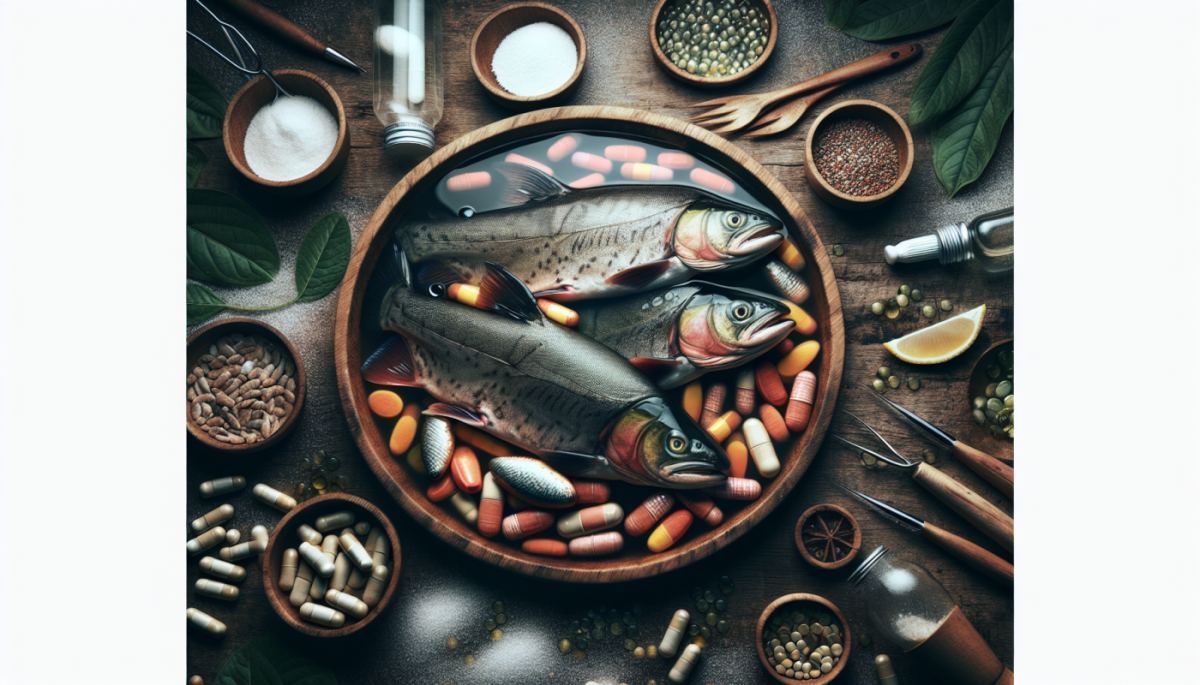
The fish on the plate looks ordinary enough. But inside its tissue, scientists have found something that has no business being there: antibiotics, including at least one drug that has been banned from use. A new study examining a major Brazilian river has uncovered a troubling accumulation of pharmaceutical compounds in both the water and the fish that live in it, raising questions that go well beyond local environmental policy and into the global conversation about antimicrobial resistance and food safety.
Researchers found that antibiotic concentrations in the river spiked significantly during the dry season. The mechanism is straightforward but easy to overlook: when water levels drop, the same volume of agricultural runoff, sewage discharge, and pharmaceutical waste becomes compressed into a smaller body of water. Dilution, one of nature's oldest pollution management tools, simply stops working. What remains is a chemical stew that aquatic life cannot avoid. Fish absorb these compounds through their gills, their skin, and the food they eat, and the drugs accumulate in their tissue over time.
Among the antibiotics detected was a compound that regulators had already pulled from approved use, precisely because of concerns about its safety profile. Finding it inside fish sold for human consumption is not just a regulatory failure, it is a signal that the pathways between banned substances and dinner tables are more porous than most consumers would assume. Brazil is one of the world's largest producers and consumers of animal protein, and its river systems are deeply integrated into both aquaculture and wild-catch fisheries that supply domestic and export markets.
The study did not stop at documenting the problem. Researchers also tested whether a common aquatic plant could help filter antibiotics from contaminated water, and the results were genuinely promising on one level. The plant demonstrated a measurable capacity to absorb and remove pharmaceutical compounds, pointing toward a low-cost, scalable bioremediation strategy that cash-strapped municipalities might actually be able to deploy.
But the same experiment revealed an uncomfortable wrinkle. The presence of the plant altered the way fish absorbed the antibiotics. Rather than simply reducing exposure, the plant changed the dynamics of uptake in ways that were not entirely predictable. This is a classic second-order effect: an intervention designed to reduce harm introduces a new variable that complicates the risk calculus. Bioremediation is not a clean off switch. It is another input into a system that is already behaving in ways scientists are still working to understand.
This finding matters because remediation strategies are increasingly being proposed as practical alternatives to the harder political work of reducing pharmaceutical pollution at its source. If those strategies carry their own hidden risks, the case for treating root causes becomes even stronger.
The deeper concern running beneath this story is antimicrobial resistance. When fish and other aquatic organisms are continuously exposed to low doses of antibiotics, the bacteria living in and around them face exactly the selective pressure that drives resistance. Resistant strains develop, persist, and can transfer resistance genes to other bacteria through horizontal gene transfer, a process that does not respect species boundaries or national borders.
A person who eats fish carrying residual antibiotics is not just ingesting a trace chemical. They may be ingesting bacteria that have already adapted to survive that chemical. The gut microbiome becomes a contact zone where resistant organisms from river ecosystems meet the human immune system. Public health researchers have been warning about this pathway for years, but the political urgency has not matched the scientific concern.
Brazil is not an outlier here. Studies from rivers in Asia, Europe, and sub-Saharan Africa have documented similar patterns of pharmaceutical accumulation, and the dry season concentration effect is a global phenomenon wherever water scarcity and agricultural intensity overlap. What makes the Brazilian findings particularly pointed is the detection of a banned substance, which suggests that enforcement gaps are allowing compounds that regulators have already judged too risky to continue circulating through ecosystems and food chains.
The trajectory here is worth watching closely. As climate change shortens wet seasons and intensifies dry ones across tropical river systems, the concentration effect that amplifies antibiotic levels will become more pronounced and more frequent. The seasonal problem of today has every reason to become the baseline condition of tomorrow.
References
- Manaia et al. (2018) — Antibiotic Resistance in Wastewater Treatment Plants
- WHO (2021) — Antimicrobial Resistance Global Action Plan
- Gothwal & Shashidhar (2015) — Antibiotic Pollution in the Environment
- Pruden et al. (2013) — Management Options for Reducing the Release of Antibiotics and Antibiotic Resistance Genes

Discussion (0)
Be the first to comment.
Leave a comment