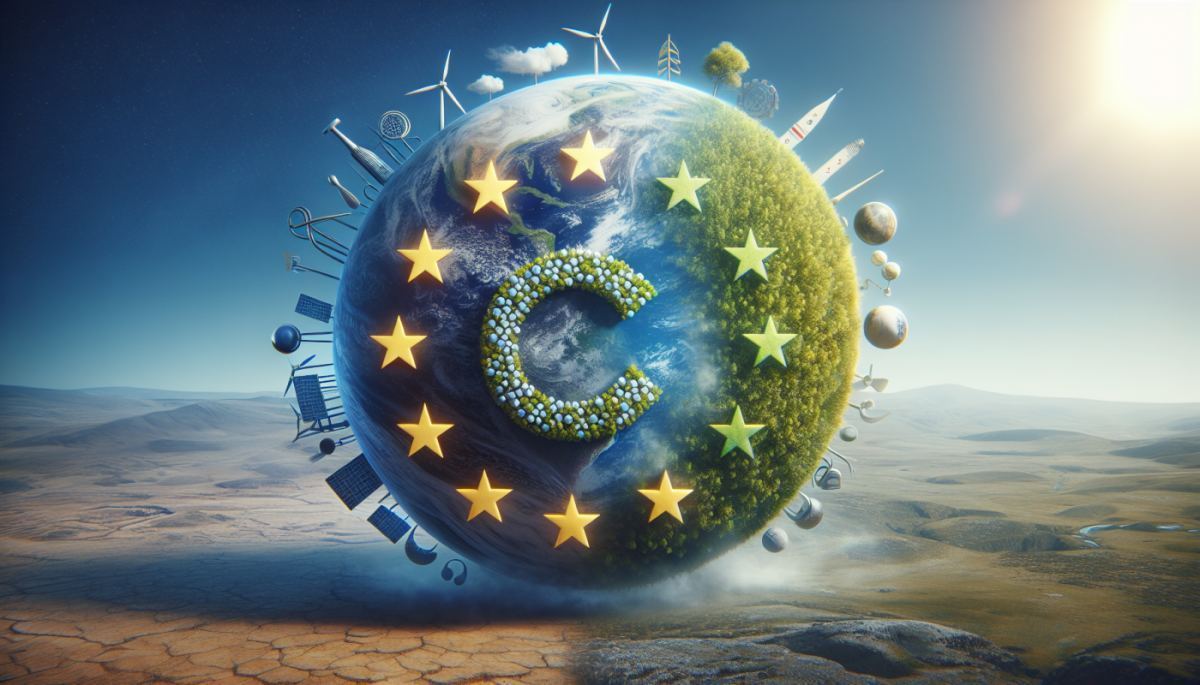
The European Union arrived at COP30 with ambition and left with bruises. Now, behind closed doors, EU environment ministers are having a conversation that would have seemed almost heretical a decade ago: whether the bloc has been too idealistic, too process-faithful, and frankly too easy to outmanoeuvre in international climate negotiations. The words circulating in Brussels are telling. "Realism." "Pragmatism." And most pointedly, "less naive."
Those are not the words of a movement in retreat, exactly. But they are the words of an institution that has spent years anchoring its identity to multilateral climate leadership and is now quietly asking whether that identity has come at a cost.
To understand the frustration, you have to understand what the EU thought it was doing at COP30. The bloc has long operated as the self-appointed conscience of the UN climate process, pushing for stronger commitments, more transparent accounting, and binding language that other major emitters have consistently resisted. That strategy produced real wins in Paris in 2015. But the geopolitical landscape has shifted dramatically since then. The United States under its current administration has pulled back from climate commitments. China, while investing heavily in renewables domestically, has shown little appetite for the kind of legally binding international architecture the EU prefers. Gulf states have used their hosting privileges and economic leverage to soften language around fossil fuel phase-outs. The EU, playing by the rules of a game others are increasingly willing to bend, has found itself isolated at the table it helped build.
What COP30 apparently made clear is that good faith multilateralism, when practiced unilaterally, is not a strategy. It is a posture. And postures do not move the needle on global emissions.
The shift in tone from EU ministers reflects something deeper than post-conference frustration. It reflects a structural tension that has been building for years between the EU's internal climate ambitions, which are genuinely among the most aggressive of any major economy, and its external negotiating behaviour, which critics have long argued is too deferential to process and too slow to use the bloc's considerable economic leverage as a bargaining chip.
The EU is the world's largest single market. It has already passed the Carbon Border Adjustment Mechanism, which effectively taxes imports from countries with weaker carbon pricing. It has the financial architecture, through instruments like the European Investment Bank and the Global Gateway initiative, to direct hundreds of billions toward climate-aligned development in the Global South. These are not small cards. They are, in the language of geopolitics, major ones. The question is whether Brussels is finally willing to play them with the kind of strategic intentionality that other powers bring to the table.
A "less naive" EU could mean several things in practice. It might mean conditioning trade relationships more explicitly on climate commitments. It might mean building tighter coalitions with climate-vulnerable nations, particularly small island states and African countries, who share the EU's interest in ambitious outcomes but have different leverage points. It might mean being willing to walk away from weak consensus texts rather than signing on to language that provides political cover for inaction.
There is a second-order consequence worth watching carefully here. If the EU does harden its negotiating posture, it risks fracturing the coalition of nations that has historically looked to Brussels for multilateral leadership. Countries in the Global South have complicated feelings about European climate assertiveness, particularly when it arrives attached to trade conditions or carbon border taxes that affect their exports. A more transactional EU could accelerate a realignment in which developing nations increasingly negotiate as a bloc against both Western and Chinese interests, rather than alongside the EU. That would make future COPs even more difficult to navigate, not less.
The deeper irony is that the EU's "naivety," if that is what it was, may have been one of the few remaining forces holding the multilateral climate architecture together. A world in which every major player negotiates purely on self-interest is a world in which the Paris Agreement becomes a filing cabinet document rather than a living framework.
Whether Brussels can find a version of pragmatism that is strategically sharper without becoming cynically self-serving is the real test ahead. COP31 will be an early indicator of whether the EU has found that balance, or simply traded one kind of ineffectiveness for another.
Discussion (0)
Be the first to comment.
Leave a comment