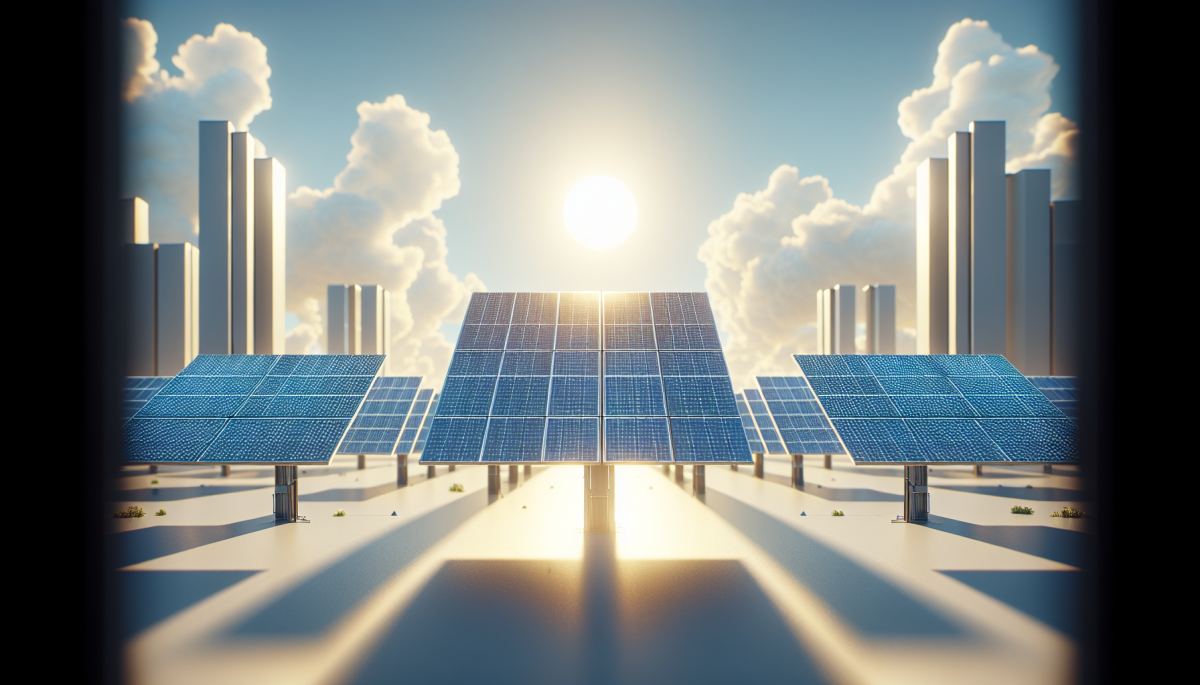
The geopolitical tremors coming out of the Middle East have a habit of reshuffling energy priorities faster than any carbon tax or international climate summit. The escalating tensions surrounding Iran are proving no different. Two new reports, arriving at a moment when governments from Tokyo to Berlin are quietly panicking about supply security, are making the case that renewable energy is no longer just a climate story. It is a national security story.
For decades, the argument for solar, wind, and battery storage was framed almost entirely around emissions and long-term planetary risk. That framing, however morally correct, never quite generated the urgency that policymakers respond to. Wars do. Price shocks do. The memory of sitting in a cold house because a pipeline runs through a contested border does. What the Iran situation is accelerating is a reframing that energy analysts have long hoped for: renewables as a strategic buffer against the volatility of fossil fuel markets, not merely a green alternative to them.
The global oil market has always been structurally fragile in ways that peacetime prices tend to obscure. Roughly 20 percent of the world's oil supply passes through the Strait of Hormuz, a narrow chokepoint that Iran has threatened to close during past confrontations with the West. Any serious disruption there does not just raise pump prices. It sends shockwaves through fertilizer costs, shipping rates, manufacturing inputs, and food supply chains. The cascade is wide and fast, and governments that built their energy systems around imported hydrocarbons feel it first and hardest.

This is the systemic vulnerability that the two new reports are pressing on. Energy-importing nations, particularly those in Asia and Europe that lack domestic fossil fuel reserves, have long understood this exposure in the abstract. What changes during a live geopolitical crisis is that the abstraction becomes concrete. Finance ministries start doing the math on what a 30 percent oil price spike would do to their current account deficits. Defense planners start asking whether energy dependence is a strategic liability. Suddenly, the capital expenditure required to build out domestic renewable capacity looks less like an environmental subsidy and more like an insurance premium.
The feedback loop here is worth naming clearly. Higher geopolitical risk raises the perceived cost of fossil fuel dependence. That perception shifts political will. Political will unlocks public investment and accelerates permitting. Faster deployment brings down the cost of renewables further, which makes the economic case even stronger independent of the security argument. The crisis, in other words, does not just make renewables more appealing in the short term. It can structurally accelerate the transition in ways that persist long after the immediate tensions ease.
The reports arrive at a moment when several major economies are already mid-pivot. The European Union, still recalibrating after the Russian gas crisis of 2022, has been pushing renewable deployment at a pace that would have seemed politically impossible five years ago. Japan, which has almost no domestic fossil fuel production, has been quietly expanding its offshore wind targets. South Korea is wrestling with how to reduce its exposure to Middle Eastern oil while managing a domestic nuclear debate. For all of these governments, a new Iran-linked supply shock is not a hypothetical. It is a planning scenario that just moved up the probability curve.
What makes the current moment distinct from previous oil crises is the maturity of the alternatives. During the 1973 oil embargo, there was no credible substitute waiting in the wings. Today, solar and wind are the cheapest sources of new electricity generation in most of the world. Battery storage costs have fallen roughly 90 percent over the past decade. The technology is ready. What has been missing, in many cases, is the political urgency to deploy it at scale. Geopolitical crisis has a way of supplying exactly that.
The second-order consequence worth watching is what happens to petrostates if this reframing takes hold broadly and durably. Nations whose entire fiscal architecture rests on hydrocarbon revenues face a compounding threat: not just the energy transition as a slow secular trend, but the energy transition as a security imperative being adopted simultaneously by their largest customers. That is a different kind of pressure, and it arrives on a much shorter timeline.
The Iran crisis may ease. Diplomatic channels may reopen. Oil prices may stabilize. But the governments that used this moment to accelerate their domestic energy buildout will have locked in a structural advantage that outlasts whatever happens in the Strait of Hormuz.
Discussion (0)
Be the first to comment.
Leave a comment