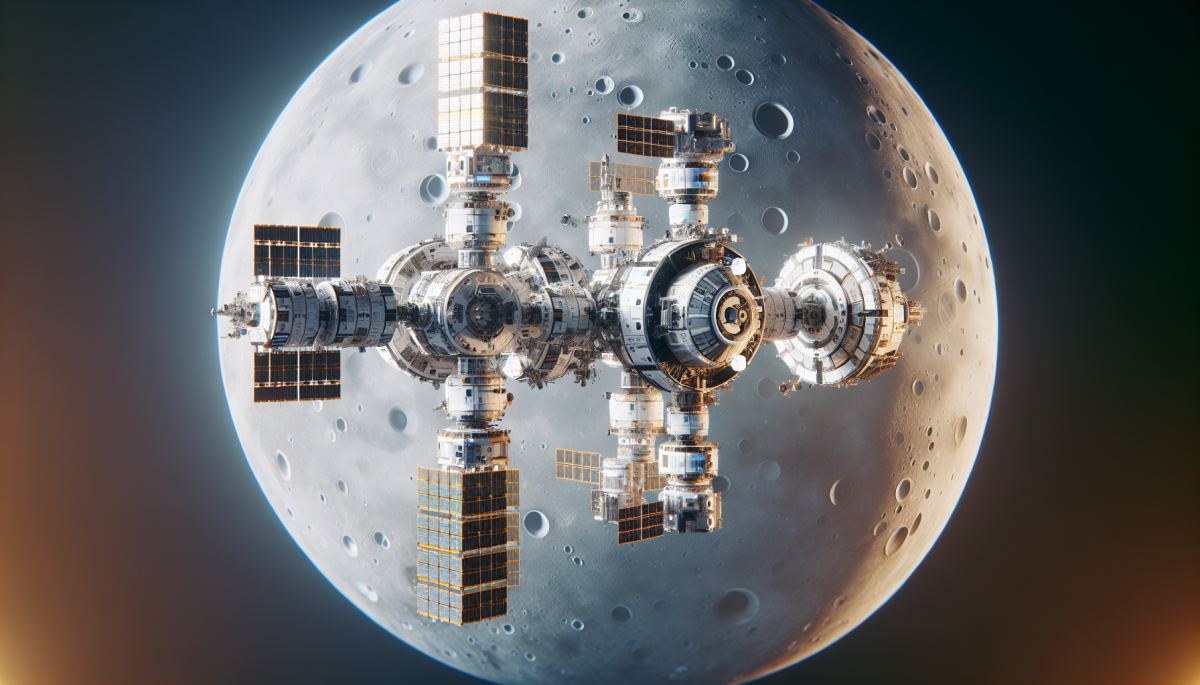
There is something almost poetic about a spacecraft designed to orbit the Moon being undone by the mundane chemistry of Earth's atmosphere. The Lunar Gateway, NASA's ambitious plan to establish a permanent outpost in lunar orbit as a staging point for Artemis missions, is facing a corrosion problem on its primary modules — and the hardware hasn't even launched yet.
The issue came to light through preliminary findings that, in the careful language of aerospace engineering, "likely results from a combination of factors." That phrasing is doing a lot of work. It signals that no single cause has been pinpointed, which in program management terms is often more alarming than a clear-cut failure. A known enemy can be fought. A diffuse, multi-causal degradation problem is the kind of thing that quietly expands in scope and cost while investigators are still drawing the fishbone diagram.
The Gateway program has already had a complicated trajectory. Originally conceived as a cornerstone of sustained lunar exploration, it has been scaled back, restructured, and debated repeatedly in Congressional budget cycles. The primary modules — the Power and Propulsion Element and the Habitation and Logistics Outpost — are being developed through partnerships with Maxar Technologies and Northrop Grumman respectively, with significant international contributions from ESA, JAXA, and the Canadian Space Agency. That multinational architecture means any delay or technical setback doesn't just ripple through NASA's schedule. It reverberates across partner agency timelines, contractual obligations, and the political capital that foreign governments have invested in the program.
Corrosion in aerospace hardware is not exotic. It is, in fact, one of the oldest and most persistent adversaries in the industry. What makes this situation notable is where it is happening: on modules that are supposed to be in storage or pre-launch processing, not exposed to the kinds of electrochemical environments that corrode hardware in service. The fact that degradation is occurring on the ground, before integration and launch, raises uncomfortable questions about storage protocols, facility conditions, and quality assurance processes that should have caught this earlier.

The aerospace industry has well-established standards for protecting flight hardware during ground processing. NASA's own guidelines, along with those from standards bodies like ASTM International, specify humidity controls, protective coatings, and inspection intervals precisely because long manufacturing and integration timelines create windows for environmental damage. If corrosion has taken hold despite those protocols, it suggests either that the protocols weren't followed, that they were insufficient for the specific materials involved, or that the combination of factors investigators are now untangling exposed a gap nobody anticipated. None of those explanations is particularly comforting.
Cost is the immediate downstream consequence. Remediation of corroded flight hardware is painstaking and expensive. Depending on the depth and extent of the damage, affected components may need to be stripped, treated, re-coated, re-tested, and re-certified — a process that can take months and consume budget that was already stretched. The Gateway program has faced funding pressure for years, and this kind of unplanned remediation work competes directly with forward progress on other program elements.
The more consequential systems-level effect may be what this does to the broader Artemis schedule. The Gateway is not on the critical path for Artemis III, the mission intended to return humans to the lunar surface, but it is central to the longer-term vision of sustained presence. If the corrosion problem causes significant delays, it pushes back the point at which the Gateway becomes operationally useful, which in turn affects how NASA plans crew rotation missions, science operations, and the logistics of deep-space exploration architecture.
There is also a subtler credibility dynamic at play. International partners committed to the Gateway based on a schedule and a set of technical assurances. Repeated setbacks — and this program has had several — erode the confidence of partner agencies when they return to their own governments to justify continued investment. The European Space Agency, for instance, is contributing the ESPRIT module and refueling capabilities. Each delay makes that contribution harder to defend in European budget negotiations.
What the corrosion story ultimately reveals is a systems problem that goes beyond chemistry. It reflects the compounding risk of long development timelines, the difficulty of maintaining hardware integrity across years of ground processing, and the organizational challenge of sustaining quality discipline on a program that has been repeatedly restructured. The Gateway was meant to be humanity's first permanent foothold in cislunar space. Whether it can get off the ground — literally — may depend less on rocket science than on whether investigators can fully untangle what "a combination of factors" actually means before the damage spreads further.

Discussion (0)
Be the first to comment.
Leave a comment