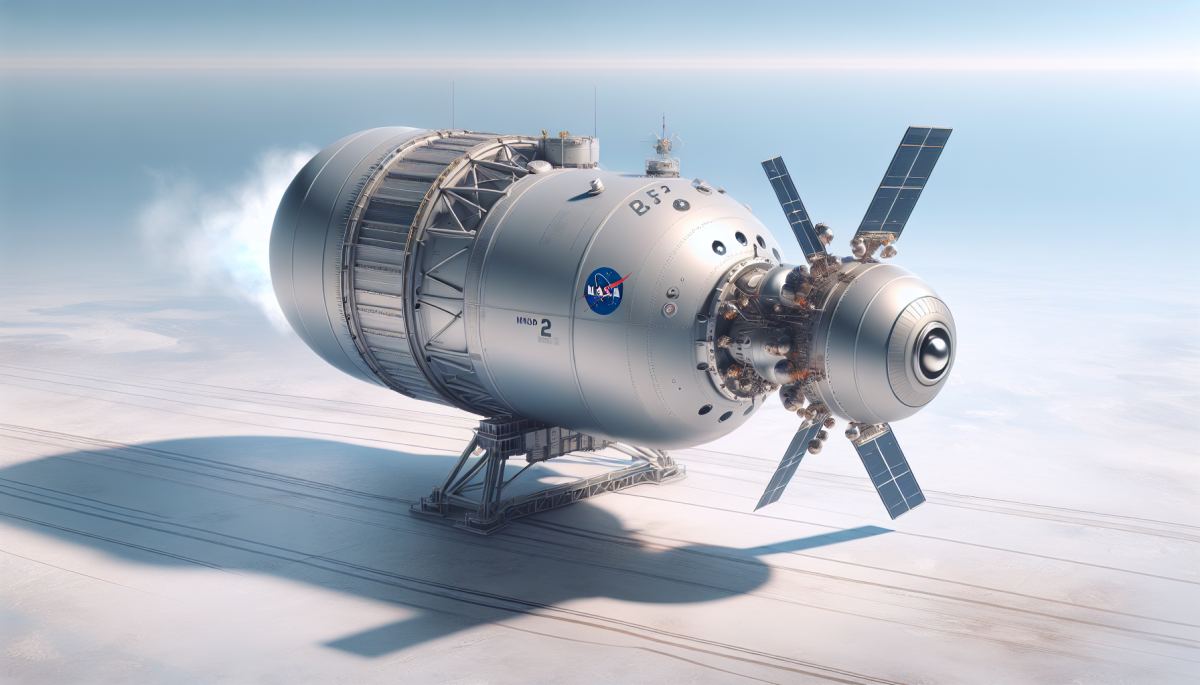
The timing was almost theatrical. Just as NASA's Artemis II mission was completing its historic crewed loop around the moon, the agency quietly unveiled something far more ambitious: a plan to build the first nuclear reactor-powered interplanetary spacecraft. The juxtaposition was not accidental. While Artemis represents the near-term return to lunar orbit, the nuclear propulsion program signals where NASA believes deep space exploration must eventually go.
Chemical rockets, the workhorses of every crewed and uncrewed mission since Sputnik, operate under a fundamental physical ceiling. They burn fuel to generate thrust, and the ratio of fuel mass to payload mass becomes brutally punishing the farther you want to travel. A mission to Mars using conventional propulsion requires months of transit time, exposes astronauts to prolonged radiation, and demands enormous fuel reserves. Nuclear thermal propulsion, by contrast, uses a reactor to superheat a propellant like hydrogen and expel it at far greater velocities than chemical combustion can achieve. The result is roughly twice the fuel efficiency, which in mission planning terms translates to shorter travel times, smaller vehicles, or heavier payloads. Possibly all three.
Nuclear propulsion is not a new idea. NASA and the Soviet space program both explored it seriously during the 1960s under programs like NERVA, the Nuclear Engine for Rocket Vehicle Application, which completed ground tests but never flew. What killed it then was a combination of political anxiety about nuclear technology, the end of the Apollo-era funding surge, and the absence of a concrete mission that demanded it. What is different now is that the mission demand has become concrete. Getting humans to Mars and back within a reasonable timeframe, before the radiation exposure becomes medically catastrophic, is a problem that chemical propulsion cannot cleanly solve.
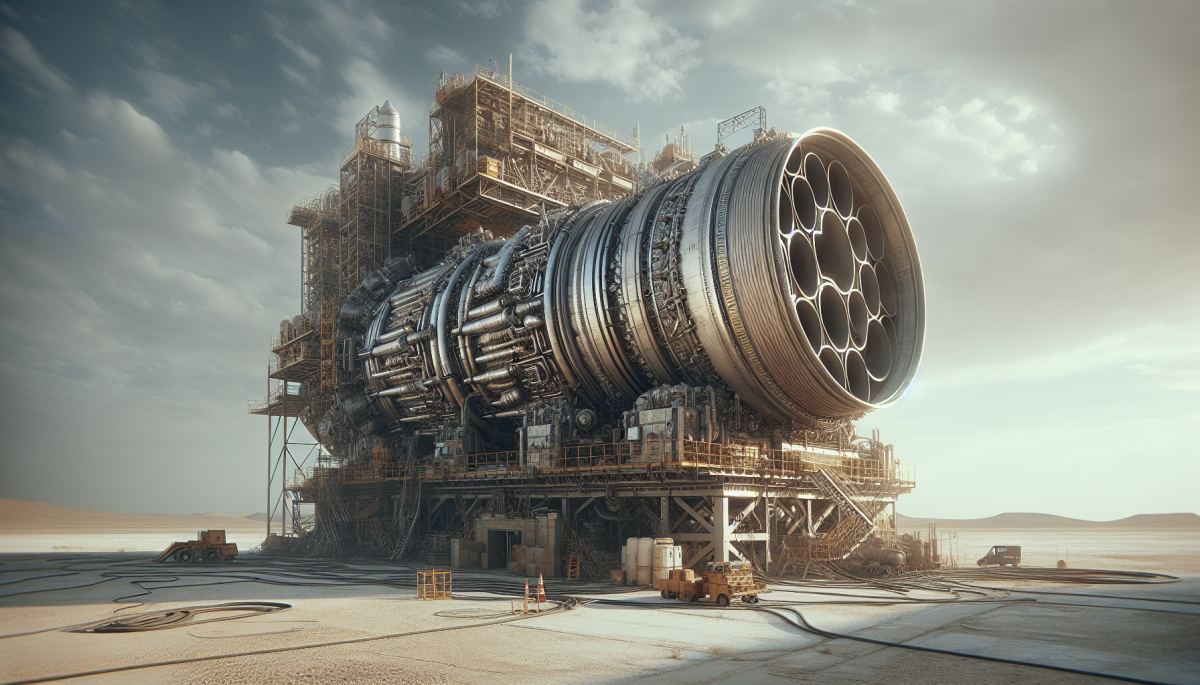
The engineering challenge is considerable. A nuclear reactor operating in deep space must be compact enough to launch, robust enough to survive the journey, and controllable enough to throttle thrust across months of operation. Shielding the crew from reactor radiation while keeping the spacecraft's mass manageable is a design problem that has no elegant off-the-shelf answer. The reactor must also start reliably after sitting dormant during launch, a requirement that demands a level of engineering redundancy that adds weight and complexity.
None of this is insurmountable, but it is genuinely hard, and the gap between a successful ground demonstration and a flight-ready system is where ambitious space programs have historically stumbled. NASA's current nuclear propulsion work sits within its Space Technology Mission Directorate, and the agency has been partnering with the Defense Advanced Research Projects Agency on a program called DRACO, the Demonstration Rocket for Agile Cislunar Operations, which aims to test a nuclear thermal rocket engine in orbit. That demonstration, if it proceeds, would be the first in-space test of nuclear propulsion by the United States in over half a century.
The second-order effects of a successful nuclear propulsion program extend well beyond faster Mars transits. If nuclear thermal propulsion becomes a reliable platform, it fundamentally changes the economics and logistics of the outer solar system. Missions to Jupiter's moons, Saturn's rings, or the ice giants Uranus and Neptune, which currently require decade-long cruise phases and gravity assist acrobatics, become substantially more accessible. Science that is presently generational in its timeline could compress into something closer to a human career span.
There is also a geopolitical dimension that rarely surfaces in the technical coverage. China has publicly stated its own interest in nuclear-powered spacecraft as part of its long-range space ambitions. If nuclear propulsion becomes the decisive capability separating first-tier and second-tier spacefaring nations, the current moment of American investment carries strategic weight that goes beyond exploration for its own sake. The race dynamic that animated the original NERVA program has not disappeared; it has simply acquired new participants.
Perhaps the most underappreciated consequence is what a successful nuclear spacecraft program does to the regulatory and public perception environment around nuclear technology more broadly. Space has historically served as a proving ground for technologies that later migrate to terrestrial applications. A generation that grows up watching nuclear reactors power humanity's reach to Mars may relate to the word "nuclear" rather differently than the generation shaped by Three Mile Island and Chernobyl. That shift in cultural baseline, slow and difficult to measure, could matter enormously for the energy transition debates of the 2040s and beyond.
Discussion (0)
Be the first to comment.
Leave a comment