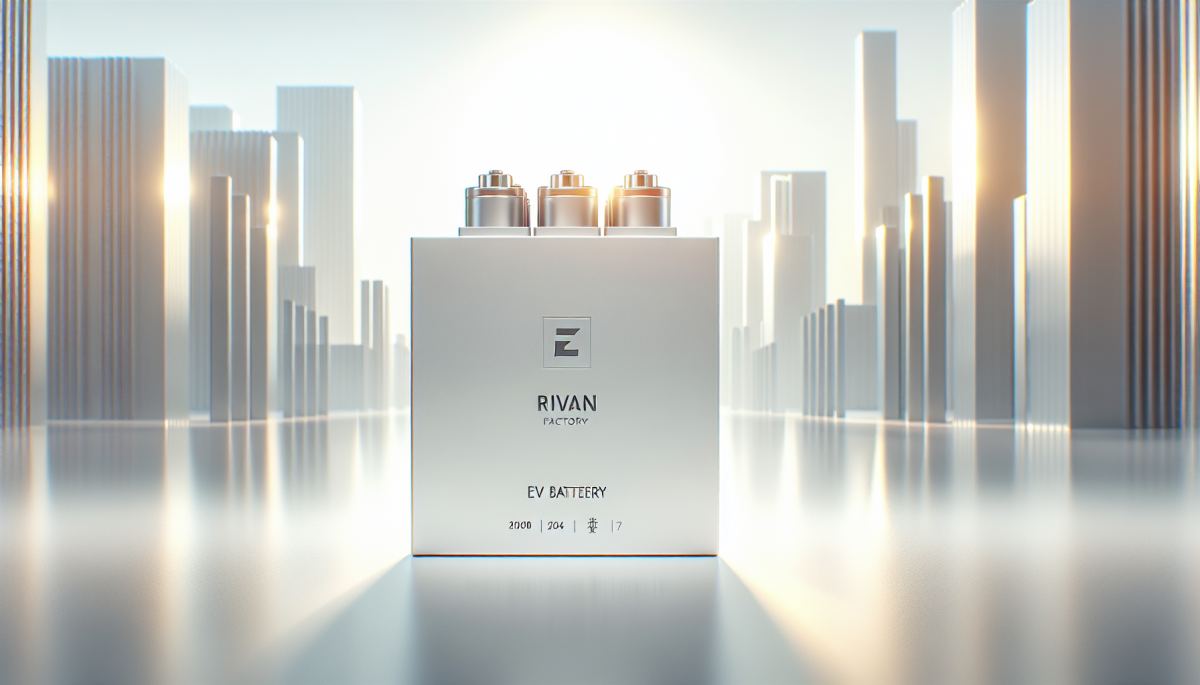
There is something quietly elegant about a factory that powers itself with the same batteries it once built. Rivian has announced plans to repurpose degraded lithium-ion battery packs from its electric vehicles into stationary energy storage systems at its Normal, Illinois manufacturing plant. The move is not just a feel-good sustainability gesture. It reflects a deeper reckoning with a problem the EV industry has been slow to confront: what happens to the batteries after the cars are done with them.
Lithium-ion cells degrade over time. A battery pack that has lost 20 to 30 percent of its original capacity is no longer suitable for powering a vehicle across hundreds of miles, but it still holds enormous electrochemical potential. For a factory that needs to store grid energy, shave peak demand charges, or buffer renewable generation, that remaining capacity is more than adequate. Rivian is essentially closing a loop that most automakers leave wide open.

The economics here are not trivial. Industrial electricity customers in the U.S. can face demand charges that account for anywhere from 30 to 70 percent of their total electricity bill, according to the U.S. Department of Energy. A large battery storage system can smooth out those spikes dramatically. By using batteries it already owns rather than purchasing new commercial storage units, Rivian avoids both the procurement cost and the awkward optics of discarding functional technology. The degraded packs become an asset rather than a liability.
The broader EV industry has talked about battery second-life applications for years, but actual deployment has lagged behind the rhetoric. Part of the friction is logistical: collecting, testing, and repackaging used battery modules requires infrastructure and expertise that most automakers have not built. There are also liability questions about warranting repurposed cells, and the economics only work cleanly when the cost of refurbishment stays well below the cost of new storage hardware.
Rivian's vertical integration gives it an unusual advantage here. Because it manufactures its own vehicles and controls the battery architecture, it has detailed data on the health and history of every pack that comes back to it. That diagnostic visibility is something a third-party recycler rarely has. The company essentially knows its batteries better than anyone else could, which makes the repackaging process more predictable and the resulting storage systems more reliable.
This is also a bet on timing. Battery recycling and second-life markets are still maturing. Regulatory frameworks in the European Union are moving toward mandatory battery passports and end-of-life accountability, and U.S. policy is beginning to follow. Companies that build internal second-life infrastructure now will be better positioned when those requirements tighten. Rivian is not just solving today's waste problem; it is building a capability that could become a competitive requirement within a decade.
The second-order consequences of this model extend well beyond one factory in Illinois. If Rivian's approach proves economically sound, it creates pressure on other automakers to develop similar programs or risk being seen as wasteful by regulators, investors, and consumers alike. It also subtly changes the calculus around battery design. Engineers who know their packs will have a second life in stationary storage have an incentive to design for longevity and modularity in ways that pure vehicle performance optimization does not demand.
There is a feedback loop worth watching here. As more used EV batteries enter the stationary storage market, they compete with new commercial battery storage products from companies like Tesla Energy and others. If second-life batteries become cheap and abundant enough, they could suppress prices in the grid storage segment, which would accelerate adoption of storage broadly, which would in turn increase demand for EVs, which would produce more used batteries. The loop is not guaranteed to be tidy, but the directional pressure is real.
For communities near manufacturing plants, there is also a resilience dimension. Factories with large on-site storage can island themselves during grid disruptions, reducing vulnerability to outages that have become more frequent as climate-driven weather events stress aging infrastructure.
Rivian's Normal plant is a single data point right now. But the logic it embodies, that the waste stream of one industrial process can become the feedstock of another, is the kind of systems thinking that tends to spread once it is proven to work. The question is not whether other automakers will eventually follow. It is whether they will do so before regulators make the choice for them.

Discussion (0)
Be the first to comment.
Leave a comment