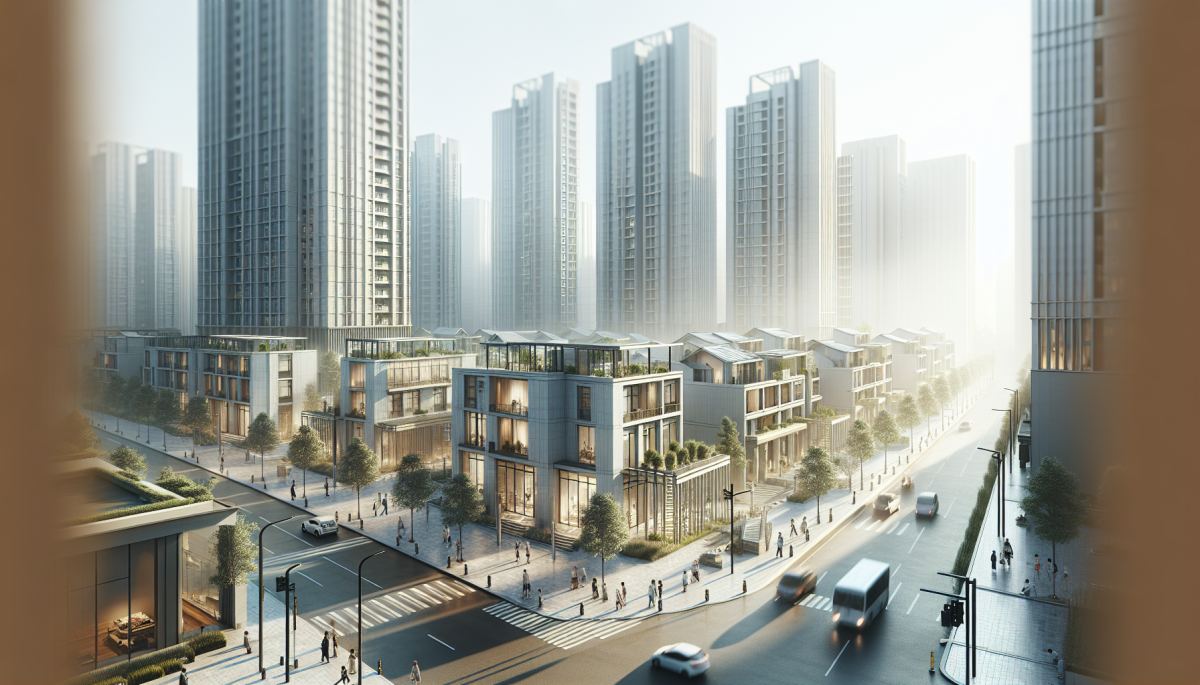
When a real estate sector accounts for roughly a quarter of an economy's GDP, its collapse is never a contained event. China's property market, which ballooned across three decades of urbanization and debt-fueled speculation, has been unwinding since Evergrande's implosion in 2021. Most analysts initially framed it as a liquidity problem, something Beijing could patch with targeted stimulus and a few developer bailouts. Four years on, the evidence suggests something more structural is at work, and credible forecasts now place the market's full reckoning somewhere around 2030.
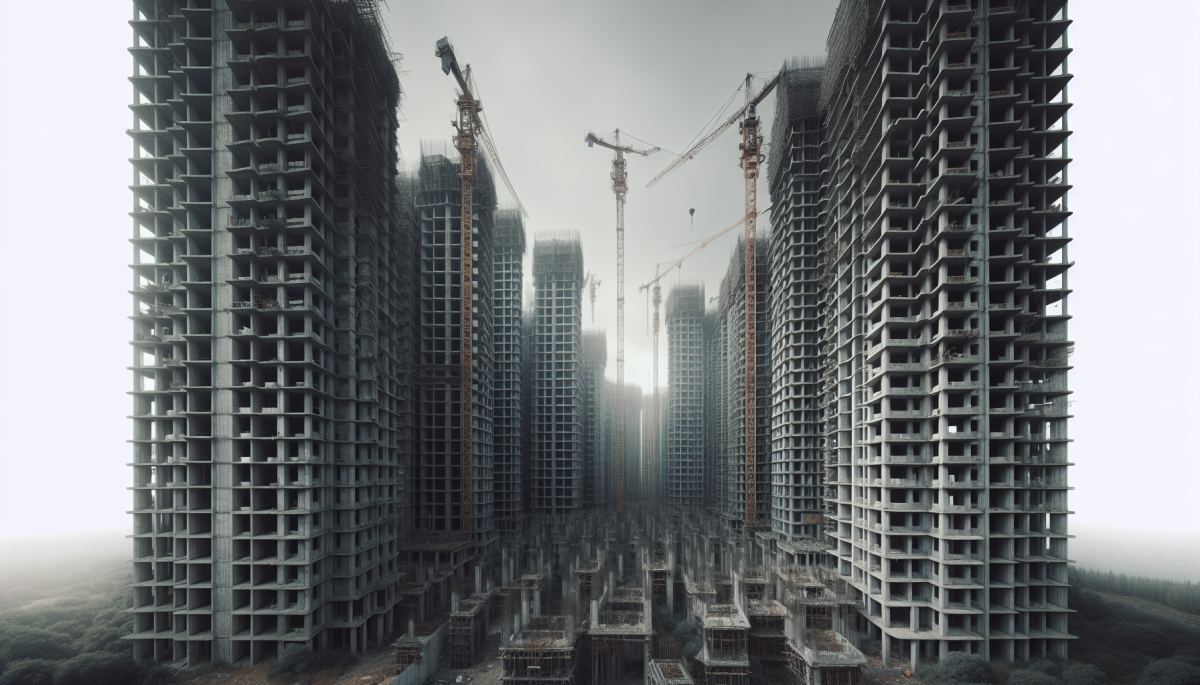
The numbers are difficult to overstate. China has an estimated 65 million to 80 million unoccupied housing units, a ghost inventory built during years when local governments depended on land sales for the bulk of their fiscal revenue. Developers pre-sold apartments that were never completed, leaving millions of buyers holding mortgages on what the Chinese internet grimly calls "rotten-tail buildings." Household wealth in China is disproportionately tied to property, with some estimates placing real estate at around 70 percent of household assets. When prices fall, consumer confidence doesn't just dip, it collapses inward, triggering exactly the kind of demand destruction that makes recovery harder to engineer.
Beijing's instinct to manage the narrative around the crisis has compounded its ability to manage the crisis itself. Social media posts documenting unfinished developments, mortgage boycotts, and falling prices have been systematically scrubbed from platforms like Weibo and WeChat. The intent is to prevent panic from becoming self-fulfilling. The effect, however, is that price signals are distorted and public trust in official data erodes further. When citizens can't discuss the scale of the problem openly, they tend to assume the worst privately, which means they hold back spending and investment even more aggressively than the underlying conditions might warrant.
This is a textbook second-order consequence of information suppression in a financial system. Markets need bad news to clear. Buyers need to believe prices have genuinely bottomed before they'll commit. If the government's visible hand keeps propping up nominal prices while real demand stays absent, the market can't find its floor. Japan's "lost decade" after its own property bubble is the most cited parallel, though Japan's demographic and institutional conditions were different enough that the comparison has limits. China's version may prove slower to resolve precisely because the political incentives against acknowledging losses are so much stronger.
The structural trap runs deeper than household balance sheets. Local governments across China financed themselves for decades through land sales to developers. As developer demand for land has collapsed, so has a critical revenue stream for municipalities that were already carrying substantial hidden debt through off-balance-sheet financing vehicles. The result is a feedback loop with no clean exit: local governments can't spend their way to recovery because they're fiscally constrained, and they're fiscally constrained partly because the property market they depended on has stopped generating revenue.
Beijing has attempted to break this loop through a series of interventions, including cutting mortgage rates, relaxing purchase restrictions in major cities, and launching programs to have state-backed entities purchase unsold inventory. The measures have produced brief rallies in transaction volumes without reversing the underlying price trend in most markets outside of tier-one cities like Shanghai and Beijing. The problem is that stimulus designed to restore confidence works best when the underlying asset is fundamentally sound. When the market is oversupplied by tens of millions of units, demand-side incentives can only do so much.
The second-order consequence that deserves more attention is what a prolonged property slump does to China's broader consumption transition. For years, policymakers have acknowledged that China needs to rebalance away from investment and exports toward domestic consumption. That transition requires Chinese households to feel wealthy enough to spend. A generation watching their primary asset depreciate while carrying mortgages on unfinished apartments is not a generation primed to drive a consumer economy. If the property correction runs to 2030 as some analysts project, China's window for engineering that rebalancing before demographic headwinds intensify may close before the market does.
The question isn't whether China's property sector will eventually stabilize. It will. The more consequential question is what kind of economy, and what kind of social contract between citizens and the state, emerges on the other side of a decade-long correction that the government spent years insisting wasn't happening.
Discussion (0)
Be the first to comment.
Leave a comment