The article is about retiring to college campuses and includes "6 steps to take before enrolling," which frames it as a consumer advice/guide piece oriented around a lifestyle product decision. While the topic has some systemic interest, the source is structured as a how-to consumer guide rather than a news event or systemic development I can meaningfully expand on without fabricating details. However, the underlying phenomenon — years-long waiting lists for university-based retirement communities — is a genuine and underreported systems story worth telling independently of the listicle framing.
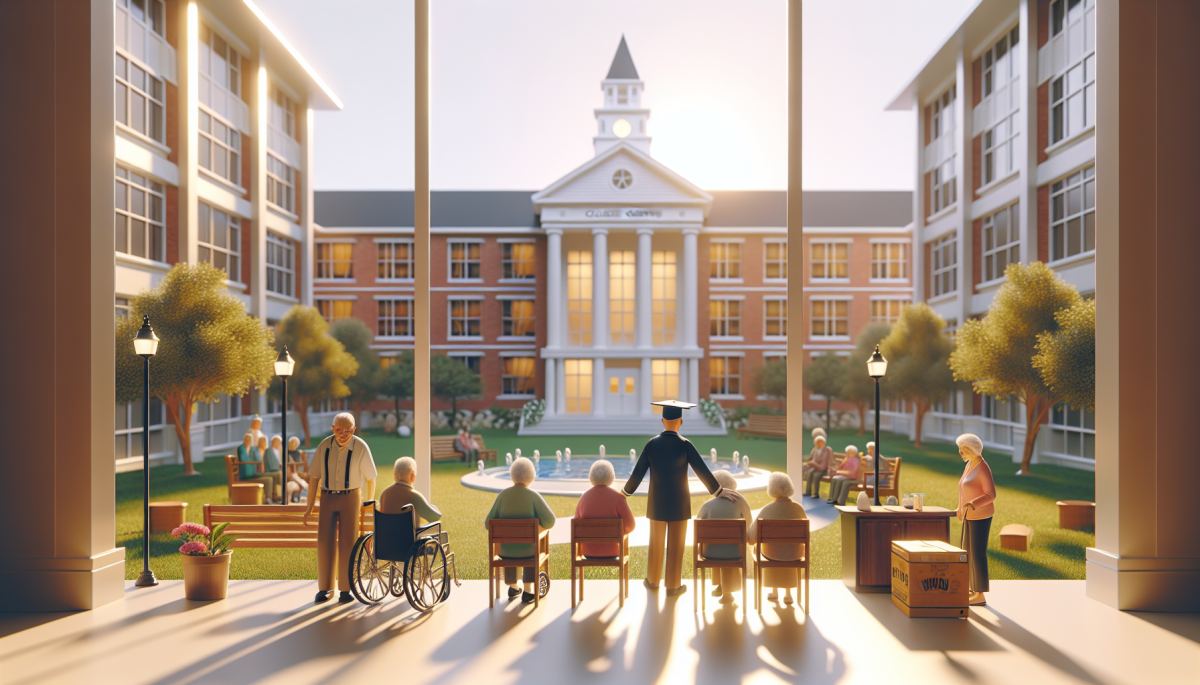
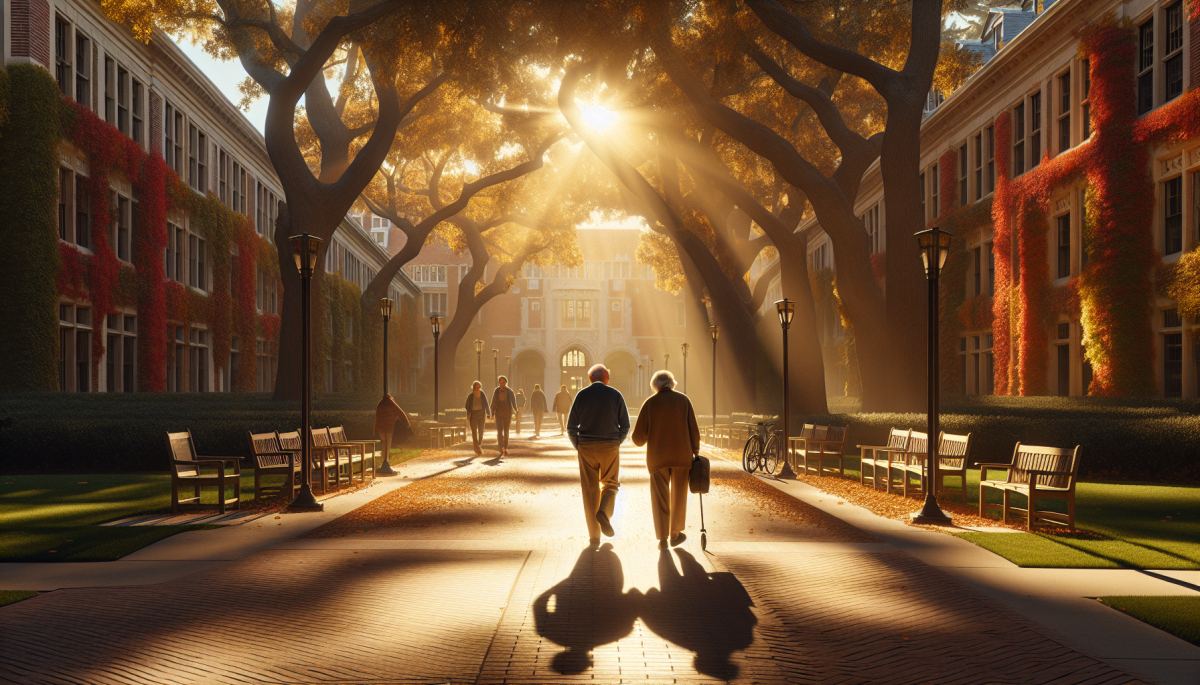
{"headline":"America's University Retirement Communities Are Oversubscribed and Undersupplied","body":"The waiting lists stretch for years. At some university-linked retirement communities across the United States, prospective residents are queuing up a decade in advance, paying deposits just to hold a spot they may not occupy until well into their seventies. The demand is real, the supply is constrained, and the forces driving both tell a revealing story about how aging, wealth, and the American university are becoming increasingly entangled.\n\nUniversity-based retirement communities, sometimes called university-linked retirement communities or ULRCs, have existed in various forms since the 1980s. The concept is straightforward: older adults, often alumni, relocate to purpose-built communities adjacent to or affiliated with a college campus, gaining access to lectures, libraries, athletic facilities, and the general intellectual atmosphere of academic life. What has changed in recent years is the intensity of demand. Baby Boomers, the largest and wealthiest generational cohort in American history, are now entering their retirement years in enormous numbers, and a meaningful slice of them are college-educated professionals who want their final decades to feel less like a slow withdrawal from life and more like a continuation of it.\n\nThe economics, however, are not gentle. Entry fees at many of these communities run into the hundreds of thousands of dollars, and monthly fees on top of that can rival a Manhattan apartment. This is not retirement for the median American. It is retirement for a specific class of older adult: the professor emeritus, the retired physician, the former corporate executive who spent four years at a flagship state university and never quite stopped thinking of it as home. The financial barrier is both a feature and a bug. It keeps these communities small and exclusive, which is precisely what generates the waiting lists, but it also means the model cannot scale to meet broader demographic need.\n\n[SECTION: The Campus as a Care Model]\n\nWhat makes university retirement communities genuinely interesting from a systems perspective is that they represent an attempt to solve one of the most stubborn problems in elder care: isolation. Loneliness among older adults has been described by the U.S. Surgeon General as a public health epidemic, with measurable effects on cardiovascular health, cognitive decline, and mortality. The campus environment, with its built-in social infrastructure, regular programming, and intergenerational contact, offers something that most assisted living facilities structurally cannot: a reason to leave your room every morning.\n\nResearch on aging consistently finds that purpose, social engagement, and continued learning are among the strongest predictors of healthy longevity. Universities, almost by accident, provide all three. The proximity to students creates informal mentorship dynamics. Access to continuing education programs keeps cognitive engagement high. The physical design of campuses, built for walking between buildings, encourages movement in ways that car-dependent suburban retirement developments do not.\n\nBut the model carries a second-order risk that rarely gets discussed. As universities face their own enrollment pressures and financial strains, the retirement community can quietly shift from a peripheral amenity to a revenue stream the institution comes to depend on. When that happens, the interests of the university and the interests of the residents do not always align. Expansion pressure, real estate decisions, and fee structures can begin to reflect institutional financial needs rather than resident wellbeing. The retiree becomes, in a subtle but important sense, a funding mechanism.\n\n[SECTION: A Demand the Market Cannot Absorb]\n\nThe years-long waiting lists are not simply a sign of popularity. They are a signal of structural undersupply in a market that has not kept pace with demographic reality. The number of Americans aged 65 and older is projected to nearly double between 2020 and 2060, according to the U.S. Census Bureau. The number of university-affiliated retirement communities has grown, but nowhere near proportionally. Building new ones requires land adjacent to campuses, institutional willingness to take on the partnership, and capital investment that many universities, already stretched thin, are reluctant to commit.\n\nThe result is a quiet but intensifying competition among a growing cohort of affluent older adults for a fixed and slowly expanding set of spots. Those who plan early, who put down deposits years or even decades before they intend to move, will secure places. Those who wait, or who cannot afford the entry fees, will not. The waiting list, in this sense, is not just a logistical inconvenience. It is a rationing mechanism for a particular vision of dignified aging, one that remains available only to those with the foresight and the financial resources to claim it early.\n\nWhat happens to the version of this idea that could work for everyone else remains, for now, an open question that neither universities nor policymakers have seriously begun to answer.\n\n","excerpt":"Years-long waiting lists at university retirement communities reveal a rationing system for dignified aging that only the wealthy and well-prepared can access.","tags":["aging","retirement","higher education","elder care","demographics"]}
Discussion (0)
Be the first to comment.
Leave a comment