
When American and Iranian negotiators quietly landed in Islamabad this week, they carried with them the weight of decades of failed diplomacy, broken agreements, and mutual suspicion that has defined one of the world's most consequential standoffs. Vice President JD Vance offered a rare note of measured hope ahead of the talks, describing the expected outcome as "positive" — a word that, in the careful grammar of international diplomacy, carries enormous freight.
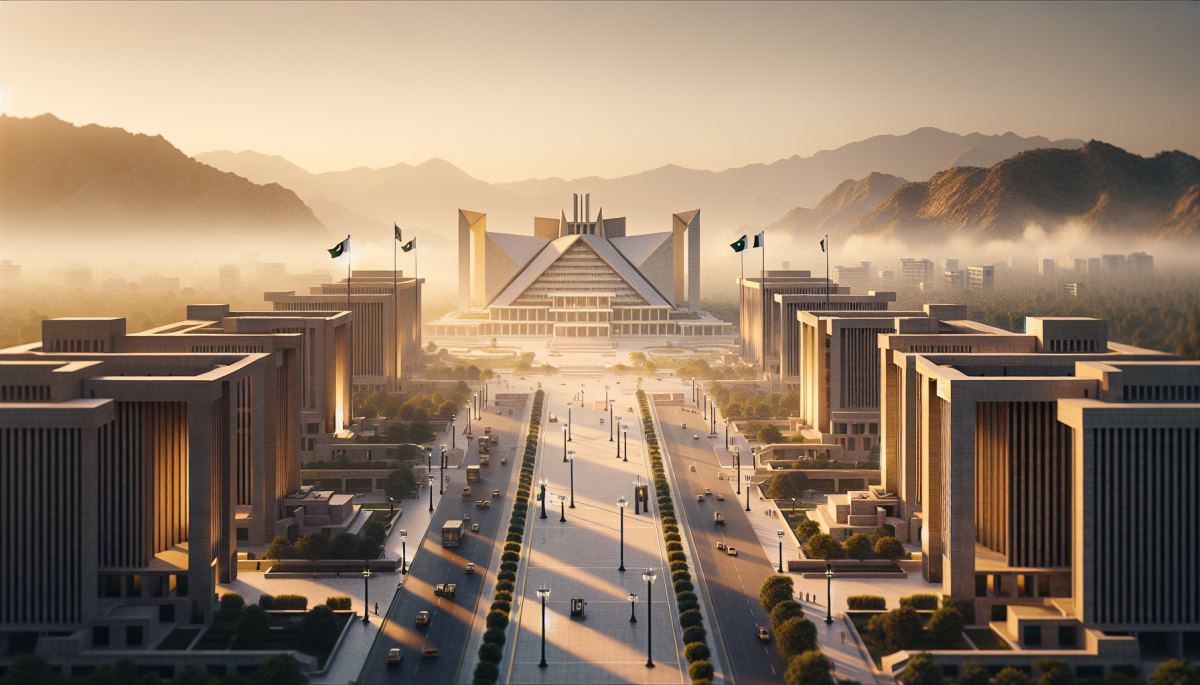
The choice of Pakistan as a venue is itself a signal worth reading carefully. Islamabad occupies a peculiar geopolitical middle ground: a nuclear-armed state with deep ties to both Washington and the broader Muslim world, a country that has historically served as a back-channel corridor when direct communication between adversaries becomes politically impossible. Hosting these talks gives Pakistan a moment of diplomatic relevance at a time when its own domestic stability remains fragile and its relationship with the United States has been complicated by years of tension over counterterrorism cooperation and aid flows.
What is driving both sides to the table now matters as much as what happens at the table itself. Iran's economy has been battered by successive rounds of sanctions, with inflation running at punishing levels and the rial having lost a staggering portion of its value over the past several years. The International Monetary Fund has repeatedly flagged Iran's economic vulnerabilities, and internal pressure from a population that has grown increasingly restless — as evidenced by the protests that swept the country following the death of Mahsa Amini in 2022 — creates a domestic incentive for the Iranian government to seek some form of sanctions relief.
On the American side, the calculus is different but no less urgent. The Trump administration, now in its second term with Vance as a central foreign policy voice, has consistently framed its Iran posture around preventing nuclear proliferation while avoiding the kind of open military conflict that would destabilize an already volatile Middle East. Israel's concerns hover over every conversation: any deal that leaves Iran with meaningful uranium enrichment capacity will face fierce opposition from Tel Aviv, and the United States cannot easily ignore that pressure without fracturing a critical alliance.
This is the feedback loop that has trapped U.S.-Iran diplomacy for years. Iran enriches uranium to gain leverage. The United States imposes sanctions to push back. Iran enriches further to demonstrate that sanctions alone won't force capitulation. Each cycle leaves both sides with fewer options and higher stakes, while the underlying technical reality — that Iran's nuclear knowledge cannot be uninvented — grows more irreversible with time.
If these talks produce even a preliminary framework, the second-order consequences would ripple well beyond the immediate question of uranium centrifuges. A sanctions relief agreement would inject meaningful capital back into the Iranian economy, potentially stabilizing a government that some analysts believe is more brittle than it appears from the outside. That stability, paradoxically, could either moderate Iranian regional behavior or embolden it — history offers examples of both outcomes following periods of economic relief.
For the broader Middle East, a U.S.-Iran rapprochement of any kind reshuffles the regional order in ways that Saudi Arabia, the UAE, and Israel would each interpret through their own threat assessments. The Abraham Accords, which normalized relations between Israel and several Arab states, were built partly on a shared wariness of Iranian power. A softening of American pressure on Tehran could complicate those relationships in ways that take years to fully surface.
There is also the question of what a failed round of talks produces. Diplomatic failures are not neutral events. They tend to harden positions, provide ammunition to hardliners on both sides, and shrink the political space for future negotiations. If Islamabad ends without progress, the next move in the cycle is likely to be escalatory rather than conciliatory — and in a region where miscalculation has historically carried catastrophic costs, that is not a trivial risk.
Vance's optimism, whether strategic or sincere, reflects an understanding that the window for a negotiated outcome is not permanently open. The longer Iran's nuclear program advances, the narrower the range of agreements that any American administration could credibly defend to Congress, to Israel, and to the American public. Islamabad may not be the moment everything changes — but it may be one of the last moments where change remains genuinely possible.
References
- International Monetary Fund (2024) — Islamic Republic of Iran: Staff Concluding Statement
- BBC News (2025) — JD Vance says US-Iran talks should be positive as negotiators arrive in Islamabad
- Arms Control Association (2024) — The Iran Nuclear Deal at a Glance
- Council on Foreign Relations (2023) — Iran's Nuclear Program
Discussion (0)
Be the first to comment.
Leave a comment