
For years, the architecture of cloud storage has quietly imposed a tax on software development. Object storage systems like Amazon S3 were designed for durability and scale, not for the kind of hierarchical, path-based navigation that applications and, increasingly, AI agents expect. Files live in buckets, accessed through API calls, not through the familiar directory trees that most software tools are built to traverse. That mismatch has been manageable for traditional workloads, but the rise of agentic AI has turned a chronic inconvenience into a genuine architectural problem.
Amazon's answer is S3 Files, a new capability that gives S3 a native file system interface. Instead of requiring developers to maintain a separate file system layer alongside their object storage, synchronize data between the two, and build translation logic to bridge the gap, S3 Files lets AI agents interact with S3 using standard file system tools, including directory navigation and file path references. The object-file split, which has long forced engineering teams to duplicate infrastructure and manage sync pipelines, is now something Amazon is absorbing at the storage layer itself.
The timing is not accidental. Multi-agent AI pipelines, where multiple specialized models hand off tasks to one another, have become a dominant pattern in enterprise AI deployment. These pipelines depend on shared, persistent workspaces. One agent might retrieve a document, another might annotate it, a third might summarize or transform it. Each step assumes the previous one left something readable in a predictable location. Object storage, with its API-mediated access model, breaks that assumption. Agents built on standard file system abstractions simply cannot navigate an S3 bucket the way they would navigate a local directory, which means every team building multi-agent systems has been solving the same plumbing problem from scratch.
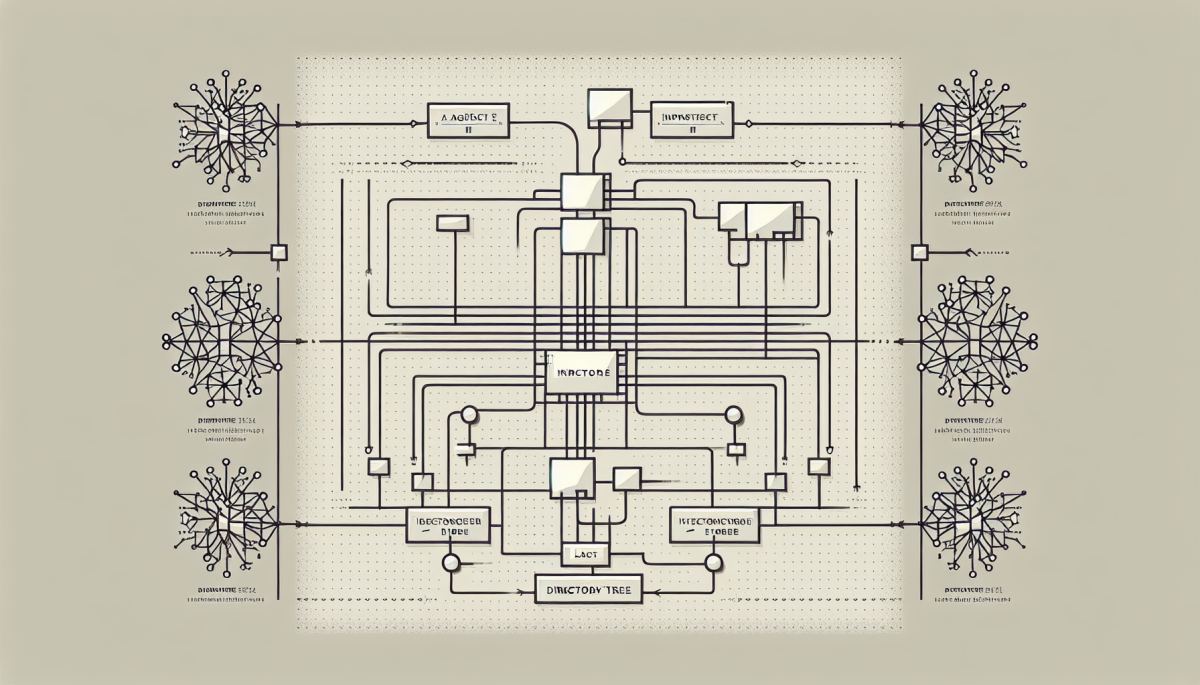
The scale of that redundant effort is easy to underestimate. Enterprises running serious AI workloads on AWS have typically maintained parallel storage architectures: S3 for durability and cost efficiency, plus a file system layer, often Amazon EFS or a third-party equivalent, for anything requiring path-based access. Keeping those two systems aligned requires sync pipelines that introduce latency, create consistency risks, and add operational overhead. When an AI agent reads a file that hasn't finished syncing, the results can range from subtly wrong to catastrophically wrong, depending on what the agent does next.
That consistency problem compounds in multi-agent settings. If two agents are operating concurrently on what they believe is the same shared workspace, but their views of that workspace are mediated by different sync states, the pipeline's behavior becomes difficult to reason about and harder to debug. The engineering response has generally been to add more synchronization logic, which adds more latency, which slows the pipeline, which undermines one of the core promises of agentic AI: that distributed, parallel task execution can be faster and more capable than sequential processing.
By collapsing the object-file distinction at the storage layer, S3 Files removes the synchronization problem at its source. There is no longer a separate file system to keep aligned with S3, because S3 is the file system. The consistency guarantees that S3 already provides for object storage now extend to file system operations, which means multi-agent pipelines can share a workspace without the engineering team having to build and maintain the consistency layer themselves.
The more consequential shift may be what this does to the broader AI infrastructure market. A significant portion of the tooling that has grown up around enterprise AI, including managed file system services, storage synchronization platforms, and data pipeline middleware, exists precisely because object storage and file system access were incompatible. If Amazon successfully absorbs that compatibility layer into S3 itself, the market rationale for some of those tools weakens considerably.
This is a familiar pattern in cloud infrastructure. Amazon has a long history of identifying the workarounds its customers are building on top of AWS and then building those workarounds into the platform itself. Each time it does, a category of third-party tooling faces pressure. The companies that survive are typically those that have moved up the stack, offering capabilities that the platform layer cannot easily commoditize.
For AI developers, the near-term effect is simpler and more immediate: less plumbing, more building. But the longer-term consequence is that the architectural assumptions baked into the next generation of agentic frameworks will be shaped by what the cloud platforms natively support. If S3 Files becomes the default workspace for AI agents running on AWS, the design patterns that emerge from that will influence how multi-agent systems are built well beyond Amazon's own ecosystem. Infrastructure choices have a way of becoming invisible constraints, and the constraints being removed today are quietly setting the boundaries of what gets built tomorrow.
Discussion (0)
Be the first to comment.
Leave a comment