
Most people think of Alzheimer's disease as something that announces itself gradually, through forgotten names and misplaced keys. But a growing body of research suggests the biological groundwork is laid decades earlier, in changes so subtle they escape clinical notice entirely. A new study focusing on APOE4, the most significant genetic risk factor for late-onset Alzheimer's, has found that the allele doesn't simply increase the odds of disease. It actively reshapes the brain's electrical architecture before a single symptom appears.
The research, conducted in mice, found that hippocampal neurons carrying the APOE4 variant are physically smaller than those without it and, crucially, far more excitable. That hyperexcitability is not a minor quirk. It resembles patterns seen in epilepsy and in brains that have aged at an accelerated rate, two conditions that themselves carry elevated Alzheimer's risk. The hippocampus, the brain's primary hub for forming new memories, is precisely the region that deteriorates earliest in Alzheimer's patients. Finding that APOE4 is already destabilizing that region at the cellular level, long before plaques or tangles accumulate, reframes the disease in an important way.
APOE4 is carried by roughly 25 percent of the general population and is present in an estimated 40 to 65 percent of people who develop Alzheimer's disease. Inheriting one copy roughly triples a person's lifetime risk; inheriting two copies from both parents can increase it tenfold. Despite decades of research, the precise mechanisms by which APOE4 promotes neurodegeneration have remained frustratingly elusive. The protein it encodes is involved in lipid transport and cholesterol metabolism in the brain, but that explanation has never fully accounted for the scale of its effect on disease risk.
The new findings point toward a different layer of the problem: electrophysiology. Neurons are not passive storage units. They fire, they rest, they integrate signals from thousands of neighbors, and the threshold at which they do so matters enormously. A neuron that fires too easily, too often, burns through energy faster, stresses its own internal machinery, and disrupts the carefully timed rhythms that healthy neural circuits depend on. Chronic hyperexcitability is, in effect, a slow drain on cellular resilience. The researchers found that this effect could be mitigated by manipulating a specific potassium channel, suggesting a potential therapeutic target, though translating mouse findings to human treatments remains a long and uncertain road.
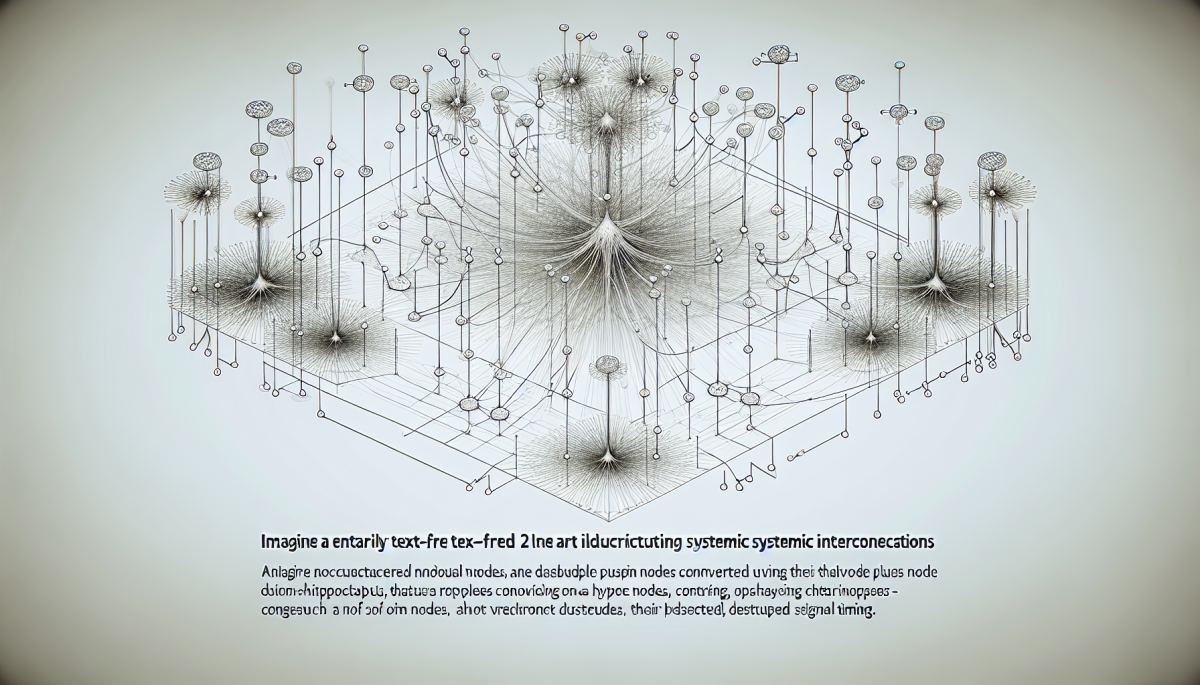
What makes this particularly striking from a systems perspective is the timing. The hyperexcitability precedes symptoms. That means the brain is operating under elevated stress for years, possibly decades, before any cognitive decline becomes measurable. The damage accumulates quietly, like a structural fault in a building that only becomes visible after an earthquake.
Here is where the second-order consequences become genuinely important. If APOE4 carriers are experiencing chronic neuronal hyperexcitability from early adulthood onward, then many of the lifestyle and environmental factors known to influence Alzheimer's risk, sleep disruption, chronic stress, poor metabolic health, may be interacting with a brain that is already operating closer to its limits. The margin for error is smaller. A bad decade of sleep, which suppresses the glymphatic system that clears amyloid from the brain, may hit an APOE4 carrier harder precisely because their hippocampal neurons are already firing inefficiently.
This also raises uncomfortable questions about how clinical trials for Alzheimer's drugs are designed. Most trials enroll participants who already show cognitive symptoms or measurable biomarker changes. If the relevant biology is happening a generation earlier, at the level of neuronal excitability and circuit dynamics, then waiting for plaques and tangles to accumulate before intervening may be structurally too late. The field has already begun shifting toward earlier intervention, but this research suggests the window may need to open even earlier than current prevention trials assume.
The potassium channel finding is a small but meaningful signal. Potassium channels regulate the rate at which neurons return to their resting state after firing, and several existing drug classes already target them for other conditions. Whether any of those compounds could be safely repurposed to quiet overactive hippocampal neurons in APOE4 carriers without disrupting normal brain function is an open question, but it is now a more concrete one than it was before.
Alzheimer's research has spent years chasing amyloid. The disease may have been quietly insisting all along that the story starts somewhere else.
References
- Belloy et al. (2023) — APOE Genotype and Alzheimer's Disease Risk Across Diverse Populations
- Palop & Mucke (2010) — Amyloid-beta-induced neuronal dysfunction in Alzheimer's disease: from synapses toward neural networks
- Holth et al. (2019) — The sleep-wake cycle regulates brain interstitial fluid tau in mice and CSF tau in humans
- Reiman et al. (2020) — Exceptionally low likelihood of Alzheimer's dementia in APOE2 homozygotes from a 5,000-person neuropathological study



Discussion (0)
Be the first to comment.
Leave a comment