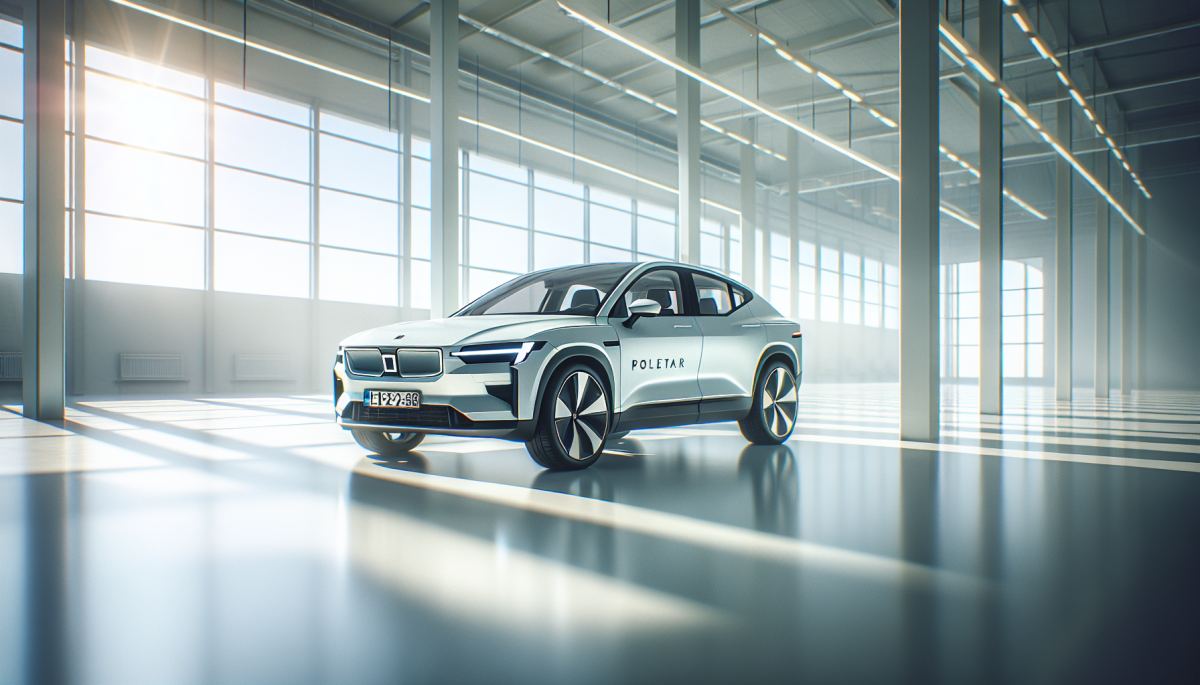
Polestar, the Swedish electric vehicle brand that has spent years navigating the complicated geography of global manufacturing, is making a significant pivot. The company has confirmed it will discontinue Chinese production of the Polestar 4, its largest vehicle to date, and shift manufacturing exclusively to the United States. It is a decision that reads, on the surface, like a straightforward business move. Dig a little deeper, and it looks more like a forced adaptation to a trade environment that is rapidly closing off old options.
The timing is not accidental. American tariffs on Chinese-made vehicles have climbed to levels that make importing EVs from China economically unworkable for any brand hoping to compete on price in the U.S. market. The Biden administration raised tariffs on Chinese EVs to 100 percent in 2024, a policy the Trump administration has shown no appetite to reverse. For Polestar, which has relied heavily on Chinese manufacturing through its relationship with Geely, this created an untenable situation. The Polestar 4 was built in China. Selling it in America under those tariff conditions would have required either absorbing enormous costs or passing them on to consumers in a market already sensitive to EV sticker prices.
So the calculus shifted. Rather than maintain a dual-track production model, Polestar is consolidating. The Polestar 4 will now be made solely in the U.S., a move that sidesteps the tariff wall entirely and positions the company to potentially qualify for domestic manufacturing incentives, depending on how federal EV policy evolves.
What makes Polestar's situation particularly layered is its ownership structure. Polestar is majority-owned by Geely, the Chinese automotive conglomerate that also controls Volvo. That relationship has been a manufacturing asset and a reputational liability simultaneously. In an era when "made in China" has become a political flashpoint in the American auto market, being visibly tethered to Chinese production lines carries real commercial risk, regardless of where the brand is headquartered or how Swedish its design language feels.
Moving production to the U.S. does not sever the Geely connection, but it does change the optics considerably. American consumers and American policymakers tend to focus on where a car is assembled, not who owns the parent company. Polestar appears to be banking on that distinction. Whether it holds up under scrutiny, particularly as political pressure on Chinese-affiliated companies operating in the U.S. continues to build, remains an open question.
There is also a supply chain dimension worth watching. American assembly does not automatically mean American parts. If the Polestar 4's components, battery cells, drivetrains, electronics, continue to flow primarily from Chinese suppliers, the vehicle's domestic credentials become more complicated. The Inflation Reduction Act's battery sourcing requirements have already forced several automakers to rethink their supply chains at a granular level, and Polestar will face the same scrutiny if it wants to capture any federal incentive value from its U.S. production move.
Polestar is not alone in facing this dilemma, and its decision will be watched closely by other foreign EV makers with Chinese manufacturing exposure. Brands like Volvo, which also builds some models in China for global markets, and various emerging EV startups that have leaned on Chinese contract manufacturing for cost efficiency are all navigating the same terrain. The tariff environment has effectively forced a geographic sorting of the global EV industry, with the U.S. market demanding domestic or near-domestic production as the price of entry.
The second-order effect here is significant. As more foreign brands shift assembly to the U.S. to avoid tariffs, they will compete more directly with established American manufacturers, particularly General Motors and Ford, for factory capacity, skilled labor, and supplier relationships. That competition could drive up production costs across the board, or accelerate investment in American manufacturing infrastructure in ways that benefit the broader industrial base. It could also create political friction, as domestic automakers lobby to ensure that foreign-branded vehicles assembled in the U.S. do not receive the same policy treatment as genuinely American-origin products.
Polestar's bet on American manufacturing is, at its core, a bet that the tariff walls are permanent and that proximity to the customer is now more valuable than proximity to cheap production. If that bet is right, the Polestar 4 could become a case study in successful adaptation. If the trade environment shifts again, or if the costs of American production prove harder to manage than anticipated, the company will have restructured its entire manufacturing footprint around assumptions that no longer hold. In an industry moving this fast, that is a risk that does not come with a safety net.
References
- Office of the United States Trade Representative (2024) — Section 301 Tariff Actions and Exclusion Process
- U.S. Department of Energy (2023) — Inflation Reduction Act and Electric Vehicle Tax Credits
- Reuters (2024) — U.S. raises tariffs on Chinese electric vehicles to 100%
- Polestar (2024) — Polestar Annual Report 2023


Discussion (0)
Be the first to comment.
Leave a comment