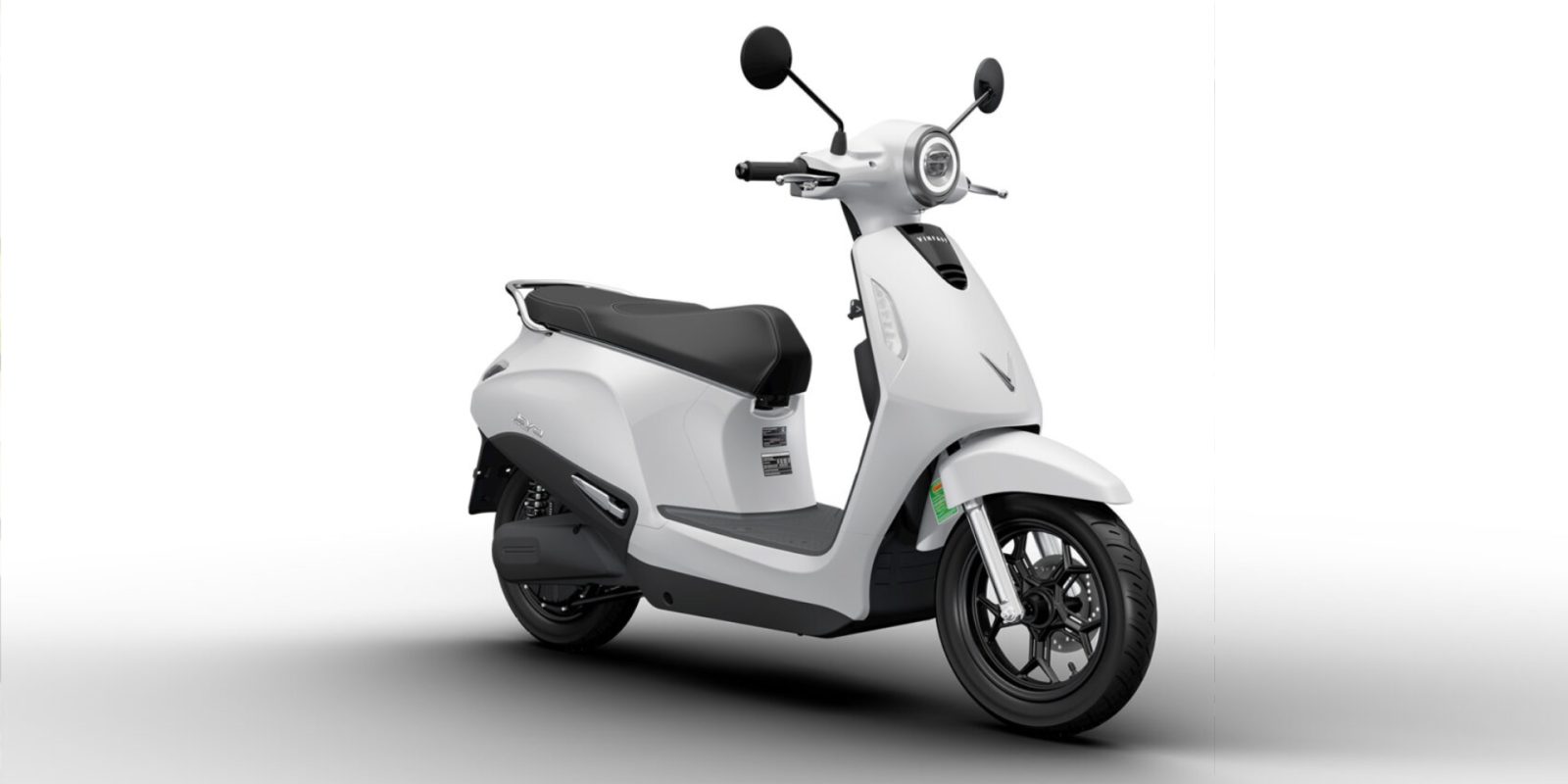
Vietnam's VinFast has spent the better part of two years trying to convince the world it belongs in the same conversation as Tesla and BYD. Its electric cars have landed in the United States, Canada, and parts of Europe, often to mixed reviews and thin sales volumes. But the company's latest strategic move suggests it understands something that many Western EV observers miss entirely: the future of electric mobility isn't just about sedans and SUVs. It's about scooters.
VinFast is now preparing to enter India's two-wheeler market with a lineup of electric scooters, building on the groundwork it has already laid for its electric car business in the country. The timing is deliberate. India is not merely a large market for two-wheelers — it is the largest in the world, with annual sales routinely exceeding 15 million units. For context, that figure dwarfs the entire U.S. passenger car market. Two-wheelers are not a niche product in India; they are the primary mode of transportation for hundreds of millions of people, the connective tissue of daily economic life across cities, towns, and rural corridors alike.

What makes the two-wheeler segment particularly compelling for an EV entrant is the charging problem, or rather, the relative absence of it. Electric scooters typically run on removable or swappable battery packs that can be charged from a standard household outlet overnight. This sidesteps the single biggest infrastructure barrier that has slowed EV car adoption in developing markets: the need for a dense, reliable network of fast-charging stations. For a country where grid reliability varies enormously by region, and where most households don't have a dedicated parking space with a charging point, a scooter you can charge from a wall socket is a fundamentally different proposition than a car requiring a 50-kilowatt DC fast charger.
India's domestic players have already begun proving the model. Ola Electric, backed by SoftBank, went public in 2024 and has aggressively expanded its scooter lineup. Hero MotoCorp and Bajaj Auto, two of the country's legacy giants, have both accelerated their own electric transitions under pressure from government policy and shifting consumer sentiment. The Indian government's FAME II subsidy scheme and its successor frameworks have funneled billions of rupees into EV incentives, with two-wheelers among the primary beneficiaries. VinFast is entering a market that has already been primed.
But primed does not mean easy. The competitive dynamics in India's electric scooter space are intensifying rapidly, and VinFast will be arriving as a foreign brand in a segment where domestic manufacturers carry enormous advantages in supply chain depth, dealer networks, and brand familiarity. Ola Electric alone has claimed a significant share of the market in a remarkably short time, and it has done so partly by building its own vertically integrated manufacturing ecosystem in Tamil Nadu.
VinFast's broader strategic logic, however, may be less about immediate market share and more about manufacturing economics. The company operates a large integrated factory in Hai Phong, Vietnam, and has been looking for ways to spread fixed costs across higher volumes. Entering a market of India's scale, even with modest initial penetration, could meaningfully improve the unit economics of its battery and drivetrain production. There is also a geopolitical dimension worth noting: as Western markets grow more skeptical of Chinese EV manufacturers and their supply chains, a Southeast Asian producer with ambitions to manufacture locally in India occupies an interesting middle position, neither fully Western nor subject to the same scrutiny as a Chinese state-linked firm.
The second-order consequence worth watching is what VinFast's entry does to pricing pressure across the segment. If a well-capitalized international player enters with competitive price points, it could accelerate the commoditization of electric scooters in India faster than domestic manufacturers have planned for. That would be good for consumers and for India's emissions trajectory, but it could squeeze margins for the very companies that took the early risk of building the market. The history of technology transitions is full of pioneers who built the road and then watched someone else drive down it.
India's two-wheeler EV market is still early enough that the eventual winners are far from determined. VinFast is making a calculated wager that getting in now, even as a challenger brand, is better than waiting for the market to mature and the doors to close.
Discussion (0)
Be the first to comment.
Leave a comment