
When Drift Protocol froze deposits and withdrawals this week, it did so quietly, with the kind of terse announcement that has become grimly familiar in decentralized finance. Blockchain trackers quickly filled in the silence, placing the stolen funds in the hundreds of millions of dollars, making it the largest crypto theft of 2026 so far. For a sector that has spent years arguing it represents a more secure, more transparent alternative to traditional finance, the timing could hardly be worse.
Drift is a decentralized exchange built on the Solana blockchain, offering perpetual futures and spot trading to users who interact directly with smart contracts rather than a centralized intermediary. That architecture, which removes the middleman, is precisely what DeFi advocates celebrate. It is also, as this week demonstrated again, what makes these platforms so vulnerable. When something goes wrong in a system with no central authority to intervene, the damage spreads before anyone can pull a lever.
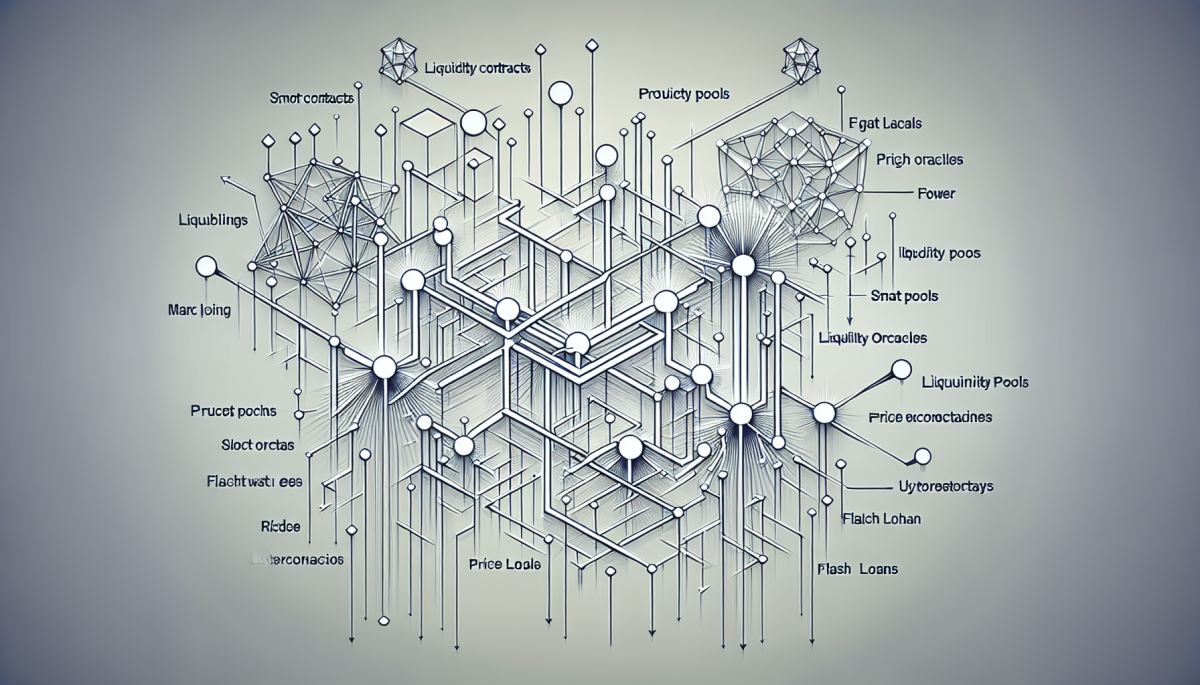
The mechanics of how hundreds of millions left Drift's protocol have not been fully disclosed, and the platform's team was still investigating as of the suspension announcement. But the pattern is familiar to anyone who has tracked DeFi exploits over the past four years. Attackers typically identify a flaw in a smart contract's logic, a price oracle that can be manipulated, or a vulnerability in how a protocol handles flash loans and rapid liquidity movements. Because smart contracts execute automatically and irreversibly, there is no fraud department to call, no transaction to reverse. The code does exactly what it was told to do, even when what it was told to do was catastrophically wrong.
This is not Drift's first brush with adversity, and it is far from the industry's. According to data tracked by firms like Chainalysis, DeFi protocols have lost billions of dollars to exploits since 2020. The 2022 Ronin Network hack, which drained roughly $625 million, and the Wormhole bridge exploit that cost $320 million remain the benchmarks against which new thefts are measured. If blockchain trackers' estimates hold, the Drift incident would rank among the most damaging in the sector's short history.
What makes this moment particularly significant is the context. Solana has spent the past 18 months aggressively repositioning itself as a serious infrastructure layer for institutional and retail DeFi alike, recovering from the reputational damage it absorbed during the FTX collapse of 2022. Drift was part of that recovery story, one of the flagship applications demonstrating that Solana's speed and low fees could support sophisticated financial products. A nine-figure theft does not just hurt Drift's users. It puts a question mark over the entire ecosystem's maturity narrative.
There is a structural tension at the heart of DeFi that this hack makes visible again. The sector's growth depends on attracting liquidity, and liquidity depends on user confidence. But the very features that make DeFi attractive, open-source code, permissionless access, composability between protocols, are the same features that give sophisticated attackers a detailed map of every potential weakness. Audits help, but they are not guarantees. Some of the most thoroughly audited protocols in the space have still been exploited.
The second-order consequence worth watching here is regulatory. In the United States, the SEC and CFTC have been circling DeFi for years, uncertain how to classify it but increasingly certain that the current hands-off posture is unsustainable. A high-profile theft of this scale, affecting retail users who had no custodial protection and no recourse, is exactly the kind of event that accelerates legislative timelines. The irony is that heavier regulation, which DeFi's ideological core was built to resist, may end up being the sector's only path to the mainstream adoption it claims to want. Every major exploit shortens the distance between the two.
For users who had funds locked in Drift when the suspension hit, the immediate question is whether and how much they will recover. For the broader industry, the question is harder: at what point does the accumulated weight of these incidents force a genuine reckoning with whether trustless systems can be made safe enough for the scale of capital they are now handling. The answer to that question will shape not just DeFi, but the entire trajectory of how financial infrastructure gets built in the decade ahead.
Discussion (0)
Be the first to comment.
Leave a comment