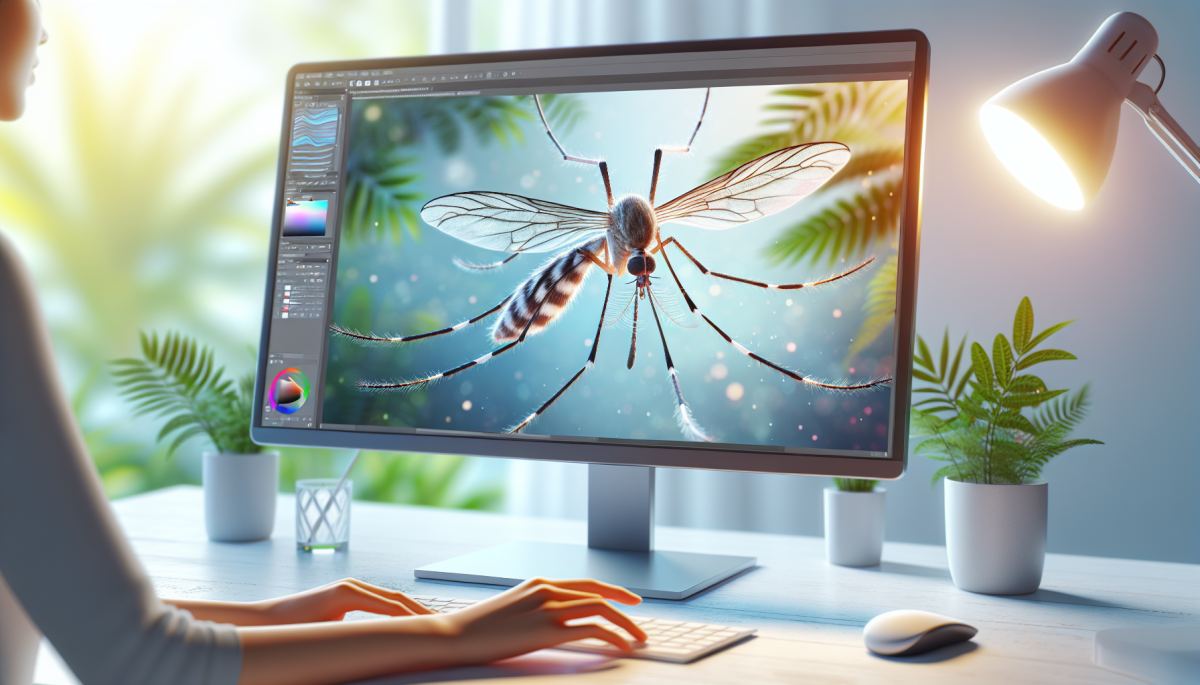
Dengue fever has never been a polite disease. It breaks bones, or at least feels like it does, earning its grim nickname "breakbone fever" from the deep muscular pain it inflicts. For most of the twentieth century, it was largely a problem of the tropics, a disease that wealthy nations could afford to treat as someone else's emergency. That calculus is changing fast.
Scientists in Brazil and Peru are deploying some of the most sophisticated mosquito-control strategies ever attempted at scale, and the urgency behind their work is not merely regional. As climate change pushes the Aedes aegypti mosquito into new latitudes and elevations, the United States is increasingly in the crosshairs of a disease that now infects an estimated 400 million people a year worldwide.
Dengue's expansion is not random. It follows a logic written in temperature gradients and rainfall patterns. Warmer winters mean mosquito populations that once died off seasonally are now surviving year-round in places they previously couldn't. Wetter summers create the standing water that Aedes aegypti needs to breed. The mosquito is not migrating so much as it is filling in a map that climate change is redrawing in real time.
Brazil has been living with this reality for decades, but the scale of recent outbreaks has been staggering even by Brazilian standards. The country recorded more than 4 million probable dengue cases in the first half of 2024 alone, a number that overwhelmed clinics and prompted a national public health emergency. Peru has faced similar pressure in its coastal and Amazonian regions, where flooding events linked to El Niño cycles create near-perfect breeding conditions.
What makes the Brazilian and Peruvian responses notable is that they have moved beyond the spray-and-pray model of mosquito control that dominated public health for generations. Researchers affiliated with the World Mosquito Program have been releasing Aedes aegypti mosquitoes infected with Wolbachia, a naturally occurring bacterium that dramatically reduces the mosquito's ability to transmit dengue, Zika, and chikungunya. A landmark randomized controlled trial published in the New England Journal of Medicine found that Wolbachia deployments in Yogyakarta, Indonesia reduced dengue incidence by 77 percent. Brazil and other Latin American nations have been scaling that approach, city by city, neighborhood by neighborhood.
Parallel to this, genetically modified mosquito programs run by companies like Oxitec have been trialed in Brazil, releasing male mosquitoes engineered to pass a lethal gene to offspring, collapsing local populations. The science is promising. The logistics, politics, and public trust required to deploy it broadly are considerably more complicated.
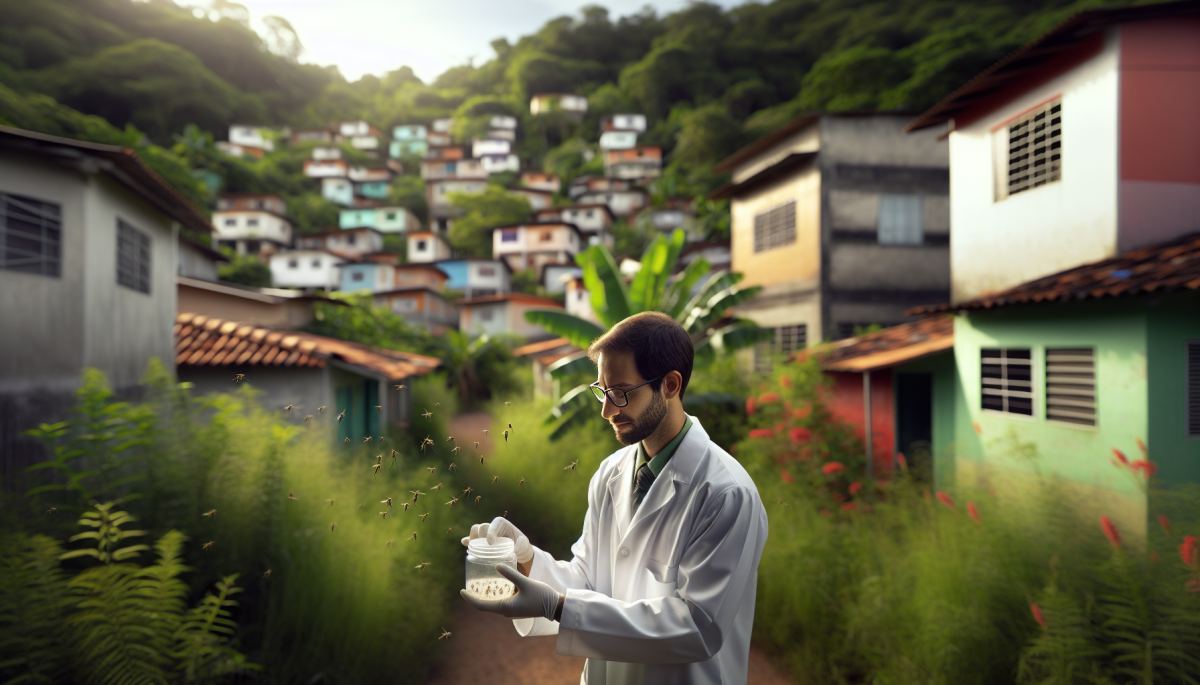
The continental United States has so far experienced dengue primarily as an imported disease, carried home by travelers. But locally transmitted cases have appeared in Florida, Texas, and Hawaii with increasing frequency, and the CDC has acknowledged that the geographic range suitable for Aedes aegypti transmission is expanding northward. A 2023 study in The Lancet Planetary Health modeled that climate change could expose an additional billion people globally to dengue risk by 2080, with the southern United States among the newly vulnerable zones.
The uncomfortable truth is that the U.S. public health infrastructure is not organized to respond to dengue the way Brazil's is, not because the tools don't exist, but because the institutional memory and community-level surveillance systems simply haven't been built. Brazil, for all the suffering its outbreaks have caused, has developed a kind of hard-won epidemiological fluency with dengue. American cities have not.
There is also a second-order consequence worth watching carefully. If dengue becomes endemic in parts of the American South, the pressure it places on already strained rural hospital systems could interact badly with other climate-driven health stresses, extreme heat hospitalizations, worsening air quality, and the mental health toll of repeated climate disasters. Public health systems are not modular. A new endemic disease doesn't simply add a line item to a budget; it competes for the same nurses, the same diagnostic capacity, the same community trust that every other health priority depends on.
The scientists working in Manaus and Lima are not just fighting dengue. They are, in a sense, beta-testing the public health responses that Miami and Houston may eventually need. Whether American institutions are paying close enough attention to that experiment is a question that will matter a great deal more a decade from now than it does today.
References
- Utarini et al. (2021) — Efficacy of Wolbachia-Infected Mosquito Deployments for the Control of Dengue
- Messina et al. (2019) — The current and future global distribution and population at risk of dengue
- CDC (2024) — Dengue in the United States
- World Mosquito Program (2024) — Our Science
- Ryan et al. (2023) — Global expansion and redistribution of Aedes-borne virus transmission risk with climate change

Discussion (0)
Be the first to comment.
Leave a comment