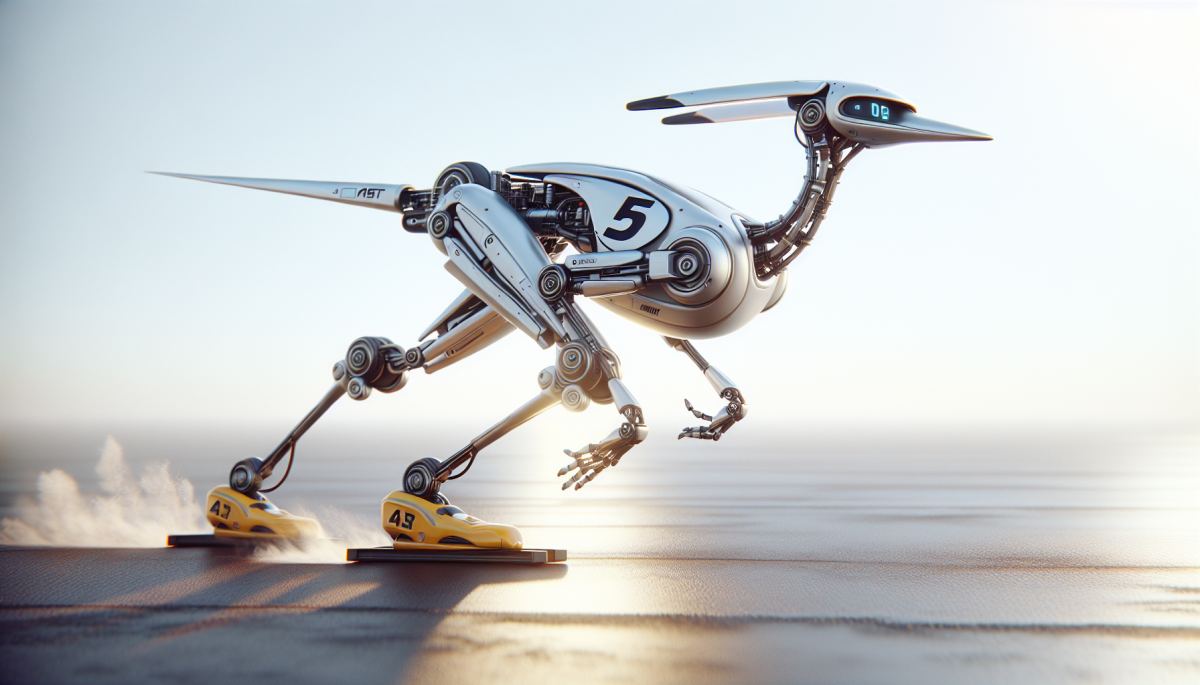
Bipedal robots have long been caught in a kind of identity crisis. They walk like humans but can't match the efficiency of wheels. They roll like vehicles but stumble the moment terrain gets complicated. A new prototype called Roadrunner, developed as a bipedal wheeled robot, is trying to resolve that tension by doing both at once, and the early results suggest the hybrid approach may be more than a novelty.
Roadrunner is designed for what researchers call multimodal locomotion, the ability to shift fluidly between walking on legs and rolling on wheels depending on what the environment demands. The concept isn't entirely new, but execution has historically been the problem. Earlier hybrid robots tended to be mechanically clumsy, switching between modes with an awkward pause rather than a seamless transition. What makes Roadrunner notable is the attempt to make those transitions feel continuous rather than sequential, which is a much harder control problem than it might appear.
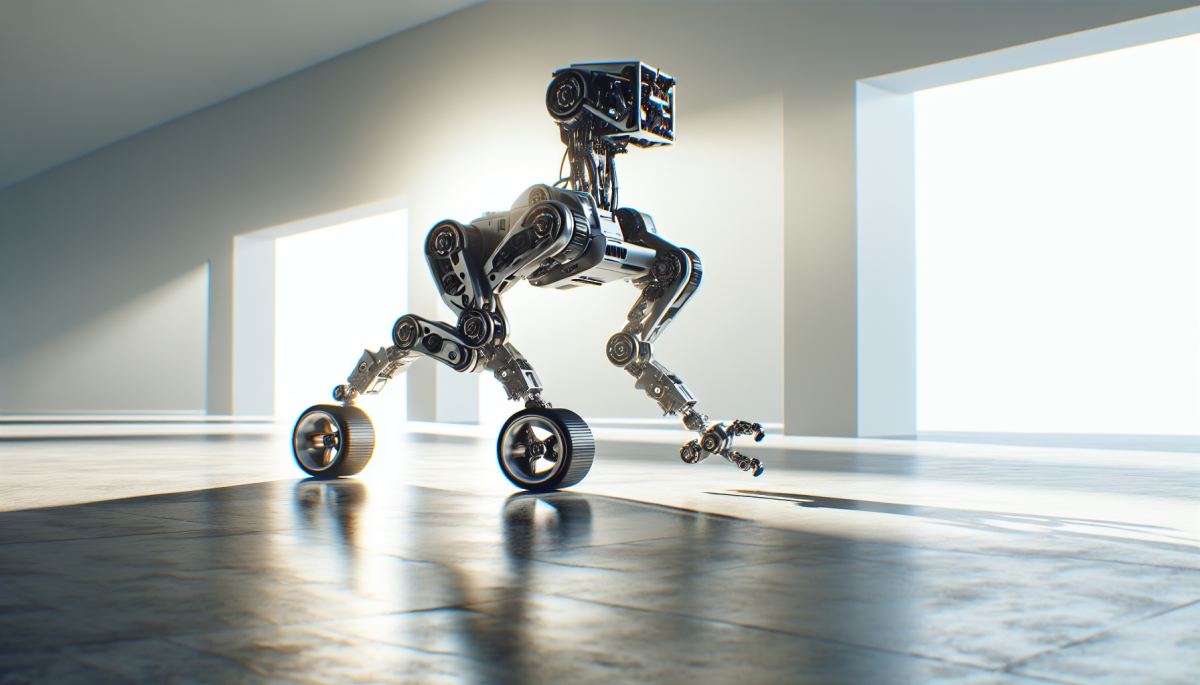
The challenge with any legged-wheeled system is that the two modes of movement operate on fundamentally different physical principles. Wheels are passive and energy-efficient on flat surfaces, but they transfer control authority to the ground. Legs are active and adaptive, but they burn energy at a much higher rate. Designing a robot that can exploit both without the control architecture collapsing under the contradiction requires sophisticated real-time decision-making about weight distribution, center of mass, and terrain classification.
Most bipedal robots today, including Boston Dynamics' Atlas and Agility Robotics' Digit, commit fully to legs. The reasoning is straightforward: legs are more versatile in unstructured environments, and the robotics community has spent decades building the software stack to support them. Wheeled systems, by contrast, dominate in structured logistics environments where floors are flat and predictable. Roadrunner is essentially betting that the real world sits somewhere between those two extremes, and that a robot capable of navigating both will have a meaningful advantage.
That bet has real-world backing. Warehouse and last-mile delivery environments are rarely as clean as a factory floor, but they're also not as chaotic as a disaster relief site. Sidewalks have curbs. Loading docks have ramps. Hospitals have thresholds and elevator gaps. A robot that can wheel efficiently down a corridor and then step over an obstacle without stopping could be genuinely more useful than one optimized for either mode alone.
If hybrid locomotion robots mature into reliable platforms, the downstream effects on labor markets and infrastructure design could be significant and underappreciated. The current generation of delivery and logistics robots has largely required environments to adapt to them, with smooth floors, standardized docking stations, and human workers managing edge cases. A robot that can handle more environmental variation inverts that dynamic. It reduces the pressure on facilities to retrofit themselves, which lowers the barrier to deployment and accelerates adoption timelines.
There's also a subtler feedback loop at play. As robots become more capable of navigating human-designed spaces without modification, the economic case for replacing human workers in semi-structured roles gets stronger. This isn't a distant concern. Agility Robotics already has Digit operating in Amazon fulfillment centers, and Figure AI has announced partnerships with BMW. Roadrunner-style multimodal robots, if they deliver on the locomotion promise, could extend that reach into environments currently considered too variable for automation.
The robotics field is also watching how these platforms handle the software side of multimodal control. The hardware is impressive, but the real intellectual property in next-generation robots is increasingly in the learned locomotion policies and the sensor fusion pipelines that let a robot decide, in real time, which mode of movement is appropriate. That software layer is where the competitive moats are being dug, and it's where Roadrunner's long-term significance will ultimately be judged.
Bipedal robots have been promising to change the world for decades. What's different now is that the gap between prototype and deployment is closing faster than most people expected, and hybrid platforms like Roadrunner are part of the reason why. The question isn't whether wheeled-legged robots will find a role in the built environment. It's whether the institutions and labor systems that environment supports are moving fast enough to respond.
Discussion (0)
Be the first to comment.
Leave a comment