
SoftBank has never been shy about making enormous bets, but the scale of its latest financial maneuver is striking even by Masayoshi Son's standards. Wall Street giants JPMorgan and Goldman Sachs are extending a 12-month, unsecured loan of $40 billion to the Japanese conglomerate, a figure that rivals the GDP of some small nations. The structure of the deal, its timeline, and its likely purpose all point in one direction: SoftBank is positioning itself to be the dominant financial force behind an OpenAI initial public offering, expected sometime in 2026.
Unsecured loans of this magnitude are rare. They signal that the lenders have extraordinary confidence in the borrower's near-term liquidity events, meaning they expect SoftBank to have access to a large, predictable cash windfall within the loan's 12-month window. That windfall almost certainly involves OpenAI. SoftBank has already committed to investing $500 billion in U.S. AI infrastructure through a joint venture called Stargate, and its relationship with OpenAI sits at the center of that ambition. A public offering would give SoftBank a mechanism to both crystallize the value of its stake and potentially recycle capital into deeper positions.
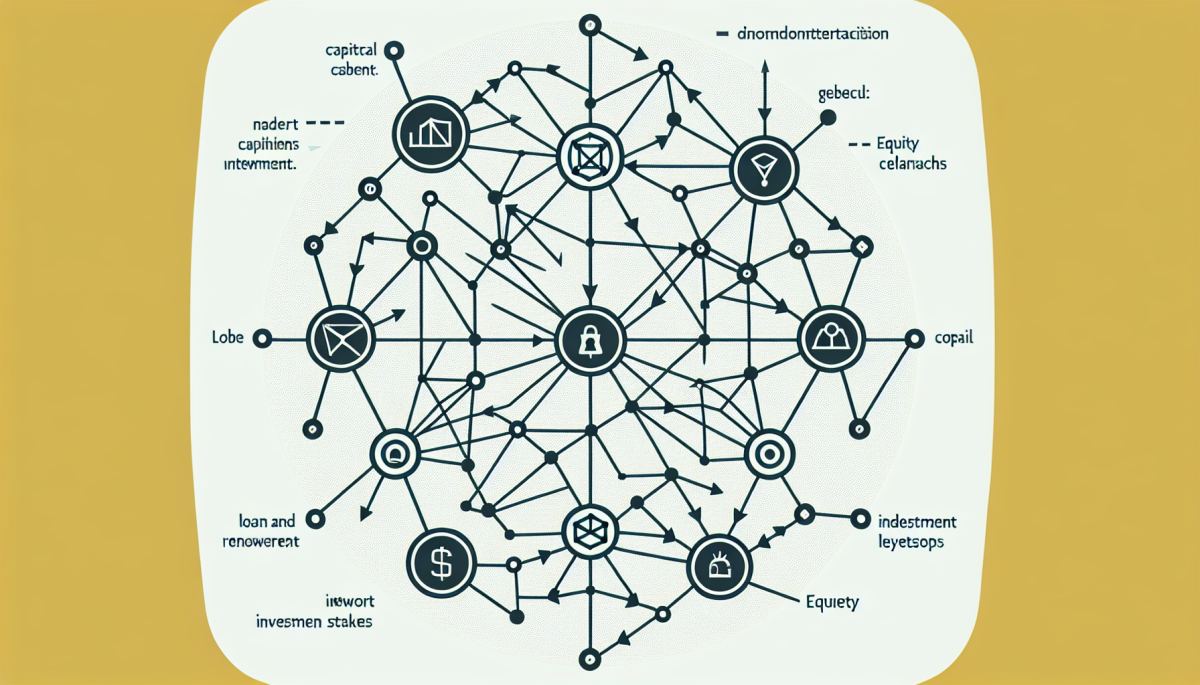
What makes this loan structurally interesting is not just its size but its unsecured nature. In traditional corporate lending, a loan of this scale would typically be backed by assets, whether equity stakes, real estate, or other collateral. The absence of collateral here suggests that JPMorgan and Goldman are essentially betting on SoftBank's cash flow and asset liquidation capacity rather than any specific underlying asset. That is a meaningful vote of confidence, but it also concentrates risk in a way that deserves scrutiny.
SoftBank's balance sheet has historically been a complex web of cross-holdings, leveraged positions, and Vision Fund assets that can be difficult to value with precision. The company's stock has surged on AI enthusiasm, and its stake in OpenAI, which was valued at roughly $157 billion in OpenAI's most recent funding round at a $300 billion valuation, represents a paper gain of historic proportions. But paper gains and liquid cash are very different things, and the 12-month loan structure implies that SoftBank needs to convert one into the other relatively quickly.
This is where the IPO thesis becomes compelling. If OpenAI goes public in 2026 at or above its current private valuation, SoftBank's stake becomes liquid, the loan gets repaid, and Masayoshi Son emerges as perhaps the single most consequential private backer in the history of artificial intelligence. The entire financial architecture only makes sense if that outcome is considered highly probable by everyone in the room.
The deeper consequence here may not be financial at all. It may be organizational. When a company's largest backer takes out a $40 billion loan that is implicitly tied to a public offering, it creates a powerful gravitational pull toward that outcome, regardless of whether the company itself is ready. OpenAI has spent years operating as a "capped-profit" hybrid entity, a structure designed to balance commercial ambition with its stated mission of developing AI safely for humanity's benefit. An IPO would almost certainly accelerate the pressure to restructure that arrangement fully into a conventional for-profit corporation, a transition OpenAI has already been navigating amid significant internal debate and public scrutiny.
Public markets are not patient with mission statements that complicate earnings calls. Quarterly reporting cycles, shareholder primacy, and analyst coverage all create feedback loops that tend to compress long-term thinking. If OpenAI becomes a public company under the weight of SoftBank's financial timeline rather than on its own terms, the governance implications could be profound. Researchers, regulators, and competitors will all be watching to see whether the safety-focused culture that OpenAI has publicly championed survives contact with Wall Street's incentive structure.
The loan also raises a quieter question about concentration of power in the AI industry. SoftBank, JPMorgan, Goldman Sachs, and OpenAI together represent a remarkable consolidation of financial and technological influence around a single technology platform. If that platform becomes a publicly traded company in 2026, it will likely be one of the largest IPOs in history, reshaping capital flows across the entire technology sector.
The 12-month clock is now running. How OpenAI chooses to respond to the gravitational pull of that timeline may tell us more about the future of AI governance than any policy paper written this year.
References
- Browne et al. (2025) — SoftBank in talks for $40 billion loan backed by JPMorgan, Goldman Sachs
- Wiggins et al. (2025) — OpenAI closes $40 billion funding round at $300 billion valuation
- Metz et al. (2025) — OpenAI's Restructuring Plan and the Future of Its Nonprofit Mission
- Son et al. (2025) — SoftBank and OpenAI announce Stargate joint venture
Discussion (0)
Be the first to comment.
Leave a comment