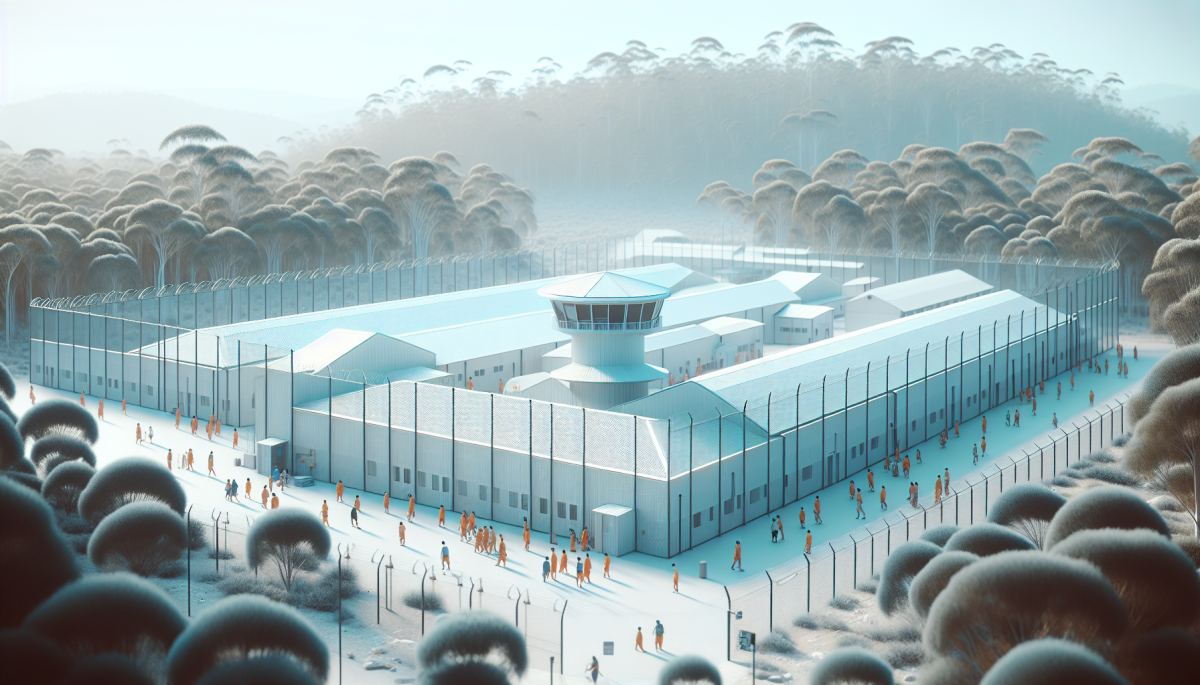
For years, Australian politicians treated Manus Island as a problem that had been solved by being made invisible. Asylum seekers were processed offshore, the courts were managed, the media access was restricted, and the public, largely, moved on. What is becoming clearer now is that invisibility was never the same thing as resolution, and the reckoning that was always structurally inevitable is arriving on schedule.
The offshore detention arrangement that Australia built with Papua New Guinea beginning in 2012 was, at its core, a system designed to externalize political cost. By moving asylum seekers beyond Australian territorial jurisdiction, successive governments could claim simultaneously that they were stopping dangerous boat crossings and that whatever happened next was not strictly their responsibility. It was a policy architecture built on jurisdictional ambiguity, and ambiguity of that kind tends to accumulate consequences rather than dissolve them.
The numbers have always told a story that the political framing tried to suppress. At its peak, the Manus Island Regional Processing Centre held over 1,000 men. The facility was declared unlawful by Papua New Guinea's Supreme Court in 2016, a ruling that forced its formal closure in 2017, yet men remained in Papua New Guinea for years afterward in what the Australian government described as a "transition" but which detainees and human rights organizations consistently described as continued indefinite detention under a different name. At least a dozen men died during the period of offshore processing, from medical neglect, violence, and suicide.
What made the Manus system so durable politically was precisely what made it so damaging in practice: the layering of contractors, subcontractors, and intergovernmental agreements that diffused accountability across multiple institutions. Companies like Broadspectrum and later Canstruct were paid billions of dollars in Australian public funds to manage facilities that Australian ministers could simultaneously claim operational oversight of and distance themselves from when conditions deteriorated. This is a well-documented pattern in outsourced governance, where the state retains the political benefit of a policy while shedding legal exposure for its consequences.
The feedback loop this created was perverse. Because no single actor bore full accountability, there was no strong internal pressure to improve conditions. Contractors had financial incentives to maintain the contracts, not to resolve the underlying situation. The Australian government had political incentives to keep arrivals low and headlines lower. Papua New Guinea had economic incentives tied to the arrangement's continuation. The men detained had no leverage at all. Systems theorists would recognize this immediately as a structure optimized for its own perpetuation rather than for any stated humanitarian goal.
The reason a reckoning was always coming is not primarily moral, though the moral case is overwhelming. It is structural. Arrangements built on jurisdictional arbitrage and contracted deniability generate legal liability that accumulates over time. Australia has already paid out a reported AU$70 million settlement to former Manus detainees in a class action lawsuit, without admitting liability, which is itself a telling formulation. That settlement did not close the legal exposure; it established a precedent and a price signal.
There is also the second-order consequence that rarely gets discussed: what the Manus model exported. Australia's offshore processing framework became a reference point for European governments grappling with Mediterranean crossings, for the United Kingdom's now-legally-troubled Rwanda deportation scheme, and for policy conversations in the United States. When a wealthy liberal democracy demonstrates that it can sustain an offshore detention system for years despite international criticism, it lowers the perceived political cost for others to attempt similar arrangements. The downstream effects of that demonstration effect are still unfolding across multiple continents.
The domestic political class that built and maintained the Manus system is now navigating a landscape where the legal, reputational, and human costs are becoming harder to quarantine offshore. Documents surface. Survivors speak. Journalists and advocates piece together timelines that official accounts left deliberately fragmented. None of this was unforeseeable; it was, in fact, the predictable terminus of a system that prioritized short-term political insulation over durable resolution.
The question worth watching now is not whether accountability will arrive but what form it takes and whether it is substantive enough to alter the incentive structures that made Manus possible in the first place. History suggests that without structural change, the lesson most governments take from a reckoning is not "don't do this" but "do it more carefully next time."
References
- Doherty et al. (2017) — Manus Island detention centre closes after five years
- Amnesty International (2016) — Australia: Appalling abuse, neglect of refugees on Nauru
- Human Rights Watch (2018) — Australia: Halt Offshore Processing of Asylum Seekers
- PNG Supreme Court (2016) — Namah v Pato — ruling on Manus Island detention legality

Discussion (0)
Be the first to comment.
Leave a comment