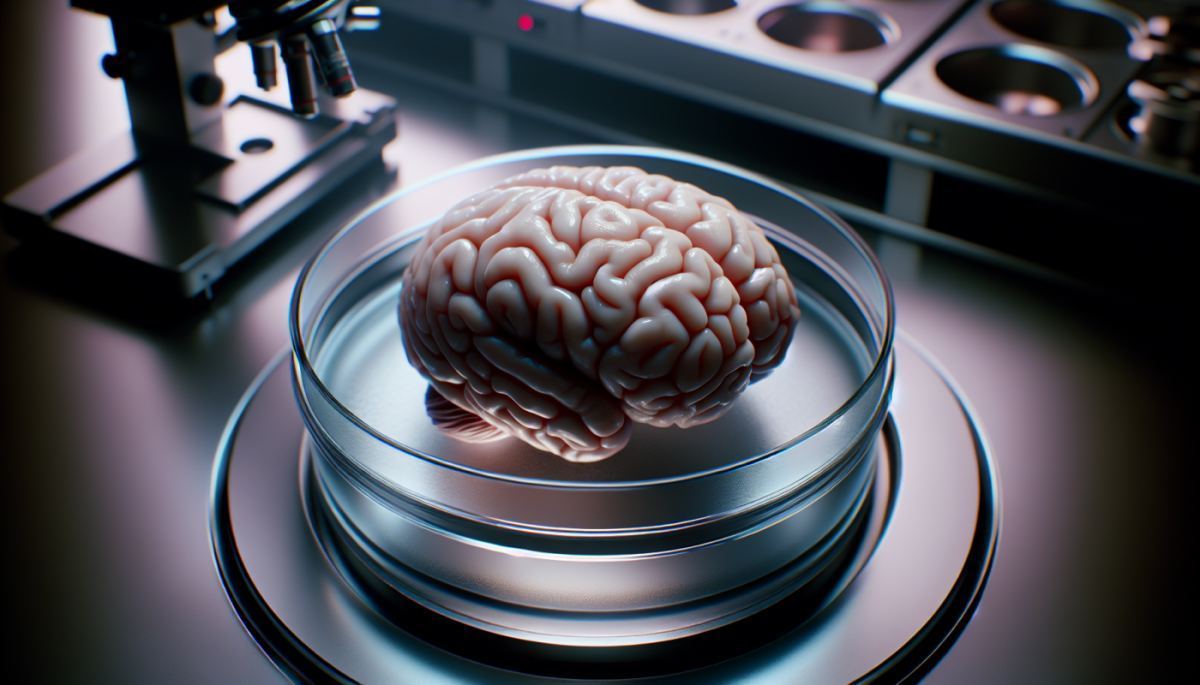
L. Stephen Coles spent his career chasing the outer limits of human longevity. A co-founder of the Gerontology Research Group and a researcher who studied supercentenarians, people who live past 110, Coles died in 2014. But in a twist that feels lifted from speculative fiction, his brain has continued, in a sense, to contribute to science. It sits in a cryogenic storage facility in Scottsdale, Arizona, held at around negative 146 degrees Celsius, and over a year ago, researchers carefully removed small samples from it to study how well the tissue had survived more than a decade of deep freeze.
The scientist who led that work was someone who knew Coles personally. That detail matters. Cryonics has always occupied an uncomfortable space between fringe aspiration and legitimate science, and the willingness of a colleague to literally study pieces of a friend's preserved brain signals something shifting in how seriously some researchers are beginning to treat the field. The question driving the work is not sentimental. It is deeply technical: after years at cryogenic temperatures, does brain tissue retain enough structural integrity to theoretically preserve the information encoded in its neural architecture?
The brain is not simply frozen in cryonics. Patients are perfused with cryoprotectant chemicals before cooling, a process designed to prevent the ice crystal formation that would otherwise shred cell membranes and destroy the fine structures of synapses and dendrites. The goal is vitrification, turning the tissue into a glass-like solid rather than a crystalline one. Whether that process works well enough, consistently enough, to preserve what neuroscientists call the connectome, the complete map of neural connections that many believe underlies memory and identity, remains one of the most contested questions in the field.

Studying Coles's brain offered a rare opportunity to examine real human tissue that had been vitrified and stored under actual cryonics conditions, not laboratory simulations. Researchers took photographs and extracted small samples, then used imaging techniques to assess cellular and structural preservation at a fine scale. The findings have not been fully published in peer-reviewed form at the time of writing, but the fact that the tissue was considered worth examining at all, and that it appeared sufficiently intact to analyze, is itself a data point that cryonics advocates have been quick to note.
The broader scientific community remains skeptical, and reasonably so. Vitrification quality varies enormously depending on how quickly a patient is cooled after death, how effectively the cryoprotectants are perfused, and how carefully the long-term storage is maintained. Coles, given his connections to the cryonics community, likely received a more carefully managed procedure than most. Generalizing from his case to the average cryonics patient would be a significant leap.
What makes this story worth watching from a systems perspective is the feedback dynamic it could trigger. Cryonics organizations like Alcor Life Extension Foundation, which operates the Arizona facility, have long struggled to attract serious scientific scrutiny partly because the field lacks the peer-reviewed foundation that draws mainstream researchers, and it lacks that foundation partly because mainstream researchers avoid the field. A single credible study of preserved human brain tissue, even a preliminary one, could begin to break that loop.
There is money waiting on the other side of that credibility gap. Wealthy technologists have quietly funded cryonics and related longevity research for years. If rigorous science begins to validate even modest claims about structural preservation, investment could accelerate rapidly, pulling in better researchers, better techniques, and better storage protocols. That is not a prediction of success. It is a description of how fringe ideas sometimes cross into legitimacy, not through a single breakthrough but through a gradual accumulation of credible data points that make dismissal harder to sustain.
Coles spent his life studying people who had outlasted every statistical expectation. There is a certain coherence to the fact that his preserved brain is now part of an experiment testing whether the boundary of biological persistence can be pushed further still. Whether the science ultimately vindicates that hope or forecloses it, the willingness to ask the question rigorously, using real tissue from a real person, marks a quiet but meaningful shift in what counts as a serious scientific inquiry.
If preservation quality can be reliably verified after the fact, the next pressure point will not be biological. It will be legal, ethical, and deeply social: who controls the data locked inside a preserved brain, and what obligations, if any, do we owe to the person it once was.
Discussion (0)
Be the first to comment.
Leave a comment