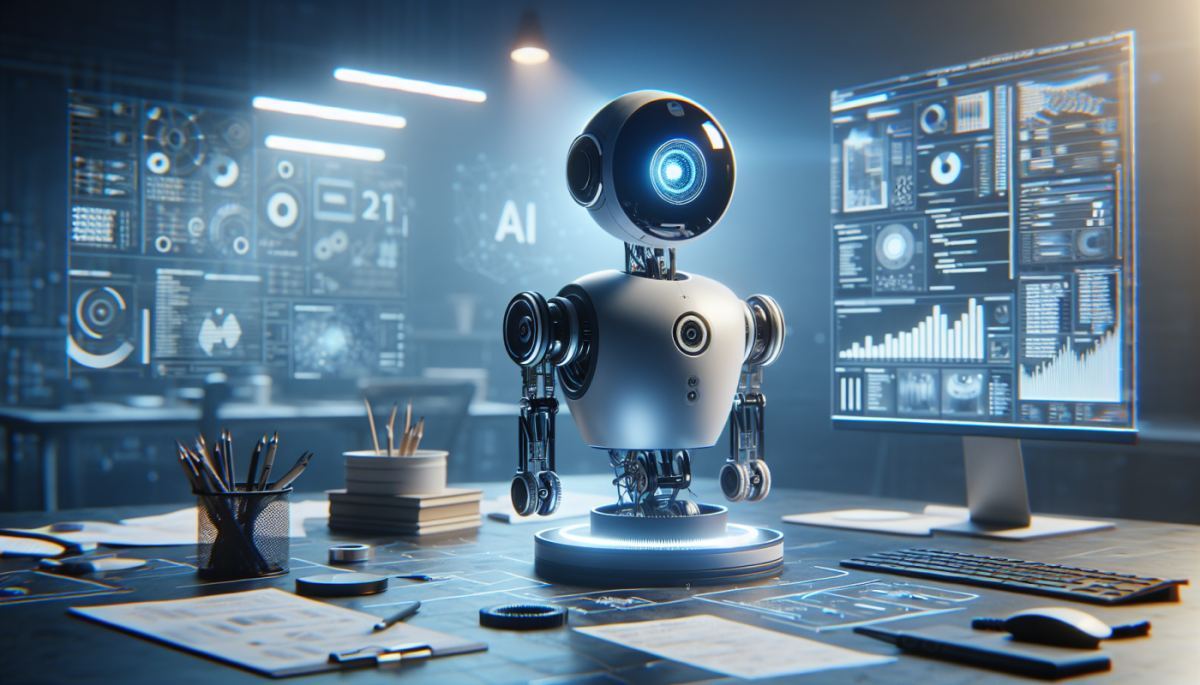
The question keeping serious AI engineers awake at night is not whether a language model can pass a benchmark. Benchmarks are, at this point, almost beside the point. The real anxiety lives somewhere more specific: the mental image of an autonomous agent quietly approving a six-figure vendor contract at 2 a.m. because someone mistyped a configuration file. That scenario is not hypothetical paranoia. It is the logical endpoint of a deployment culture that has sprinted past its own safety infrastructure.
Over the past 18 months, teams building production AI systems have watched the industry graduate from what engineers dismissively call "ChatGPT wrappers" into something genuinely more complex: autonomous agents that don't just answer questions but take actions, chain decisions together, and operate across live systems with real consequences. The tooling, the testing philosophy, and the organizational accountability structures have not kept pace. What has emerged is a gap between capability and control that the industry has been slow to name honestly.
Traditional software testing rests on a foundational assumption: given the same inputs, a deterministic system produces the same outputs. You write a test, you run it, you get a pass or a fail. Autonomous agents break that contract almost by design. They are built to reason through ambiguity, adapt to context, and take initiative. Those are features. They are also precisely what makes conventional quality assurance frameworks inadequate.
When an agent can browse the web, call APIs, write and execute code, or interact with financial systems, the test surface is not a function signature. It is an entire environment, and that environment is dynamic. A misconfigured permission scope, an unexpected API response, or a subtly ambiguous instruction in a system prompt can cascade into consequential real-world actions before any human reviewer sees a log entry. The failure modes are not crashes or error codes. They are plausible-looking decisions that happen to be catastrophically wrong.
This is the core systems problem that production teams are grappling with. Agents operate in feedback loops with external systems, and those loops can amplify small errors quickly. A typo in a config file is a recoverable nuisance in a static application. In an agentic system with write access to procurement workflows, it is a different category of event entirely.
Part of what makes this hard is structural. The teams building the underlying models are not the same teams deploying agents in enterprise contexts, and neither group bears the full cost of a failure in production. Model developers optimize for capability. Deployment teams face pressure to ship. The organizations absorbing the risk are often the ones with the least visibility into how the system actually makes decisions.
This diffusion of accountability is not unique to AI, but it is particularly acute here because the failure modes are so legible after the fact and so difficult to anticipate beforehand. An agent that approves a bad contract or exfiltrates sensitive data through a poorly scoped tool call will produce a clear paper trail. The question is whether that trail leads anywhere useful, or whether it simply documents a gap that everyone knew existed and nobody owned.
The emerging response from serious engineering teams involves a few converging approaches: sandboxed environments that mirror production without live consequences, "chaos testing" frameworks borrowed from distributed systems engineering, and explicit human-in-the-loop checkpoints for actions above defined risk thresholds. None of these are complete solutions. They are, at best, a discipline that slows the rate at which things go wrong.
The second-order consequence worth watching is regulatory. Autonomous agents acting on behalf of organizations in financial, legal, and healthcare contexts will eventually produce a failure visible enough to attract legislative attention. When that happens, the absence of industry-wide testing standards will become a liability in a very literal sense. The companies that built accountability frameworks early will be positioned very differently from those that treated agent safety as a future problem. That future has a way of arriving before the calendar suggests it should.
References
- Anthropic (2024) — Claude's Model Specification and Agent Safety
- Shinn et al. (2023) — Reflexion: Language Agents with Verbal Reinforcement Learning
- Yao et al. (2023) — ReAct: Synergizing Reasoning and Acting in Language Models
- Park et al. (2023) — Generative Agents: Interactive Simulacra of Human Behavior
Discussion (0)
Be the first to comment.
Leave a comment