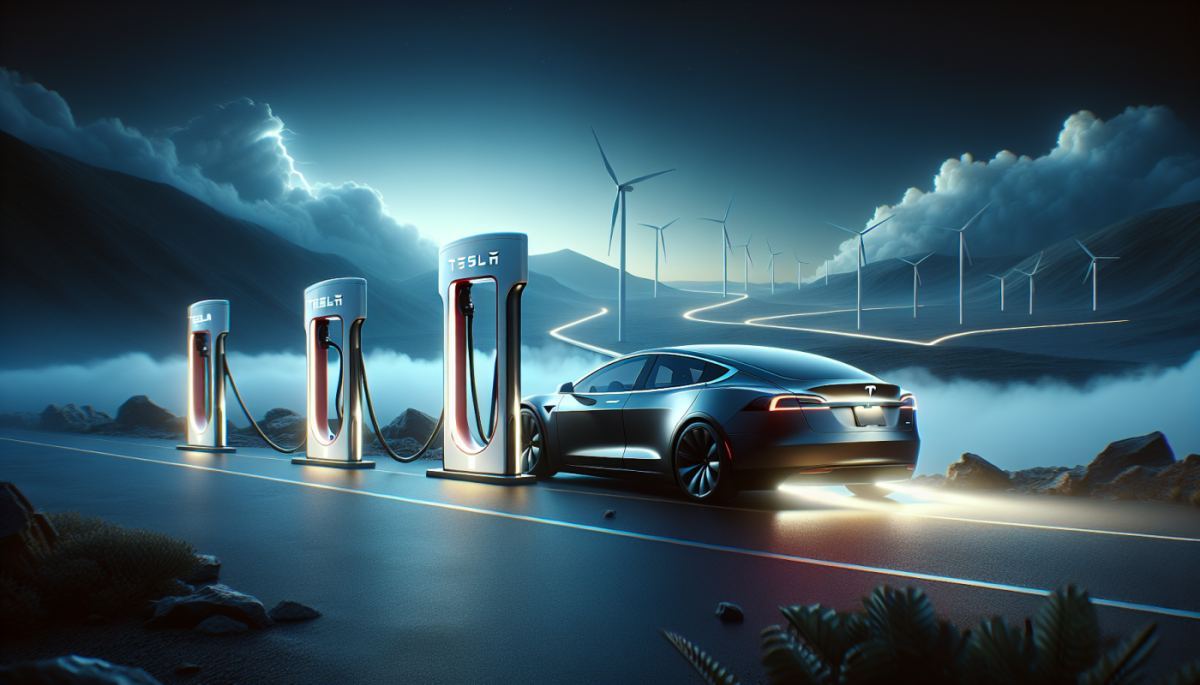
When Tesla opened its Supercharger network to rival automakers in 2023, the move looked either visionary or reckless depending on who you asked. Now, with Stellantis completing the final piece of that puzzle, every major EV brand sold in the United States can plug into what was once a walled garden. Jeep, Dodge, Ram, Chrysler, and the rest of the Stellantis portfolio gained Supercharger access this week, making Tesla's network the de facto public charging backbone of the American EV market.
The significance of this moment is easy to understate. Tesla built the Supercharger network over more than a decade at enormous cost, with the explicit goal of removing range anxiety as a barrier to EV adoption among its own customers. That network now numbers over 17,000 stations across North America, dwarfing any competitor. By opening it up, Tesla transformed a competitive moat into a piece of shared infrastructure, and in doing so, it fundamentally changed the calculus for every other automaker trying to sell electric vehicles in a market where charging confidence remains one of the top consumer concerns.
The physical object at the center of this shift is almost comically mundane: a small adapter that converts the Combined Charging System, or CCS, plug used by most non-Tesla EVs into the North American Charging Standard, or NACS, that Tesla pioneered. But that adapter carries enormous symbolic and economic weight. Ford was the first legacy automaker to announce Supercharger access in May 2023, followed quickly by General Motors, Honda, Mercedes, Nissan, and others. Stellantis, which manages a sprawling portfolio of brands across Jeep, Dodge, Ram, Fiat, Alfa Romeo, and Chrysler, was the last holdout among major players. Its arrival closes the loop.
What made Stellantis's position particularly interesting is the nature of its EV lineup. The company has faced persistent criticism for lagging behind competitors on electrification, and its EV sales volumes remain modest compared to Ford or GM. Gaining Supercharger access does not instantly solve those deeper product and strategy challenges, but it does remove one legitimate objection a potential buyer might raise. A Jeep Wrangler 4xe owner or a prospective Dodge Hornet PHEV customer now has access to a charging network that, by most reliability and coverage metrics, outperforms anything else available.
The second-order consequences of this consolidation deserve more attention than they typically receive. When a single private network becomes the dominant charging infrastructure for an entire national market, it creates a platform dynamic that echoes what happened with smartphone operating systems or cloud computing providers. Tesla now has a relationship, however indirect, with the charging behavior of virtually every EV driver in America. That data, aggregated across brands and geographies, is extraordinarily valuable for understanding energy demand patterns, grid stress points, and future station placement.
There is also a feedback loop worth watching on the utility side. As Supercharger utilization increases across more brands and more vehicles, Tesla has stronger justification to expand the network further, which in turn makes EVs more attractive to hesitant buyers, which increases utilization further. The Biden administration's $7.5 billion investment in EV charging infrastructure through the Bipartisan Infrastructure Law was partly premised on the idea that public charging needed to catch up to private networks. The irony is that the private network moved so fast and so decisively that it may render some of that public investment redundant in certain corridors, while remaining essential in rural and underserved areas where Tesla has less commercial incentive to build.
For Stellantis specifically, the timing matters. The company is navigating a turbulent period following the departure of CEO Carlos Tavares late last year, and its North American operations have faced production cuts and dealer tensions. Supercharger access will not fix those structural problems, but it signals a willingness to participate in the emerging consensus around charging standards, particularly as NACS moves toward formal adoption as an SAE standard across the industry.
The more durable question is whether Tesla's generosity, if that is even the right word for a move that generates charging revenue and network data, reshapes how Americans think about EV ownership. Range anxiety has always been as much a psychological barrier as a practical one. When the answer to "where do I charge?" becomes "almost anywhere, on the biggest network in the country," the conversation around EV adoption shifts in ways that no single vehicle launch or tax credit quite manages to achieve.
Discussion (0)
Be the first to comment.
Leave a comment