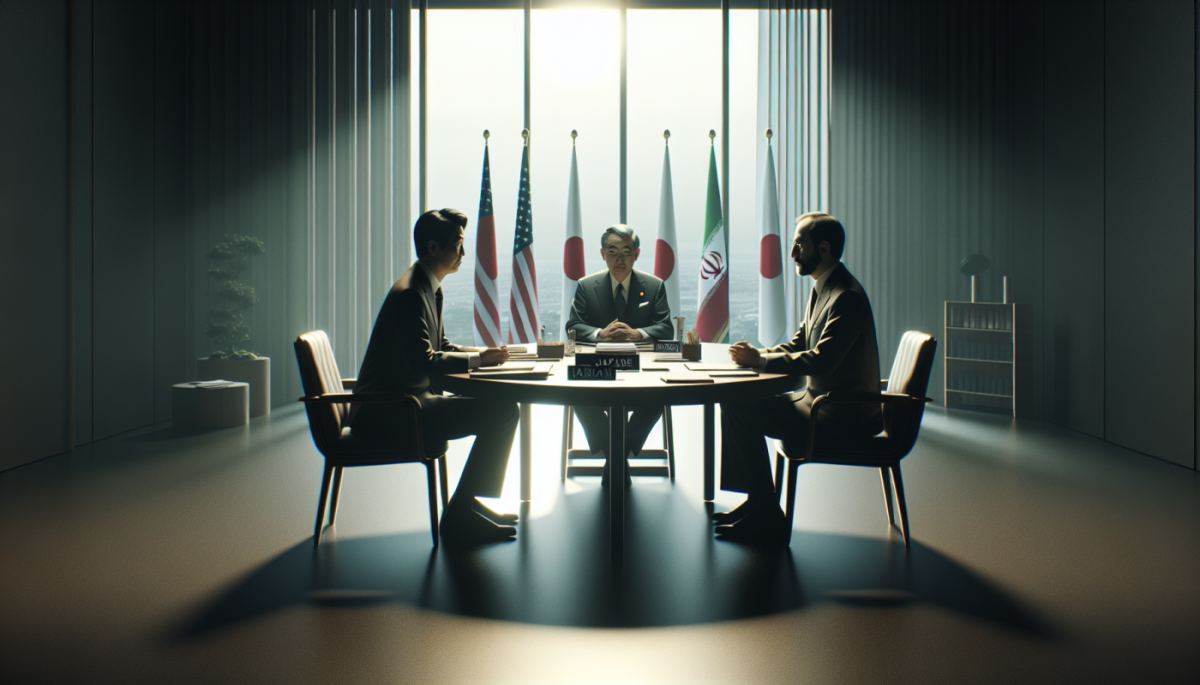
When Iran signaled it was prepared to offer Japan safe passage through the Strait of Hormuz in exchange for direct, bilateral talks, Tokyo's response was measured but firm. Foreign Minister Toshimitsu Motegi made clear that Japan was not considering unilateral negotiations with Tehran, a statement that carries more strategic weight than its diplomatic brevity might suggest.
The Strait of Hormuz is not merely a waterway. Roughly one-fifth of the world's oil supply passes through its narrow channel, and for Japan, a nation that imports nearly all of its crude oil, the stakes are existential in an economic sense. Any disruption to that flow, even a temporary one, would ripple through Japanese industry with alarming speed. So when Iran effectively extended an olive branch with a geopolitical price tag attached, the temptation to accept must have been real. That Japan declined, at least publicly, tells you something important about the pressures Tokyo is navigating from multiple directions at once.
Japan's refusal to pursue a side deal with Iran is inseparable from its security alliance with the United States. Washington has been the architect of maximum pressure on Tehran, and any Japanese move to negotiate independently would have been read in Washington as a defection, however modest. Japan has long walked a careful line between its dependence on Middle Eastern energy and its dependence on American military protection. Those two dependencies do not always point in the same direction, and the Hormuz situation is a case where they pull sharply apart.
There is also a coalition logic at work. Japan had been in discussions with allies about contributing to a maritime security framework in the Gulf, a multilateral effort to protect commercial shipping that would allow Tokyo to act without appearing to either appease Iran or fully align with American hawkishness. Accepting a bilateral offer from Tehran would have undercut that framework before it was even established, signaling that individual nations could be peeled away from collective responses through targeted incentives. Iran, for its part, almost certainly understood this dynamic. The offer was as much a probe of alliance cohesion as it was a genuine diplomatic overture.
The more consequential story here may not be what Japan decided, but what the offer itself reveals about Iran's strategy. Tehran appears to be testing whether economic vulnerability can fracture the informal coalition of nations aligned with U.S. pressure. Japan is an attractive target for this kind of approach precisely because it has historically maintained warmer relations with Iran than most Western nations, and because its energy exposure is so acute. If Iran could secure a quiet bilateral arrangement with Tokyo, it would demonstrate that the pressure campaign has exploitable seams.
For Japan, the second-order risk runs in the opposite direction. By declining the offer and aligning with multilateral frameworks, Tokyo accepts a degree of ongoing exposure in the Strait. If tensions escalate and Japanese tankers are harassed or worse, the domestic political cost of having passed up a direct deal will be significant. Japanese public opinion is not structured around abstract alliance commitments; it is structured around energy prices, economic stability, and the memory of supply shocks past.
There is a longer feedback loop worth watching here. Japan has been accelerating its push toward renewable energy and reducing its structural dependence on Gulf oil, partly for climate reasons and partly because episodes like this one make the vulnerability impossible to ignore. Every time the Hormuz question resurfaces, it adds political momentum to the energy transition argument inside Japan's policy establishment. The Strait of Hormuz, paradoxically, may be doing more to advance Japanese solar and battery investment than any domestic climate lobby could manage on its own.
What happens next in the Gulf will depend heavily on whether the multilateral maritime framework Tokyo is counting on actually materializes with enough credibility to deter Iranian pressure. If it does not, Japan may eventually find itself revisiting the question of bilateral engagement, not as a preference, but as a necessity. The line Motegi drew is real, but it is not unconditional.
Discussion (0)
Be the first to comment.
Leave a comment