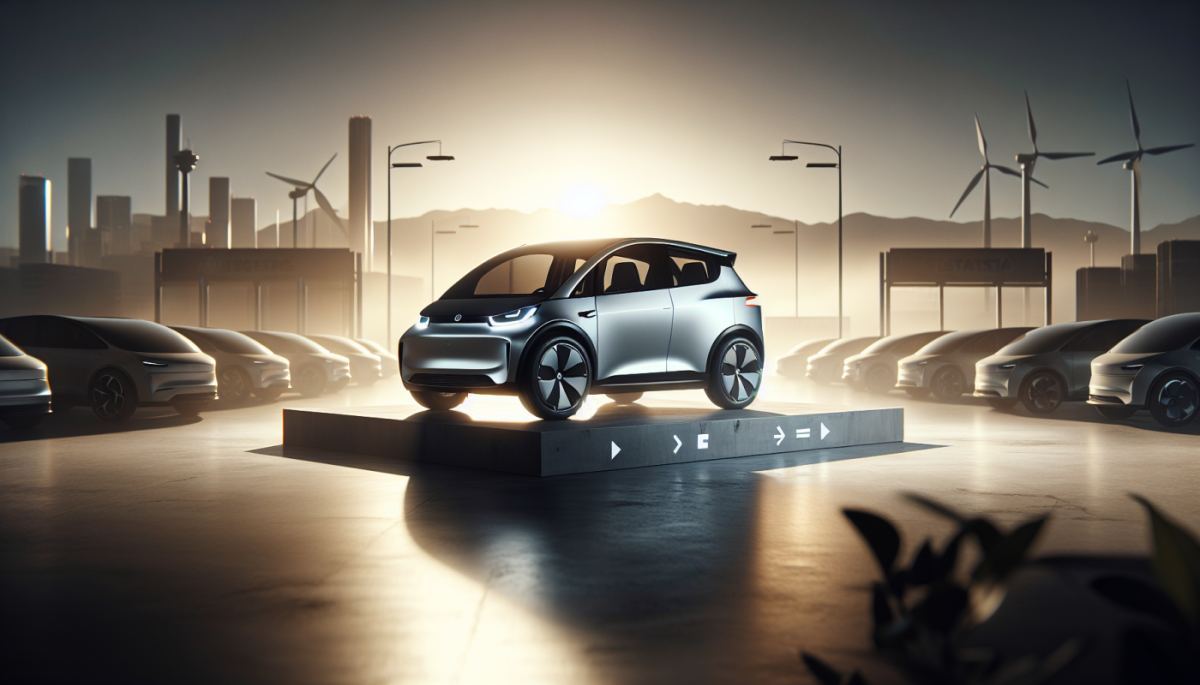
BMW has never been shy about treating its electric vehicle lineup as a living document, adding and subtracting models as market conditions shift beneath it. The latest revision follows a familiar pattern: with the new i3 sedan preparing to go on sale later this year, the German automaker is planning to discontinue an existing EV to clear space in its portfolio. It is a move that says as much about the pressures reshaping the global auto industry as it does about any single product decision.
The original BMW i3, launched in 2013, was a genuinely radical machine for its time. Built around a carbon-fiber reinforced plastic passenger cell and powered entirely by electricity, it was the kind of car that made people believe legacy automakers could think differently. BMW discontinued that version in 2022 after nearly a decade on the market, and the i3 name has since been reborn on a very different kind of vehicle: a sleek, China-first electric sedan developed in partnership with Brilliance, aimed squarely at the premium compact segment that has become fiercely contested ground.
Now, as that new i3 prepares to reach additional markets, BMW is trimming elsewhere. The logic is straightforward on the surface. Automakers operate under real constraints around factory capacity, dealer training bandwidth, parts supply chains, and marketing budgets. Launching a new model without retiring another is not always financially or operationally viable, particularly when the broader EV transition is still burning cash across the industry.
What makes this moment interesting is the broader context in which BMW is making these calls. The EV market in 2024 and into 2025 has been defined less by euphoric growth and more by a grinding recalibration. Demand in key Western markets has softened relative to earlier projections, while price competition from Chinese manufacturers has intensified dramatically. Companies like BYD and SAIC are not just competing on price; they are competing on feature density, software integration, and update cycles that traditional automakers have historically struggled to match.
BMW's response has been to double down on the premium end of the spectrum while quietly rationalizing the models that do not pull their weight. The i3 sedan, designed with Chinese consumer tastes in mind, represents a bet that the premium electric sedan segment still has room for a brand that can charge a meaningful price premium. Whether that bet pays off in markets outside China remains genuinely uncertain.
There is a second-order consequence here worth watching carefully. Every time a legacy automaker discontinues an EV, even a slow-selling one, it sends a signal through the supply chain. Battery suppliers, charging infrastructure planners, and fleet operators all read these decisions as indicators of commitment. If BMW is seen as pruning its electric lineup under pressure rather than growing it with confidence, that perception can subtly erode the trust of commercial buyers and leasing companies who need long-term model stability to justify their own planning cycles. A single discontinuation is not a crisis, but a pattern of them becomes a narrative.
The new i3 arrives carrying more weight than its price tag suggests. It needs to demonstrate that BMW's partnership-driven development model for China can produce vehicles compelling enough to travel in the other direction, from east to west, rather than remaining regionally siloed. That has proven difficult for most joint-venture products historically, where engineering compromises made for one market rarely translate cleanly into another.
BMW has the brand equity to make the argument, but brand equity is not infinitely elastic. Younger buyers in Europe and North America who are cross-shopping electric vehicles are doing so with more information and less loyalty than any previous generation of car buyers. They are comparing software ecosystems, real-world range figures, and over-the-air update histories as much as they are comparing badge prestige.
The discontinuation of one model to fund the launch of another is, in isolation, a routine business decision. But routine decisions made consistently in one direction tend to define a company's trajectory more honestly than any strategy presentation. BMW is betting that focus beats breadth in the current EV environment. The market will render its verdict soon enough.
Discussion (0)
Be the first to comment.
Leave a comment