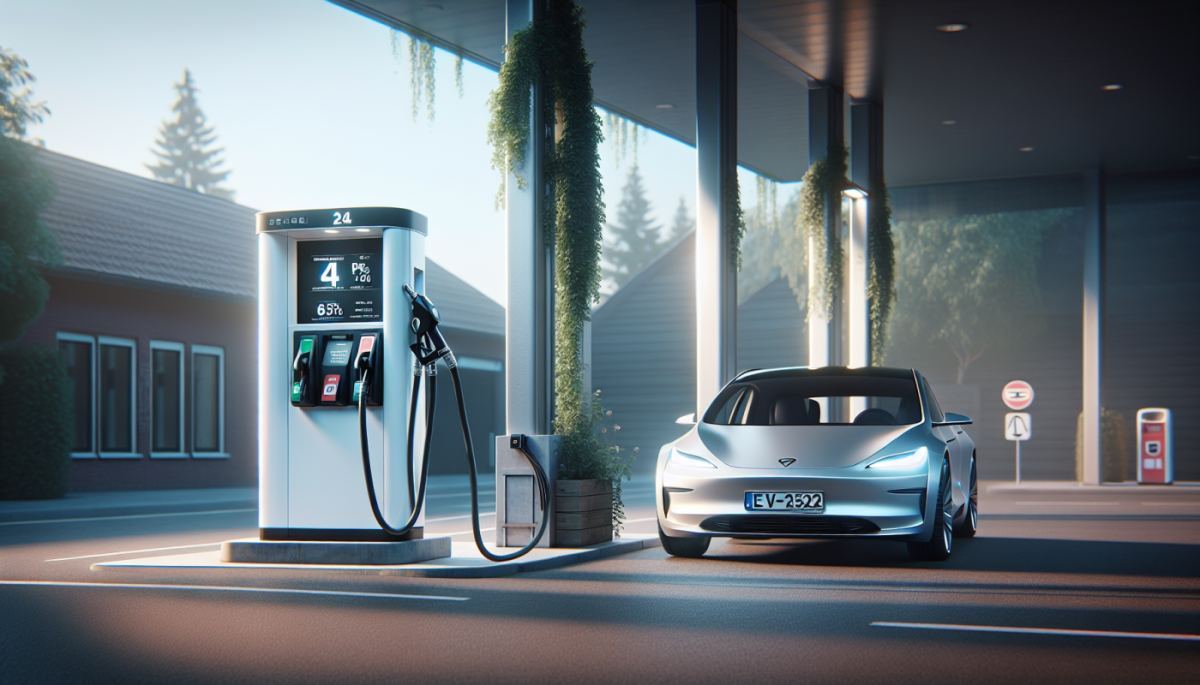
There is a number burned into the psychology of American drivers, and it sits just above four dollars a gallon. Below it, the internal combustion engine feels manageable, even comfortable. Above it, something shifts. Consumers start doing math they had been avoiding, and the electric vehicle stops looking like a luxury or a statement and starts looking like a solution. What makes this moment different from previous gas price spikes is that the EV market has finally matured enough to absorb that curiosity and convert it into sales.
The relationship between fuel prices and EV adoption is not new, but it has historically been complicated by a mismatch in timing. When gas prices surged in 2008, the modern EV market barely existed. When they spiked again in 2022, supply chains were fractured and inventory was thin. Today, the infrastructure is meaningfully better, the model lineup is broader, and the upfront cost gap between EVs and comparable gas-powered vehicles has narrowed considerably. The average EV transaction price has been falling steadily, and federal tax credits under the Inflation Reduction Act still offer up to $7,500 for qualifying buyers, which changes the calculus significantly for middle-income households.
The core economic argument is straightforward. At $4 per gallon, a driver covering 15,000 miles annually in a vehicle averaging 28 miles per gallon spends roughly $2,140 on fuel each year. The equivalent EV, charged primarily at home at average U.S. electricity rates, costs closer to $550 annually to power. That gap of nearly $1,600 per year compounds quickly over a five or six year ownership cycle, and it is precisely the kind of tangible, recurring savings that moves consumers who were previously unmoved by environmental arguments or technology enthusiasm.
And yet, hesitation persists. Range anxiety remains a real psychological barrier even as it becomes a less rational one. The average American drives fewer than 40 miles per day, well within the range of virtually every EV currently on the market. But perception lags behind reality, and the fear of being stranded on a long trip still carries outsized weight in purchase decisions. The charging infrastructure, while growing, remains uneven. Rural corridors and lower-income communities have seen far less investment than urban centers and major interstate routes, which means the EV value proposition is not equally accessible across the country.
There is also a credit market dimension that rarely gets discussed. EV adoption at scale depends heavily on the used vehicle market, where most Americans actually buy their cars. The used EV market is still developing its pricing norms, and uncertainty about battery degradation over time makes lenders and buyers cautious. Until a robust, trusted secondary market exists, the transition will remain concentrated among buyers who can afford new vehicles, which is a meaningful constraint on how fast adoption can actually spread.
Dealer behavior adds another layer of friction. Despite manufacturer commitments to electrification, many dealerships have been slow to train sales staff on EV technology or to stock EVs prominently. A buyer who walks in genuinely curious about an electric vehicle and encounters an undertrained salesperson or a lot with limited inventory is a buyer who often leaves with a gas-powered car. The retail experience is a bottleneck that aggregate sales figures tend to obscure.
The more interesting systems-level question is what happens if $4 gas becomes the sustained baseline rather than a temporary spike. A durable shift in fuel costs would not just accelerate EV adoption linearly. It would trigger a cascade of second-order effects that reshape adjacent industries in ways that are already beginning to appear. Auto insurers are still developing actuarial models for EVs, whose repair costs and total-loss thresholds differ substantially from combustion vehicles. If EV adoption accelerates faster than those models mature, insurers face meaningful pricing risk.
Utilities face the inverse problem. A faster-than-expected surge in residential charging demand could stress grid infrastructure in regions that have not planned for it, particularly in the South and parts of the Midwest where grid modernization investment has lagged. The irony is that EVs, if managed intelligently through vehicle-to-grid technology, could actually stabilize grids rather than strain them. But that outcome requires coordination between automakers, utilities, and regulators that does not yet exist at scale.
The $4 threshold, then, is less a tipping point than a pressure valve. It does not guarantee a clean transition. It guarantees that the tension between where the market wants to go and where the infrastructure actually is will become impossible to ignore. How that tension resolves will depend less on consumer sentiment than on whether the institutions surrounding the EV market can move as fast as the economics are now demanding.
References
- Lutsey et al. (2021) — Update on electric vehicle costs in the United States through 2030
- U.S. Department of Energy (2023) — Fact #1042: Average Annual Vehicle Miles Traveled by Major Vehicle Category
- IRS (2023) — Credits for New Clean Vehicles Purchased in 2023 or After
- BloombergNEF (2023) — Electric Vehicle Outlook 2023
- Edison Electric Institute (2023) — Electric Vehicle Sales and the Charging Infrastructure Required Through 2030
Discussion (0)
Be the first to comment.
Leave a comment